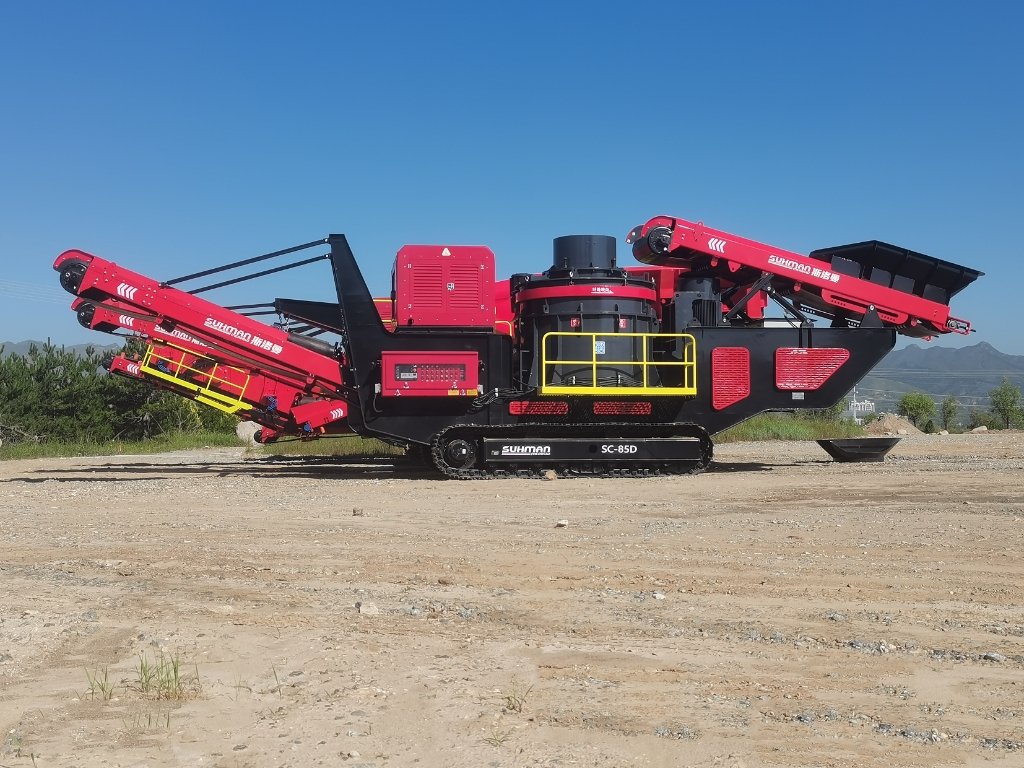
Quick Answer: By deploying optimized combinations of jaw crusher and impact crusher in mobile crushing circuits, European contractors can process 2 million tons of mixed Construction Waste into four grades of recycled aggregate within 20–24 months. SUHMAN’s Austrian-technology crusher machines deliver 95%+ material recovery rates while cutting CAPEX by 30–40% compared to European brands.
Executive SummaryFlexible Configurations: From single-unit concrete crusher setups for basic crushing to multi-line systems for mega-projects, solutions match actual project needs—not forced upsells.Compliance Assurance: Full CE certification and Stage V emission compliance ensure seamless operation under EU 2025 landfill ban and ESPR digital product passport frameworks.
The European Construction Waste Crisis: Why Action Is Urgent
The Numbers Behind the Crisis
According to Eurostat and the European Environment Agency (EEA), Europe generates approximately 860 million tons of Construction Waste annually, accounting for nearly one-third of the continent’s total waste output. Germany leads with 220+ million tons per year, followed by France (~170M), the UK (~130M), and Italy (~115M).
Landfill fees vary dramatically across EU member states:
| Country | Landfill Fee (€/ton) | Annual C&D Waste (est.) | Source |
| Germany | €40–€80 | 220M+ tons | Federal Environment Agency (UBA), 2023 |
| Netherlands | €35–€65 | 85M tons | Statistics Netherlands (CBS), 2022 |
| UK | €25–€50 | 130M tons | DEFRA Waste Statistics, 2023 |
| France | €30–€55 | 170M tons | ADEME Waste Observatory, 2023 |
| Italy | €20–€45 | 115M tons | ISPRA Waste Report, 2023 |
For a 2-million-ton demolition project, landfill costs alone range from €50M to €160M—funds that could be reinvested into profitable
recycling operations.
The Hidden Cost of Inaction
Carbon Penalties: Each ton of unrecycled Construction Waste generates approximately 0.9 tons of CO₂ equivalent. At current EU ETS carbon prices of €66–€80 per ton of CO₂, the embedded carbon penalty for 2 million tons equals €119M–€144M in foregone carbon credit opportunities.
CBAM Impact: The EU’s Carbon Border Adjustment Mechanism (CBAM), fully implemented in October 2026, imposes tariffs on carbon-intensive imported building materials. Contractors unable to document low-carbon material sourcing face competitive disadvantages in public infrastructure bidding.
The Opportunity: From Liability to Asset
Forward-thinking contractors recognize that Construction Waste is actually a resource stream. Recycled aggregate for concrete commands premium prices:
| Aggregate Grade | Price Range (€/ton) | Primary Applications |
| 0–5mm Fine Sand Substitute | €10–€15 | Concrete production, mortar bedding |
| 5–10mm Fine Aggregate | €9–€13 | Structural concrete, asphalt mix |
| 10–20mm Medium Aggregate | €8–€12 | Road base, pipe bedding |
| 20–31.5mm Coarse Aggregate | €7–€10 | Sub-base, railway ballast |
Source: European Aggregates Association (UEPG) Market Report, 2024
Revenue Calculation for 2 Million Tons:
95% recovery rate × 1,900,000 tons × weighted avg €9.5/ton = €18.05M gross
Steel recovery (0.7% avg): 14,000 tons × €500/ton = €7M additional
Total Project Revenue: €25.05M
Compare this to €50M–€160M in avoided landfill costs, and the business case becomes compelling.
Case Study: German Contractor Processes 2.08 Million Tons in 39 Months
Project Background & Challenge


Client: Major German demolition contractor specializing in urban renewal across Bavaria.
Scope: Complete demolition and material recycling for Munich’s old town district redevelopment:
340+ buildings (pre-1970s construction)
Total waste volume: 2,080,000 tons
Material composition: Concrete 60%, brick/masonry 25%, asphalt 10%, mixed debris 5%
Reinforced concrete density: avg. 80kg rebar/m³
Core Constraints:
Zero Landfill Mandate: Munich regulations aligned with EU Waste Framework Directive requiring 70% recycling/recovery.
Site Limitations: 12-hectare zone prohibited large material stockpiles—on-site processing mandatory.
Timeline Pressure: Extended from 18 to 39 months due to scope additions and winter weather.
Quality Standards: Recycled aggregate for concrete had to meet DIN EN 13242 specifications.
Equipment Configuration Strategy
The contractor initially considered traditional setups requiring separate primary crusher, secondary crusher, and screening plants. However, concrete recycling machine economics favored integrated solutions:
Line A (Fine Aggregate Production)
| Equipment | Capacity (8h shift) | Output Grades | Function |
| SE-1060 Jaw Crusher | 1,600–2,000 tons max | Primary crush (0-150mm) | Parallel primary crushing |
| SF-580D-S Integrated Unit | 1,440–1,840 tons | 0-10mm + 10-31.5mm (2 grades) | High-throughput secondary crusher + dual screening |
Note: SF-580D-S uses a 315kW motor with 1315-type three-chamber impact module, delivering higher throughput than SF-380D-S (250kW). Both models feature integrated screening but target different output strategies.
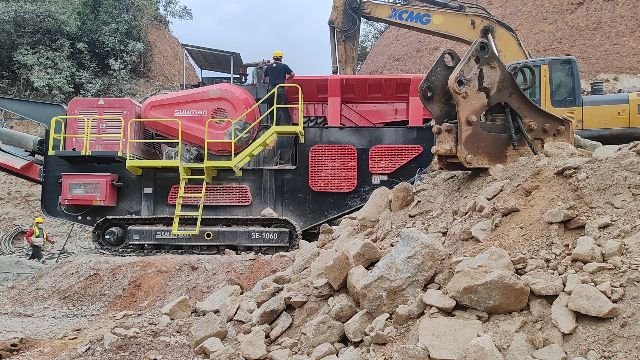
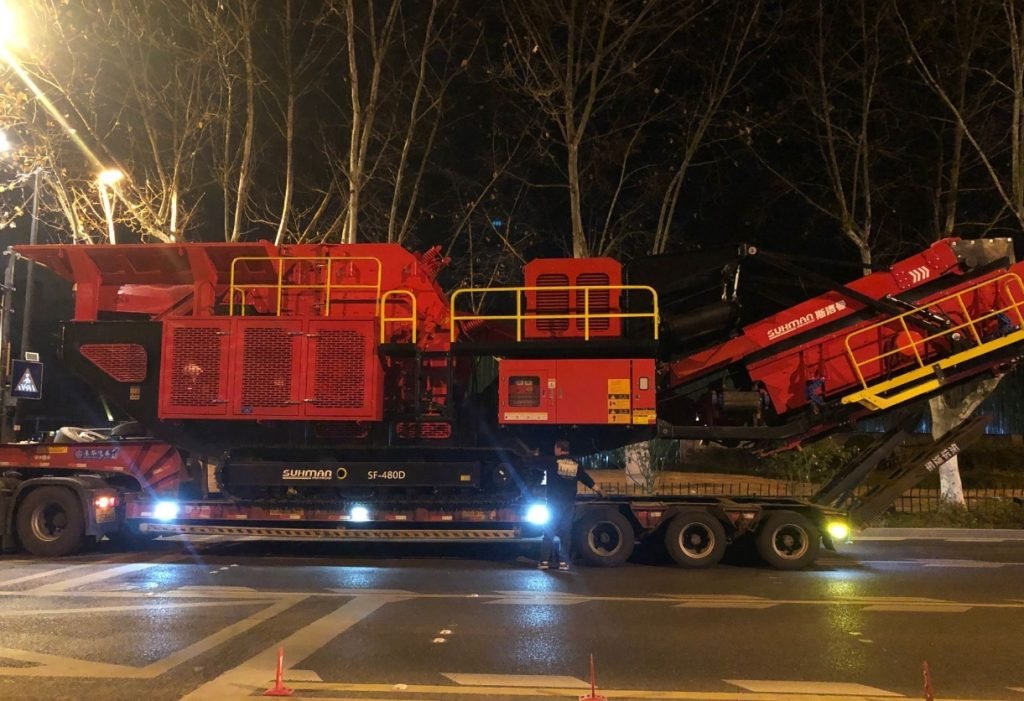
Daily Output Line B: 1,440–1,840 tons
Combined Throughput (8-hour shifts)
Theoretical Maximum: 2,640–3,280 tons/day
Actual Average: 2,420 tons/day (accounting for downtime, material variability, maintenance)
Total Duration: 2,080,000 ÷ 2,420 = 859 working days ≈ 39 months
Economic Outcomes
| Metric | Value | Notes |
| Total Processed Volume | 2,080,000 tons | Over 859 working days |
| Material Recovery Rate | 96.3% | 4 grades + steel |
| Steel Recovered | 14,560 tons | Sold at €500/ton |
| Steel Revenue | €7.28M | — |
| Aggregate Revenue | €17.74M | Weighted avg €8.86/ton |
| Total Revenue | €25.02M | — |
| Equipment CAPEX | $1.64M (~€1.48M) | 2× SE-1060 + 1× SF-380D-2S + 1× SF-580D-S |
| Operating Cost | $3.8/ton × 2.08M = $7.90M (~€7.12M) | Fuel + labor + wear parts |
| Net Profit | ~€16.4M | Before tax, after all expenses |
| ROI Multiple | ~11.1× | — |
| Payback Period | ~16 months | Based on monthly cash flow |
Why Integrated Units Won
- Eliminated Standalone Screener Costs:
Traditional configurations require separate mobile screening plants (~€350K each). SF-380D-2S and SF-580D-S integrate screening directly into the crusher chassis:
SF-380D-2S: Triple-deck screen produces 3 aggregate grades simultaneously
SF-580D-S: Dual-deck screen produces 2 grades with closed-loop oversize return
- Reduced Footprint:
Compact integrated design fit within the 12-hectare site constraints. Separate crusher + screener setups would have required ~180 m² versus ~110 m² for integrated units.
- Lower Maintenance Burden:
Fewer machines = fewer failure points. SUHMAN’s Austrian-designed impact chambers achieved 650–780 hours between hammer replacements versus industry average of 300–500 hours.
SUHMAN’s Approach: Austrian Technology Meets Chinese Manufacturing
Technology Origins: Not Reinventing the Wheel
SUHMAN’s crushing chambers incorporate Austrian core technology—the same computational fluid dynamics (CFD) models and chamber geometries found in premium European brands. Key elements:
Curved Impact Plates: Optimize nip angles for maximum material-on-material crushing efficiency, achieving reduction ratios up to 20:1 in single pass.
Dynamic Rotor Balancing: Rotors balanced to G2.5 precision grade (aerospace standard), minimizing vibration and bearing wear.
Metallurgy: Impact hammers use Austrian-specified high-chrome white iron (Cr 20–28%, Mo 1.5–2.5%) with martensitic matrix achieving 58–62 HRC hardness.
Manufacturing Standards: Military-Grade Precision
SUHMAN operates a 15,000 m² facility in Hefei, Anhui built to military specifications. Quality control measures include:
Raw Material Spectroscopy: Every steel batch undergoes spectrographic analysis verifying chemical composition meets specs (C 0.35–0.45%, Cr 1.0–1.5%). Non-conforming batches are rejected.
CNC Machining: Critical surfaces (bearing seats, shaft journals) machined to ±0.05mm tolerance on 5-axis CNC centers.
72-Hour Load Testing: Every completed unit runs 72 continuous hours under simulated load. Monitored parameters: bearing temp (<75°C), oil pressure (±5% variance), vibration amplitude (<2.5 mm/s RMS). Failed units are completely rebuilt.
Why SUHMAN Costs Less Than European Brands
| Cost Factor | European Brand | SUHMAN |
| Base Manufacturing | €550K–€750K | €320K–€520K |
| Reason | High European labor costs, premium branding, distributor margins | Vertically integrated supply chain, 50–100 units/month scale, direct-from-factory pricing |
Important Caveat: SUHMAN’s lower price comes from production efficiency, not material shortcuts. Wear parts life, bearing intervals, and screen mesh durability meet or exceed European benchmarks.
Crusher in China: Competitive Landscape Context
China dominates global crusher production with 60%+ of worldwide output. However, quality varies dramatically:
Tier 1 (SUHMAN): Austrian/German technology partnerships, military-grade QC, export-focused
Tier 2: Domestic Chinese designs, acceptable for local projects, limited international support
Tier 3: Copycat designs with inconsistent quality, minimal after-sales
When sourcing a crusher in China, verify: technology origin (licensed vs. copied), QC certifications (ISO 9001 minimum), and export track record (years in international markets).
Practical Selection Guide: Matching Equipment to Your Construction Waste Project
Critical Decision Point: Do you need graded aggregate, or just size reduction?
Scenario 1: Basic Crushing Only (Backfill/Road Base/Temporary Access)
Applicable when: proximity to end-users is limited, or material is destined for low-spec applications.
Recommended Setup: Single SE-1060 Jaw Crusher or Single SF-380D Impact Crusher
Output: Single size fraction (0-150mm mixed)
Daily Capacity: 1,600–2,000 tons (8-hour shift)
Advantages: Minimal CAPEX, simple operation, highest reliability, fastest deployment
Disadvantages: Cannot produce specification aggregates for concrete production
Why This Works: Many civil engineering projects (road embankments, temporary access roads, site leveling) require size reduction only. Spending extra on screening equipment is economically unjustified if end-markets don’t exist.
Scenario 2: Graded Aggregate Production (Concrete/Asphalt Markets)
Applicable when: nearby concrete plants, asphalt mixers, or brick manufacturers can absorb sized material.
Option A: 2-Size Output (High Throughput)
Configuration: SE-1060 + SF-380D-S (integrated dual-deck screening)
Output: 0-10mm + 10-31.5mm
Daily Capacity: 1,200–1,440 tons (8h)
Best For: Road base layers, pipe bedding, general fill
Advantage: Highest throughput among SF-380D series; dual-deck screen eliminates standalone screener cost
Technical Note:SF-380D-S uses a 250kW motor and 380×380mm rotor, processing up to 600mm feed size. Its dual-deck vibrating screen produces two finished sizes simultaneously with oversize material automatically returning to the crusher via built-in return conveyor.
Option B: 3-Size Output (Premium)
Configuration: SE-1060 + SF-380D-2S (integrated triple-deck screening)
Output: 0-5mm + 5-10mm + 10-20mm
Daily Capacity: 1,200–1,440 tons (8h)
Best For: Ready-mix concrete plants, asphalt producers, precast concrete manufacturers
Advantage: Triple-deck screen produces three salable products simultaneously; maximum revenue per ton
Technical Note:SF-380D-2S shares the same 250kW motor and chassis as SF-380D-S but upgrades to a larger triple-deck screen (4600×1540mm) for three-way size separation.
Option C: High-Volume 2-Size Output (Maximum Throughput)
Configuration: SE-1060 + SF-580D-S (heavy-duty integrated dual-deck screening)
Output: 0-10mm + 10-31.5mm
Daily Capacity: 1,440–1,840 tons (8h)
Best For: Large-scale road construction, high-volume fill projects
Advantage: 315kW motor and 1315 three-chamber impact module deliver highest throughput in the SF-series lineup
Technical Note:SF-580D-S uses a 315kW motor with 1315-type impact chamber, accepting feed up to 700mm. Despite similar external dimensions to SF-380D-S, the upgraded power plant and crushing chamber deliver 20–30% higher throughput.
Scenario 3: Mega-Projects (100K+ Tons/Month)
Configuration: Multiple parallel lines combining above setups
Example: 2× SE-1060 + 1× SF-380D-2S + 1× SF-580D-S
Daily Capacity: 2,640–3,280 tons
Strategy: Use SF-380D-2S for high-value grades, SF-580D-S for high-volume base material
Operational Excellence: SOP for Mobile Crusher Deployment at Construction Sites
Site Preparation Checklist
Step 1: Ground Bearing Verification
Confirm soil bearing capacity ≥150 kPa via plate load test or geotechnical report. Soft ground requires steel plate reinforcement beneath outriggers.
Step 2: Access Route Survey
Verify route width ≥4.0 meters and vertical clearance ≥5.5 meters for low-bed trailer delivery. Identify bridge weight restrictions along the haul route.
Step 3: Utility Coordination
Locate underground utilities (water, gas, electrical) and maintain minimum 3-meter setback from crusher positioning.
Deployment Sequence
Step 1: Chassis Positioning
Track-mounted units self-deploy from delivery trailers. Operators use wireless remote controls to position units precisely without entering danger zones.
Step 2: Leveling and Stabilization
Extend hydraulic outriggers until chassis is level within ±2°. Verify with digital inclinometer—uneven bases cause excessive vibration and premature bearing failure.
Step 3: Power and Control Connections
Connect diesel engines or mains power. Pair wireless remote controls. Conduct functional tests of all safety interlocks and emergency stops.
Step 4: Commissioning Feed
Begin with clean concrete blocks (no rebar) to verify calibrated discharge settings. Gradually introduce mixed demolition waste once stable operation confirmed.
Routine Operation Protocol
Step 1: Pre-Shift Inspection (15 min)
Check hydraulic oil levels, screen mesh integrity, magnetic separator belt alignment, and emergency stop functionality.
Step 2: Controlled Feeding
Wheel loaders deliver material to hoppers at consistent rate. Avoid overloading—excessive feed causes jamming and accelerated wear.
Step 3: Continuous Monitoring
Observe material flow through primary crusher → magnetic separation → secondary crusher → integrated screening. Watch for:
Unusual vibrations (indicates worn bearings or loose hardware)
Excessive dust (check water spray nozzles)
Belt misalignment (adjust tracking rollers)
Step 4: End-of-Shift Procedures
Gradually reduce feed 15 minutes before shutdown. Clean magnetic separators. Log production volumes, fuel consumption, and any anomalies.
Compliance & Regulatory Navigation
EU 2025 Landfill Ban Compliance
The EU Waste Framework Directive prohibits untreated Construction Waste landfilling effective 2025. SUHMAN mobile crushers ensure compliance by:
Processing waste on-site to produce certified recycled aggregate for concrete
Eliminating transport to distant landfills
Generating auditable material recovery documentation
Carbon Credit Opportunities
Each ton of recycled aggregate avoids ~0.9 tons CO₂ versus virgin aggregate extraction. Under Verra VCS methodology:
2M tons recycled aggregate = ~1.8M tons CO₂ avoided
At €66–€80/ton carbon price = €118.8M–€144M potential credit value
Note: Actual monetization depends on project registration with approved carbon registries.
CE Certification & Stage V Compliance
All SUHMAN mobile crushers carry full CE marking compliant with:
2006/42/EC Machinery Directive (safety interlocks, emergency stops, guarding)
2014/30/EU EMC Directive (control systems, sensors)
Stage V Non-Road Mobile Machinery Regulations (emission standards)
FAQ
Q1: Do I really need screening, or can I just crush with a single concrete crusher?
A: It depends on your end market. If you’re crushing for backfill, road base, or temporary access roads, a single jaw crusher or impact crusher without screening is the most economical choice—lower CAPEX, simpler operation. However, if you have nearby concrete plants or asphalt producers willing to buy sized aggregate, adding screening (either integrated or standalone) can increase revenue per ton by €3–€7. Analyze local market demand before investing in screening capability.
Q2: How does SUHMAN’s quality compare to European brands like Kleemann or Rubble Master?
A: SUHMAN uses licensed Austrian crushing chamber designs and achieves equivalent wear life (650–780 hours for impact hammer replacements vs. 300–500 hours for generic Chinese designs). The main differences are: (1) lower initial purchase price due to Chinese manufacturing efficiencies, (2) lower brand recognition in Western markets, and (3) shorter corporate history in international markets. For contractors prioritizing ROI over brand prestige, SUHMAN offers compelling value. For those requiring maximum brand equity (e.g., rental fleets serving premium clients), European brands may be preferable despite higher costs.
Q3: What happens if rebar gets stuck in the impact crusher rotor?
A: SUHMAN impact crushers include anti-wrap features: specially designed crushing chambers allow rebar to pass through without jamming, and reversible rotors can eject trapped material. However, best practice is to remove large rebar sections upstream using overhead magnetic separators. For heavily reinforced concrete (>5% steel content), consider reducing feed rate and monitoring rotor amps closely.
Q4: How quickly can I get spare parts if equipment fails at my Construction Waste site?
A: SUHMAN recommends stocking essential wear parts (jaw plates, blow bars, screen mesh, bearings) matching one complete overhaul cycle. For emergency failures, air freight from China to Germany takes 3–5 days; sea freight takes 25–35 days. Remote video diagnostics are available 24/7 to troubleshoot issues without on-site technician dispatch. Many common parts (filters, seals, hydraulic fittings) are interchangeable with locally available industrial equivalents.
Q5: Can I operate a mobile crusher in European winter conditions?
A: Yes, with modifications. Switch to cold-weather hydraulic oil (ISO VG 46 or lower viscosity grade), install engine block heaters for overnight cold-soaking, and extend warm-up periods to 15–20 minutes before loading. Diesel fuel should include winter additive preventing gelling below -10°C. Expect 15–25% throughput reduction in freezing conditions due to material brittleness and hydraulic viscosity. Some contractors suspend operations during peak winter months; others maintain production with appropriate cold-weather protocols.
Next Steps
Get Your Project-Specific Assessment
Provide your total waste volume, timeline, and material composition. SUHMAN engineers will calculate optimal equipment configuration, daily throughput projections, and preliminary ROI analysis—free of charge.