
Introduction: Why Granite Requires a Different Approach
Granite is one of the hardest materials on earth. Crushing it requires more than just powerful machinery. You need a configuration that handles extreme abrasion, maintains consistent particle shape, and withstands intense operational stress.
Many plant operators face a common problem. Standard crushers suffer from high vibration and frequent breakdowns when processing granite. This leads to unplanned downtime and rising maintenance costs.
This guide explains how to configure a granite crushing plant using SUHMAN mobile solutions. We will cover equipment selection, cost analysis, and the specific design features that ensure reliability in hard rock applications.

The Granite Challenge: What Your Crusher Faces
Granite Composition and Hardness Profile
Granite is an igneous rock composed mainly of quartz and feldspar. It has a high silica content, often exceeding 65%. This makes it highly abrasive. The compressive strength of granite ranges from 100 to 300 MPa.
These properties create three main challenges for crushing equipment:
- Rapid Wear: High silica content destroys wear parts quickly.
- High Vibration: The resistance of hard rock generates intense reactive forces.
- Poor Particle Shape: Improper crushing methods produce flat or elongated stones.
Solving the Vibration and Failure Problem
High vibration is not just a comfort issue. It is a major cause of equipment failure. Excessive shaking loosens bolts, cracks frames, and damages bearings.
SUHMAN addresses this with a heavy-duty reinforced chassis. Our mobile crushers feature thickened steel plates at stress points. We use precision welding and stress relief treatments to prevent micro-cracks. This design reduces structural fatigue by over 40%. The result is a machine that stays stable even during 24/7 granite operations.
Equipment Selection: The Granite-Specific Workflow
Stage 1: Primary Crushing with Jaw Crusher
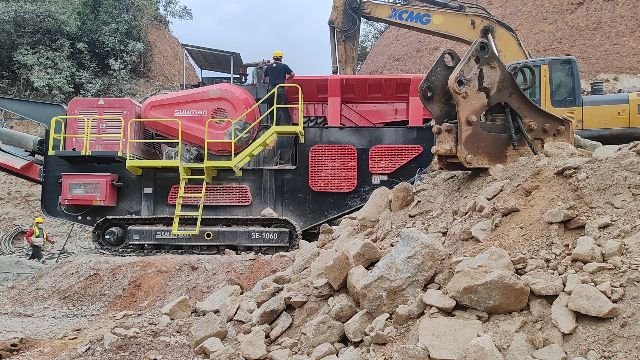
The first stage of granite crushing must handle large feed sizes. A jaw crusher is the standard choice for this stage. It uses compression to break large rocks into manageable sizes.
Recommended Models:
- SE-1060 Mobile Jaw Crusher: Ideal for medium-scale production (200-250 TPH).
- SE-1160 Heavy Duty Jaw Crusher: Best for large-scale projects (230-280 TPH).
Why SUHMAN Jaw Crushers? Our jaw crushers feature a deep crushing chamber for higher reduction ratios. The heavy-duty frame absorbs shock loads effectively. Hydraulic adjustment allows for quick changes in discharge size without stopping the machine.
Learn more about the SE-1060 Mobile Jaw Crusher

Stage 2: Secondary Crushing with Cone Crusher
For granite, you must choose a cone crusher for the secondary stage. Impact crushers use hammers that wear out too fast with hard rock. Cone crushers use compression, which is much more efficient for granite.
Recommended Models:
- SY-HP300 Mobile Cone Crusher: The standard choice for 200-300 TPH operations.
- SY-HP400 Mobile Cone Crusher: High-capacity option for 220-380 TPH.
Why Cone Crushers? Cone crushers produce well-graded aggregates with good cubical shape. The multi-cylinder hydraulic system ensures consistent crushing force. This reduces vibration and improves the lifespan of wear parts.
Explore the SY-HP300 Mobile Cone Crusher


Stage 3: Screening and Closed Circuit
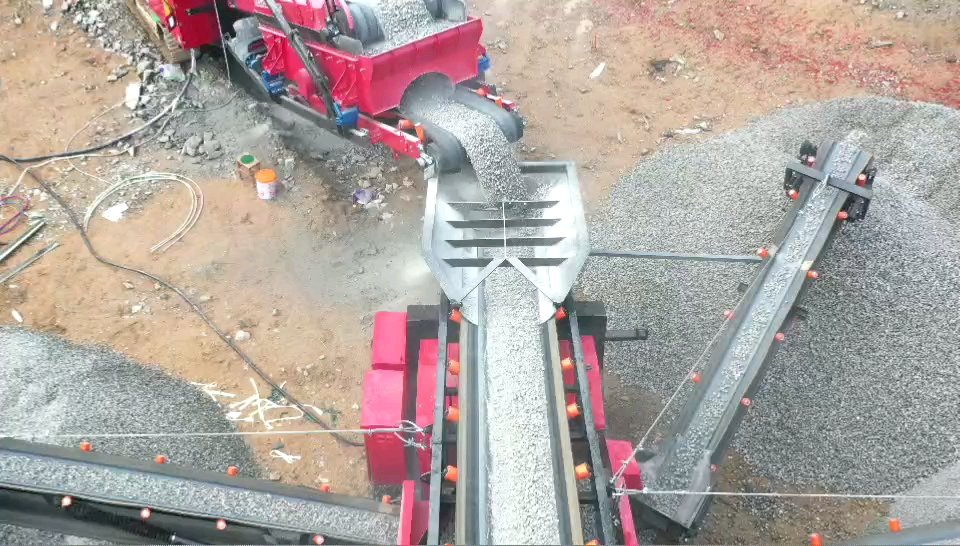
Efficient screening is essential for quality control. The SS-7018 Mobile Inclined Screener separates material into different sizes. It can produce up to four different aggregate sizes simultaneously (0-5mm, 5-10mm, 10-20mm, 20-40mm).
A closed-circuit system returns oversized material to the cone crusher. This ensures that every stone meets your size specifications.
Check out the SS-7018 Mobile Screener

Stage 3: Screening and Closed Circuit
Configuration A: 100 TPH (Small Quarry)
- Primary: SE-650D Mini Jaw Crusher
- Secondary: SY-HP200 Mobile Cone Crusher
- Screening: SS-7018 Mobile Screen
- Best For: Small quarries and budget-conscious projects.
Configuration B: 200 TPH (Most Popular)
- Primary: SE-1060 Mobile Jaw Crusher
- Secondary: SY-HP300 Mobile Cone Crusher
- Screening: SS-7018 Mobile Screen
- Best For: Medium quarries and infrastructure projects.
Configuration C: 300 TPH (Large-Scale)
- Primary: SE-1160 Heavy Duty Jaw Crusher
- Secondary: SY-HP400 Mobile Cone Crusher
- Screening: SS-7018 Mobile Screen
- Best For: Large quarries and highway construction.
Process Flow: Mobile Granite Crushing in Action
- Feeding: Raw granite rocks are loaded into the jaw crusher hopper.
- Primary Crushing: The jaw crusher breaks large rocks (up to 700mm) into smaller pieces.
- Secondary Crushing: The material moves to the cone crusher for further reduction.
- Screening: The screen separates the material into different sizes.
- Recycling: Oversized material returns to the cone crusher via a conveyor belt.
- Stockpiling: Finished aggregates are stacked for transport.
This closed-loop system ensures zero waste and high efficiency.


Cost Analysis: Granite-Specific Data
Capital Investment (CAPEX)
| Configuration | Equipment Value | Est. Ocean Freight | Total Landed Cost |
| 100 TPH Plant | $120,000 | $15,000 | $135,000 |
| 200 TPH Plant | $180,000 | $22,000 | $202,000 |
| 300 TPH Plant | $250,000 | $30,000 | $280,000 |
Operating Cost per Ton (Granite Exclusive)
- Energy Consumption: $0.15–$0.25 per ton
- Wear Parts: $0.08–$0.12 per ton
- Labor & Logistics: $0.10–$0.15 per ton
- Total OPEX: $0.33–$0.52 per ton
The 2-Year Warranty Advantage
Most manufacturers offer a 12-month warranty. SUHMAN provides a 2-year warranty on all main components. This includes the main frame, motor, bearings, and hydraulic system.
This is a direct cost saving for your business.
- Lower Repair Costs: You avoid paying for major repairs in the second year.
- Risk Reduction: Unexpected breakdowns are covered.
- Higher Resale Value: Equipment with a full warranty history sells for more.
For a 200 TPH plant, the 2-year warranty can save you over $10,000 in potential repair costs during the second year alone.
Real Projects: SUHMAN Granite Cases

Case 1: Vietnam Granite Quarry
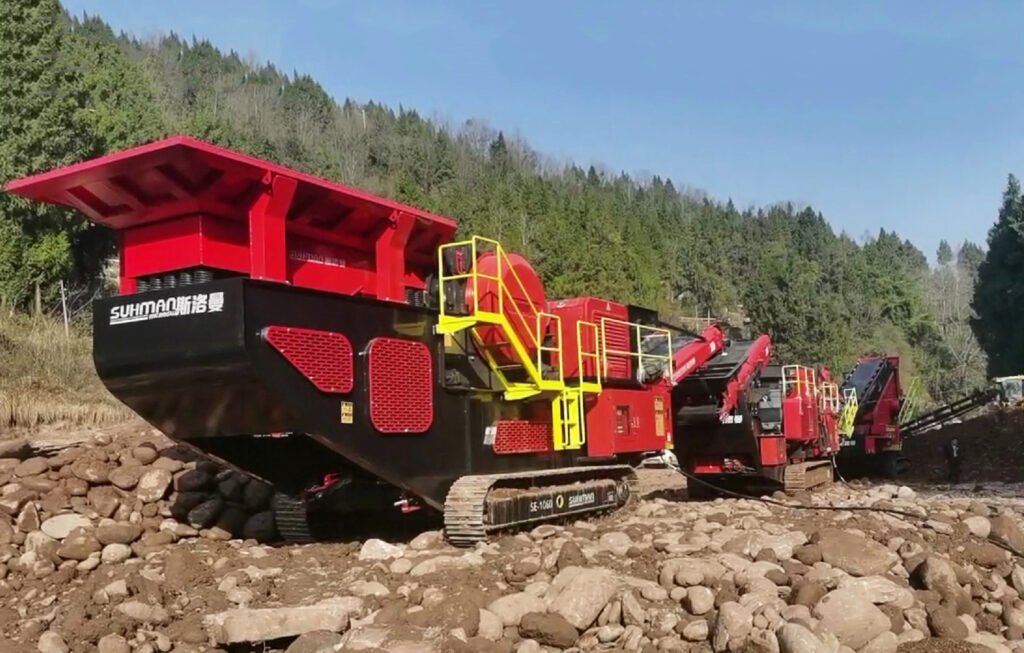
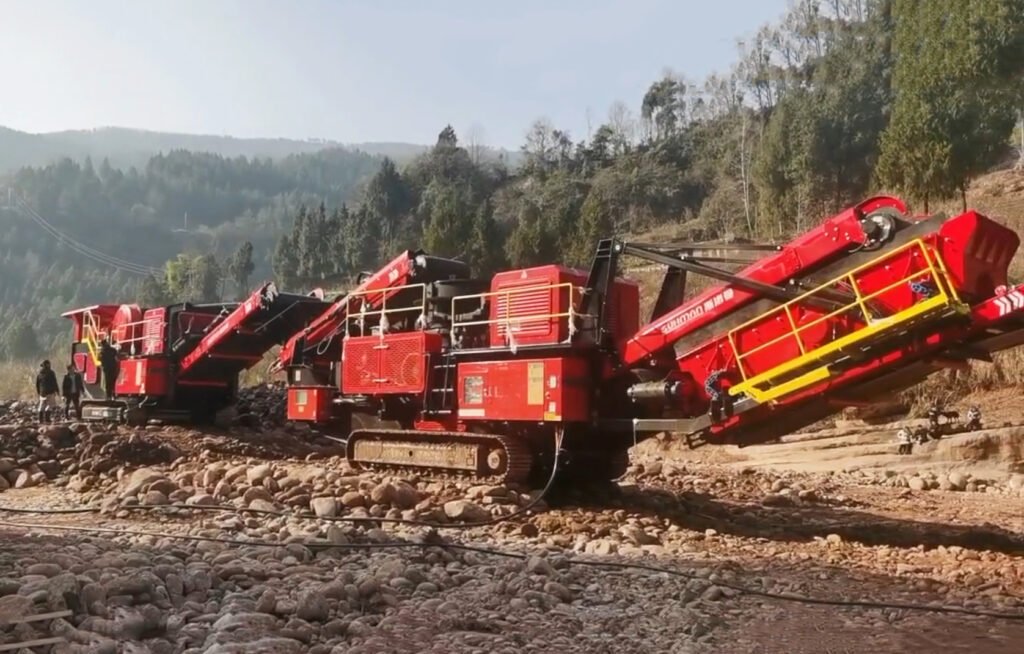
- Challenge: High silica granite caused rapid wear on previous equipment.
- Solution: SE-1060 Jaw Crusher + SY-HP300 Cone Crusher.
- Result: Consistent 220 TPH output. Wear parts lasted 400+ hours.
Case 2: India Highway Aggregate
- Challenge: Needed 300 TPH capacity with limited power supply.
- Solution: SE-1160 Jaw Crusher + SY-HP400 Cone Crusher (Dual Power).
- Result: Stable 280 TPH output. Operated entirely on diesel for 18 months.
Frequently Asked Questions
Q: Why not use an impact crusher for granite?
A: Impact crushers use blow bars that wear out very fast with hard rock. Cone crushers reduce wear costs by 60-70% compared to impact crushers for granite.
Q: How long do wear parts last?
A: With SUHMAN cone crushers, mantles and concaves typically last 300-500 hours when crushing granite.
Q: Can the plant operate without electricity?
A: Yes. All SUHMAN mobile crushers are available in dual-power versions (diesel + electric).
Q: What is the delivery time?
A: Standard production takes 20-25 working days. Shipping depends on the destination.
Ready to Configure Your Granite Crushing Plant?
Every granite project is unique. Contact SUHMAN for a free consultation. We will help you select the right equipment and design a custom crushing solution.
- WhatsApp: +86 13856971828
- Email: ahsuhman@163.com
- Website: https://ahsuhman.com

