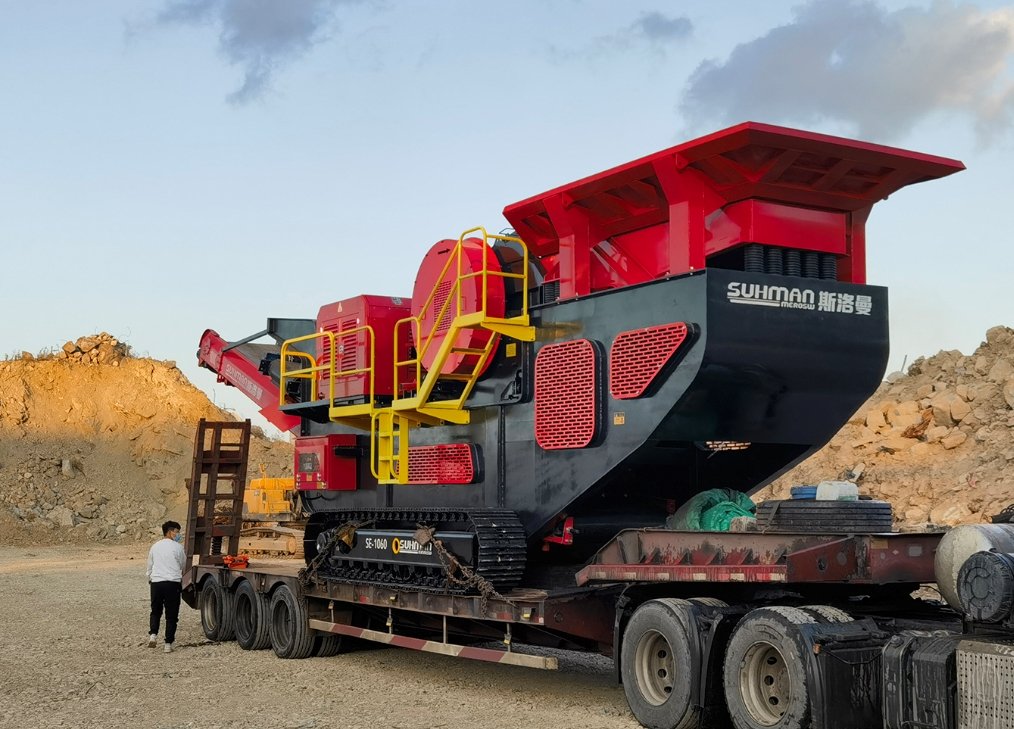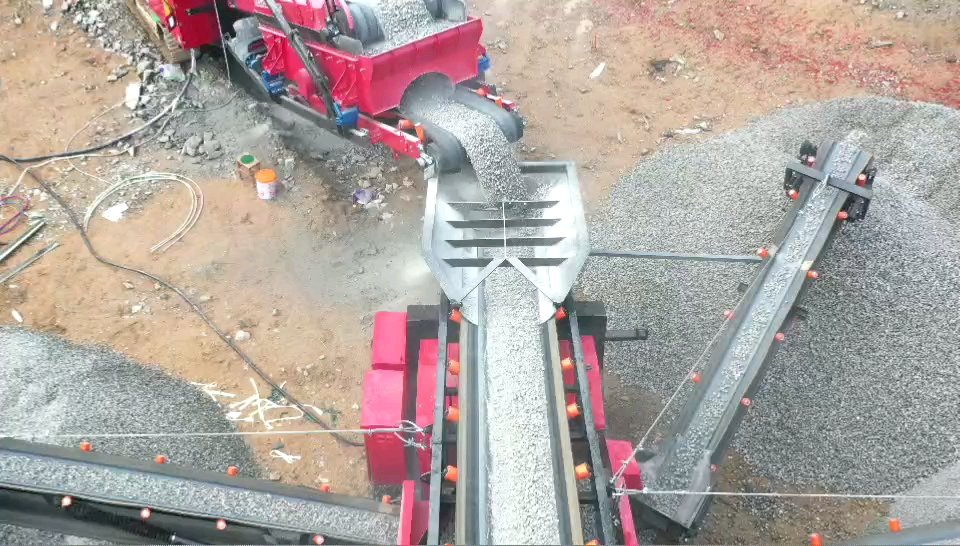
In regions such as Siberia (Russia), Northern Canada, and Northern Europe, winter temperatures regularly drop to -45°C to -50°C. In these conditions, standard mobile crushers face five engineering challenges: engine cold-start failure, hydraulic system freeze-up, brittle steel fracture, ice-and-snow track slippage, and electrical system failure.
This guide analyzes these five challenges from an engineering perspective and outlines the design standards a mobile crusher must meet to operate reliably in extreme cold.
1. Cold-Start Engine Systems: Engineering Requirements
Technical Background:
Diesel engines struggle to start in extreme cold for three reasons:
- Diesel fuel viscosity increases, causing poor atomization
- Battery capacity drops significantly (at -30°C, capacity is only 40% of room temperature)
- Engine oil viscosity increases, raising cranking resistance
Engineering Solutions:
- Block Heater / Coolant Heater: Pre-heats the engine block to +20°C or above
- Intake Air Heater: Heats the intake manifold
- Battery Enclosure with Heater: Maintains battery temperature above 0°C
- Fuel Heating / Return-Line Circulation System: Prevents diesel waxing
Design Reference:
- SAE J1367: Commercial Vehicle Cold-Start Test Standard
- Russian and Nordic cold-climate construction machinery operating guidelines
Industry:
Most standard mobile crushers do not include these systems and cannot reliably cold-start below -20°C. Extreme cold regions require a complete low-temperature cold-start package.
2. Low-Temperature Hydraulic Systems: Viscosity and Sealing
Technical Background:
Hydraulic oil viscosity changes with temperature. Standard HM 46 anti-wear hydraulic oil has a pour point of approximately -15°C. At -30°C, its viscosity exceeds the maximum start-up viscosity allowed by hydraulic pumps, causing:
- Hydraulic pump cavitation due to insufficient suction
- Valve response delay or sticking
- Seal damage from high pressure differentials
Engineering Solutions:
- Use low-temperature synthetic hydraulic oil (pour point ≤ -50°C, e.g., 32# low-temp oil or synthetic oil)
- Equip hydraulic tank with heater or insulation layer
- Select low-temperature compatible seal materials (fluororubber or special NBR)
- Use low-temperature flexible hydraulic hoses (-50°C without hardening)
Design Reference:
- ISO 6743-4: Hydraulic Oil Classification Standard
- DIN 51524-2: HM Hydraulic Oil Technical Specification
Industry:
Most manufacturers ship standard HM 46 hydraulic oil, rated for -10°C to +50°C. Extreme cold regions require replacement with low-temperature hydraulic oil and compatible seals.
3. Frame Steel Selection: Ductile-to-Brittle Transition
Technical Background:
Carbon steel and low-alloy steel have a Ductile-to-Brittle Transition Temperature (DBTT). When ambient temperature falls below the DBTT, the material transitions from ductile to brittle — under impact loading, it cracks without plastic deformation.
Low-Temperature Steel Performance Comparison:
| Steel Grade | Yield Strength | DBTT Range | Suitability at -45°C |
| Q235B (Carbon Steel) | 235 MPa | -20°C to 0°C | Not Recommended |
| Q345B (High-Strength Steel) | 345 MPa | -40°C to -30°C | Marginal |
| Q355E (Low-Temp Steel) | 355 MPa | ≤ -50°C | Recommended |
| ASTM A572 Gr.50 | 345 MPa | Requires low-temp impact verification | Needs Verification |
Key Metric: Charpy V-Notch Impact Test
- Q235B: Room temperature impact energy ≥ 27J; data below -20°C typically not provided
- Q355E: -50°C impact energy ≥ 27J (per EN 10025-3)
Engineering Recommendation:
For mobile crusher frames operating at -45°C, we recommend low-temperature steel with a DBTT below -40°C. When purchasing, request the manufacturer’s Mill Test Report and verify:
- Steel grade complies with standard (e.g., Q355E / EN 10025 S355J3)
- Low-temperature impact toughness data (Charpy V-notch at -40°C or -50°C)
- Welds have undergone ultrasonic testing (UT Testing)
Design Reference:
- EN 10025-3: Technical delivery conditions for heat resistant steels
- ASTM A572/A572M: High-Strength Low-Alloy Columbium-Vanadium Structural Steel
- GB/T 1591: High-Strength Low-Alloy Structural Steel
4. Crawler Track Design: Ice and Snow Traction
Technical Background:
Standard crawler shoes are designed for traction on rock and hard ground, with unidirectional or bidirectional grousers. On ice and snow, the friction coefficient between steel tracks and ice is only 0.1–0.2 (compared to 0.6–0.8 on dry rock), causing equipment to slip during movement and creating rollover risk on slopes.
Engineering Solutions:
- Anti-Slip Snow Crawler Pads (Rubber Crawler Pads with Grip Pattern): Increase contact area and friction between tracks and ice/snow
- Track Tension Adjustment: Increase tension appropriately for snow/ice conditions
- Equipment Center of Gravity Optimization: Lower CG for cold-climate models to improve slope stability
Design Reference:
Crawler machinery ice-and-snow safety guidelines
ISO 13995: Crawler-type construction machinery traction performance testing
5. Electrical System Protection: Extreme Cold
Technical Background:
Low temperatures affect electrical systems in three ways:
- PVC-insulated cables harden below -25°C and crack when bent
- Ice and snow entering electrical cabinets cause short circuits
- Electronic components drift in performance at low temperatures
Engineering Solutions:
- Use low-temperature flexible cables (rubber-insulated or special low-temp PVC, rated for -50°C)
- Electrical cabinet protection rating ≥ IP54; critical terminals fitted with protective covers
- Control panels and sensors equipped with insulation/heating design
- Allow extra cable length for low-temperature shrinkage during routing
Design Reference:
- IEC 60529: Degrees of Protection Provided by Enclosures (IP Code)
- IEC 60227/60245: Cable low-temperature bending test
6. Cold-Climate Maintenance Protocol
Beyond equipment selection, cold-climate maintenance procedures are equally critical:
Pre-Start Check (Before Every Start):
- Confirm block heater has been powered on for ≥ 2 hours
- Check hydraulic oil temperature (must be ≥ -10°C before starting hydraulic pump)
- Check battery voltage (must be ≥ 12.6V)
- Confirm winter-grade diesel is used (-35# or -50#)
Shutdown Protection (After Daily Shutdown):
- Clean ice, snow, and mud from crawler tracks
- Drain or check coolant antifreeze ratio
- Cover electrical cabinets and critical components (prevent overnight snow/ice buildup)
Scheduled Maintenance (Every 250 Hours):
- Replace diesel filter and air filter
- Inspect hydraulic system seals
- Check track tension and shoe wear
- Inspect cable insulation for low-temperature cracking
Cold-Weather Mobile Crusher Procurement Checklist
| Артикул | Recommended Specification | Verification Method |
| Minimum Operating Temperature | -45°C to -50°C | Request technical specification from manufacturer |
| Cold-Start System | Engine pre-heater + battery heater | Check configuration list |
| Hydraulic Oil | Low-temp synthetic oil (pour point ≤ -50°C) | Check oil grade and certificate |
| Frame Steel | Low-temp high-strength steel (DBTT ≤ -40°C) | Request Mill Test Report |
| Weld Inspection | Ultrasonic Testing (UT) | Request inspection report |
| Cables | Low-temp flexible cable (rated for -50°C) | Check cable specification |
| Electrical Cabinet Protection | IP54 or above | Check IP rating certificate |
| Crawler Tracks | Anti-slip snow crawler pads | Check configuration list |
| Control Interface | Russian/English bilingual | Check control panel |
| Гарантия | Covers extreme cold conditions | Check warranty terms |
Summary
At -50°C, a mobile crusher must meet five engineering requirements:
- Cold-Start System — Engine pre-heater, battery heater, winter diesel compatibility
- Low-Temperature Hydraulic System — Low-temp hydraulic oil, low-temp seals, tank insulation
- Low-Temperature Steel Frame — DBTT ≤ -40°C, with Mill Test Report
- Anti-Slip Track Design — Snow crawler pads, center of gravity optimization
- Electrical System Protection — Low-temp flexible cables, IP54 protection
These five factors are not “optional upgrades” — they are the minimum requirements for equipment to operate in extreme cold.
When purchasing, we recommend requesting from the manufacturer:
- Mill Test Report for structural steel
- Ultrasonic Testing (UT) Report for welds
- Technical specification for cold-start system
- Hydraulic oil grade and low-temperature performance data
SUHMAN mobile crushers are available with extreme cold-weather customization. All equipment ships with complete material certificates and inspection reports. For detailed specifications or to request our cold-start system technical guide, contact us:
WhatsApp: +86 13856971828
Электронная почта: ahsuhman@163.com
Website: https://ahsuhman.com/