Published: May 9, 2026 | Last Updated: May 9, 2026
Author: SUHMAN Technical Team |
Reviewed By: Chief Engineer, SUHMAN Crusher Verified: This guide is based on field data from 50+ construction waste recycling projects in Southeast Asia, Africa, and the Middle East.
Introduction
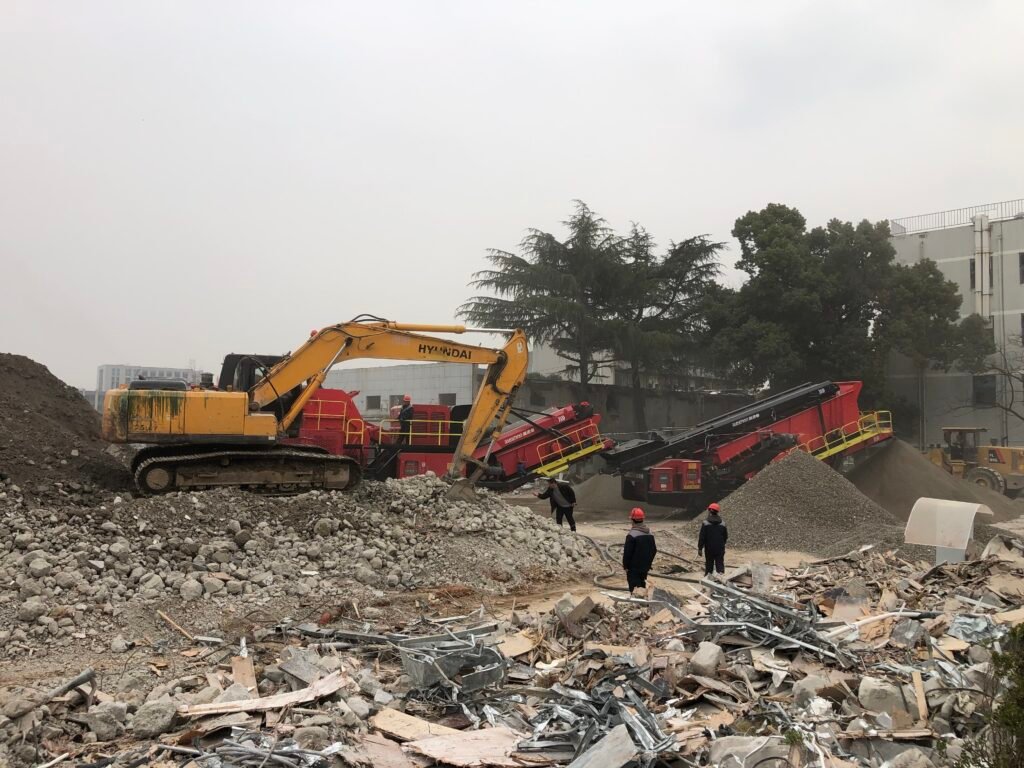
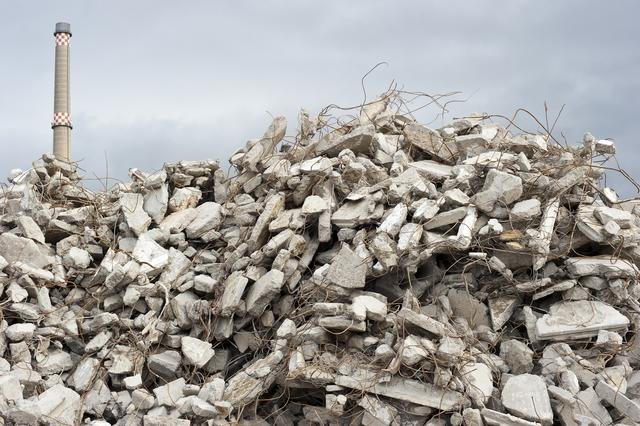
Construction and demolition (C&D) waste is one of the largest waste streams globally. Every year, cities generate millions of tons of concrete, bricks, asphalt, and wood from demolition, renovation, and new construction.
Historically, this waste was sent to landfills. Today, it is a valuable resource.
With the right construction waste recycling equipment, contractors and quarry operators can turn demolition debris into high-quality recycled aggregates (0–5mm, 5–10mm, 10–20mm) that sell for road base, concrete production, and landscaping.
This guide covers everything you need to know about setting up a recycling plant in 2026 — from equipment selection and process flow to profitability analysis and common pitfalls.
Why Recycle Construction Waste?
1. Environmental Regulations
Governments worldwide are banning C&D waste from landfills. In the EU, China, and parts of the US, contractors are legally required to recycle a certain percentage of demolition waste.
2. Profitability
Recycled aggregate is in high demand.
- Raw Material Cost: Often free or very low cost (demolition sites pay you to take the waste).
- Processing Cost: Approximately $2–$5 per ton (fuel, labor, wear parts).
- Selling Price: $10–$25 per ton for graded recycled aggregate.
- ROI: Many operations achieve a return on investment within 6–12 months.
3. Sustainability Goals
Using recycled aggregates reduces the need for virgin mining, lowering the carbon footprint of construction projects.
Key Equipment for Construction Waste Recycling
Not all crushers are suitable for recycling. The presence of rebar (steel reinforcement) and mixed materials (wood, plastic, soil) requires specific equipment.
1. Primary Crusher: Jaw Crusher or Impact Crusher?
| Equipment | Best For | Pros | Cons |
| Jaw Crusher | Large concrete blocks, heavy demolition | High reduction ratio; handles large feed; durable | Produces flatter particles; rebar can tangle |
| Impact Crusher | Mixed concrete, bricks, asphalt | Excellent particle shape; handles rebar well; versatile | Higher wear cost on very hard rock |
Recommendation: For construction waste, an Impact Crusher is generally preferred. The impact crushing action shatters concrete but leaves steel rebar relatively intact, making it easier to separate.
2. Magnetic Separator (Essential)
A overband magnet or drum magnet is mandatory. It removes steel rebar from the crushed material.
- Why? Rebar damages downstream conveyors and screens.
- Revenue: Clean, separated rebar can be sold to scrap metal dealers.
3. Screening Plant
A mobile or modular screen separates the crushed material into different sizes (e.g., 0–5mm, 5–10mm, 10–20mm).
- Recommended: Inclined vibrating screen or horizontal screen for high capacity.
4. Feeder & Conveyor
- Vibrating Feeder: Regulates material flow and pre-screens fines (soil/sand) before the crusher.
- Conveyors: Transport material between stages.
Mobile vs. Stationary Setup: Which is Right?
| Factor | Mobile Setup (Tracked) | Stationary Setup (Fixed) |
| Mobility | High (move between sites) | Low (fixed location) |
| Setup Time | 30 mins – 2 hours | 2–4 weeks (foundation required) |
| Cost | Higher equipment cost | Lower equipment cost |
| Best For | Demolition contractors, short-term projects | Recycling yards, long-term operations |
| Footprint | Compact | Large |
Field Experience:
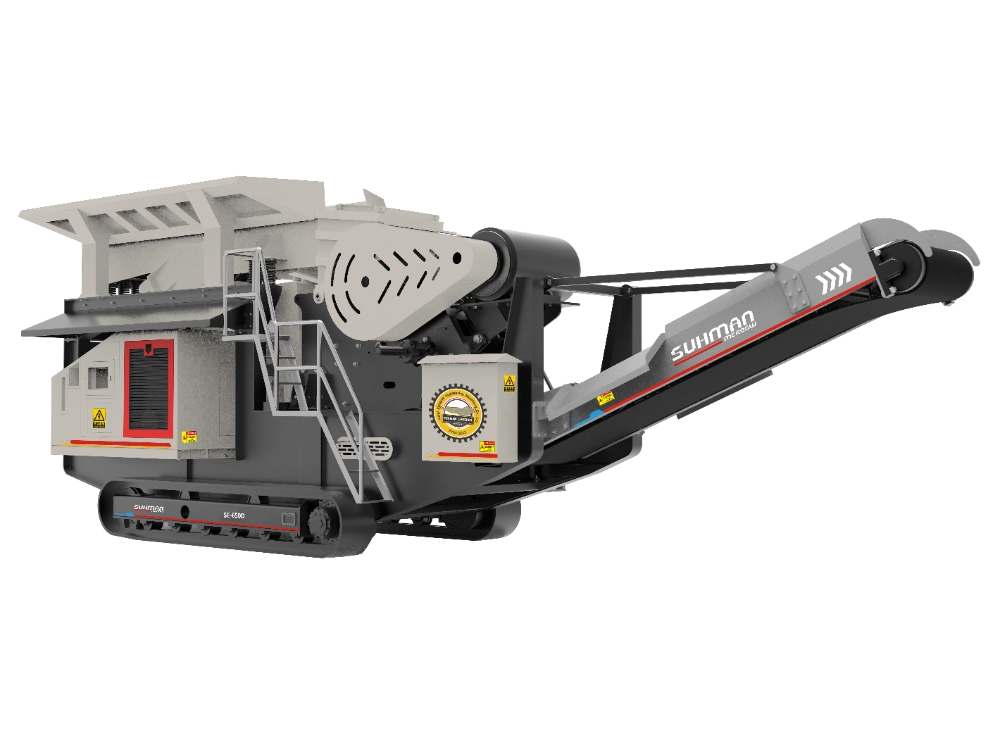
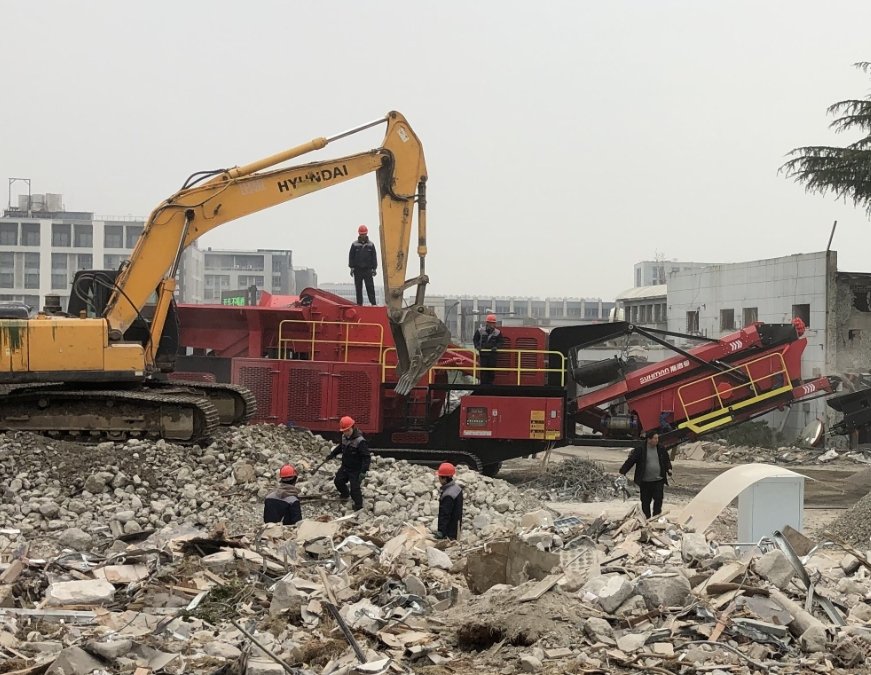
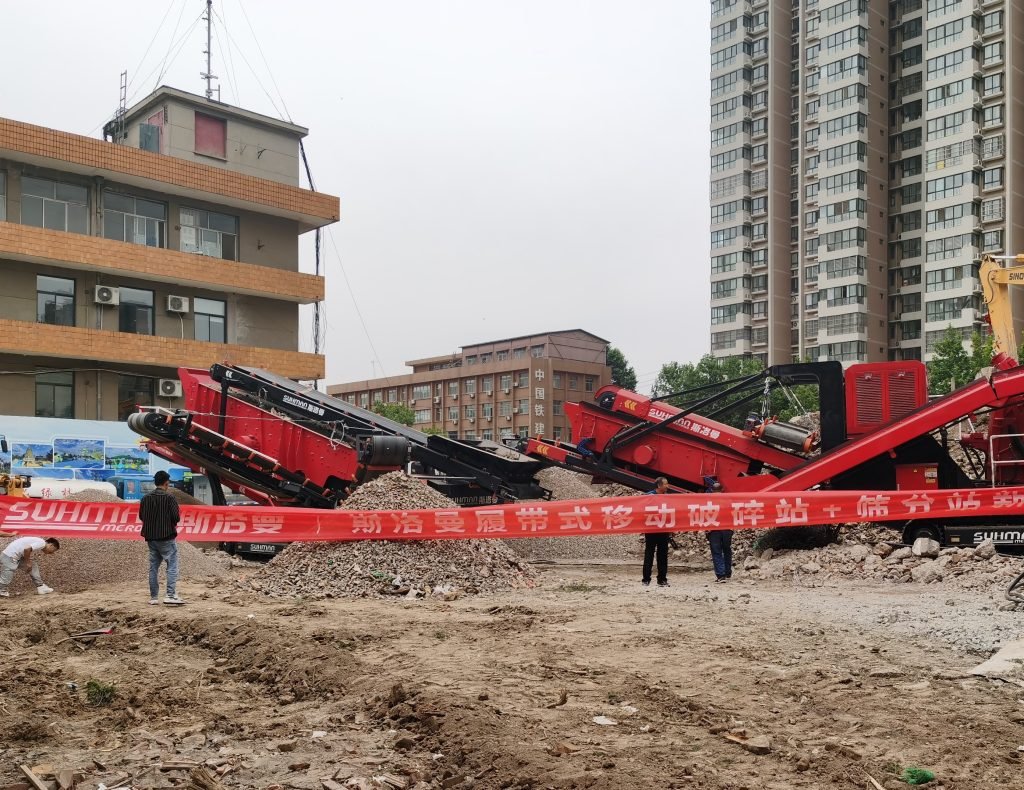
- Choose Mobile if you are a demolition contractor moving from site to site. The SF-580D Mobile Impact Crusher is designed for this — drive to the demolition site, crush on-site, and move to the next.
- Choose Stationary if you have a fixed recycling yard processing waste from multiple sources. A stationary plant is cheaper per ton processed.
Step-by-Step Setup Guide
Step 1: Site Preparation
- Mobile: Flat, compacted ground. No foundation needed.
- Stationary: Concrete foundation, electrical supply, water supply (if washing is needed).
Step 2: Feeding & Pre-Screening
- Load waste with an excavator into a vibrating feeder.
- The feeder removes fines (soil/sand) and regulates flow to the crusher.
Step 3: Crushing
- Feed material enters the Impact Crusher.
- The rotor hurls material against breaker plates, shattering concrete and brick.
- Steel rebar remains largely intact.
Step 4: Magnetic Separation
- Material passes under a magnetic separator.
- Rebar is pulled out and stacked separately.
Step 5: Screening & Grading
- Clean material enters the Screening Plant.
- Separated into sizes:
- 0–5mm: Sand for masonry or backfill.
- 5–10mm: Fine aggregate for concrete.
- 10–20mm: Coarse aggregate for road base.
- Oversize material is recirculated to the crusher (closed circuit).
Step 6: Stockpiling & Sales
- Conveyor belts stack graded aggregate into piles.
- Load onto trucks for sale to concrete plants, road builders, or landscapers.
Profitability Analysis (Example)
Based on a typical 200 TPH mobile recycling operation:
| Item | Value |
| Daily Processing | 1,500 tons (10 hours) |
| Annual Processing | 450,000 tons (300 days) |
| Raw Material Cost | $0 (or negative if paid to take waste) |
| Processing Cost | $3/ton (fuel, labor, wear parts) |
| Total Processing Cost | $1,350,000/year |
| Selling Price (Avg) | $15/ton |
| Total Revenue | $6,750,000/year |
| Scrap Metal Revenue | ~$100,000/year (rebar) |
| Net Profit | ~$5,500,000/year |
Note: This is a simplified example. Actual profitability depends on local material costs, selling prices, and operational efficiency.
Recommended SUHMAN Equipment for Recycling
1. SF-580D Mobile Impact Crusher
- Capacity: 150–350 TPH
- Why: Heavy-duty rotor, built-in magnetic separator option, handles rebar effortlessly.
- Best For: Large-scale demolition and concrete recycling.
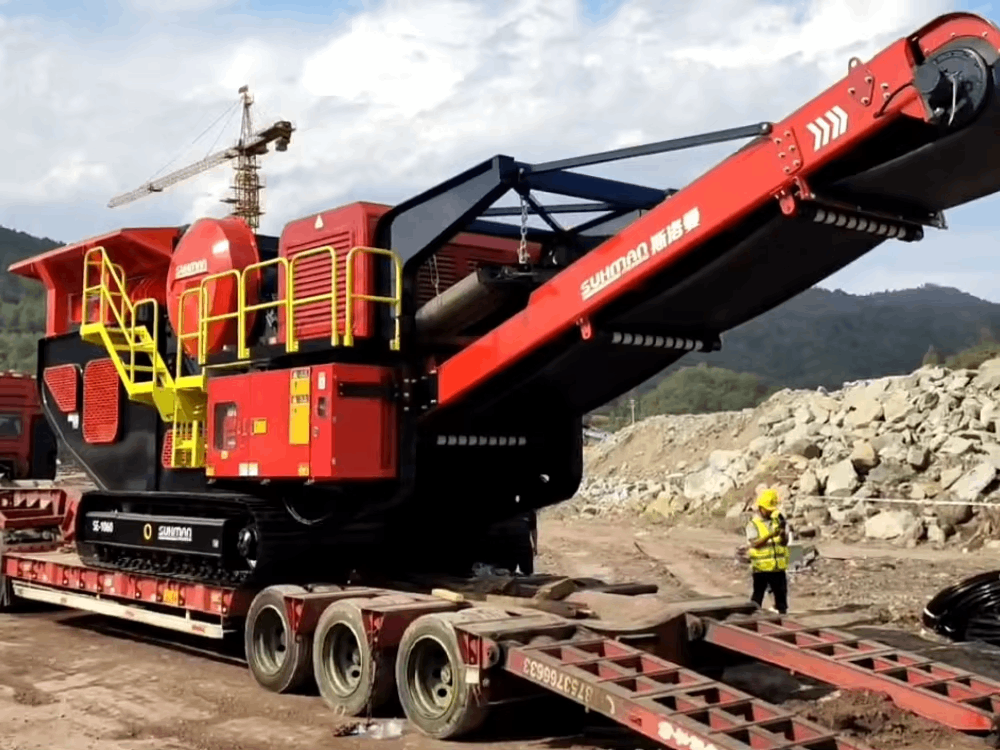
2. SE-650D Mini Mobile Jaw Crusher
- Capacity: 50–130 TPH
- Why: Compact 30-ton design, easy transport, perfect for urban demolition sites with limited space.
- Best For: Small contractors, narrow sites.
3. SS-7018 Mobile Inclined Screener
- Capacity: 200–300 TPH
- Why: 3-deck screen produces 4 sizes simultaneously, high efficiency.
- Best For: Grading recycled aggregate into saleable products.
FAQ
Q: Can recycled concrete be used for new concrete?
A: Yes. Recycled concrete aggregate (RCA) can replace virgin aggregate in non-structural concrete, road base, and landscaping. Some standards allow up to 30% replacement in structural concrete.
Q: How much does a mobile recycling plant cost?
A: A basic mobile setup (Jaw + Screen) starts around $50,000–$80,000. A high-capacity Impact + Screen setup can range from $100,000–$200,000 depending on capacity and options.
Q: Do I need a water washing system?
A: Not always. If the waste is relatively clean (mostly concrete/brick), washing may not be necessary. If there is high soil or clay content, a pre-screening feeder or washing screen may be needed.
Q: How fast can I set up a mobile plant?
A: With SUHMAN tracked crushers, you can be crushing within 30 minutes of arriving on site. No foundation or crane is required.
Conclusion
Construction waste recycling is a profitable and sustainable business. The key to success is choosing the right equipment — specifically an Impact Crusher for its ability to handle rebar and produce high-quality aggregate.
Whether you need a compact mobile unit for urban demolition or a high-capacity tracked plant for large-scale recycling, SUHMAN has the solution.
Get a free consultation & quote: Contact us at +86 13856971828 or email ahsuhman@163.com
Explore our recycling equipment range:https://ahsuhman.com/