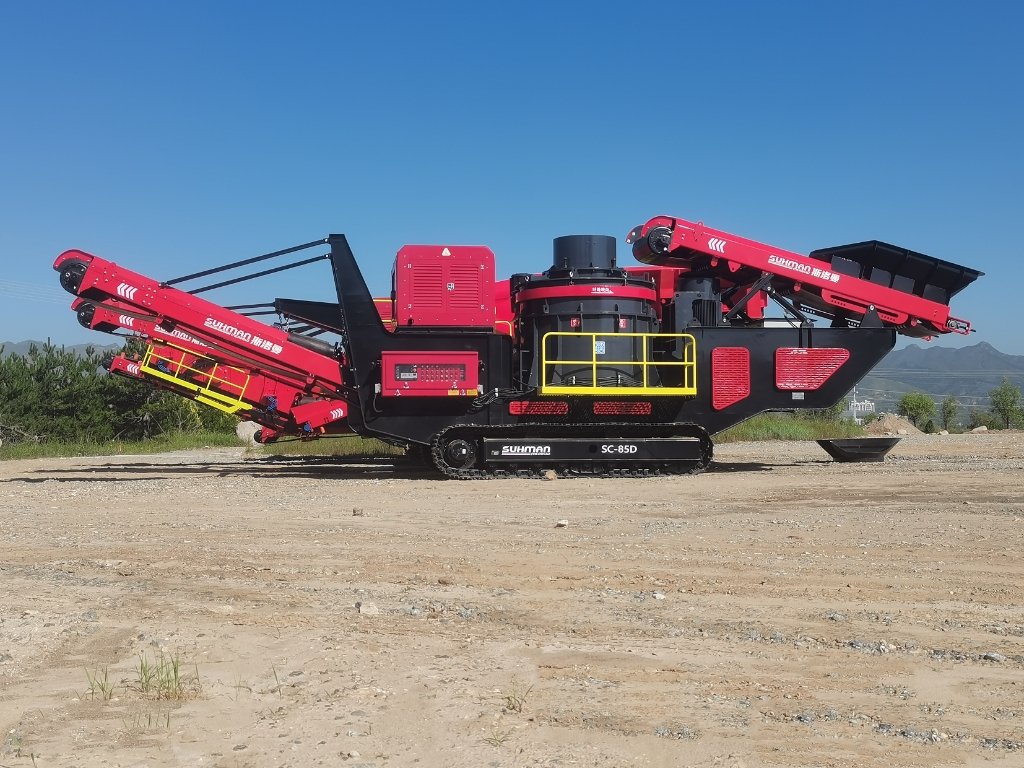
Article Core SummaryMobile crushers integrate feeding, crushing, screening, and conveying into self-propelled units, eliminating long-distance material haulage and reducing carbon emissions at the source
What Are Mobile Crushers?
Mobile crushers are self-contained, track-mounted or wheel-mounted crushing plants engineered to process rocks, ores, and demolition debris directly at extraction or worksite locations. Unlike stationary crushing plants that require materials to be transported over substantial distances, these integrated units combine controlled feeding, size reduction, screening, and radial stockpiling into a single mobile platform—enabling on-site material transformation with minimal logistical overhead and maximum operational agility.
Chapter 1: The Crushing Unit Anatomy — Mechanical Architecture
The crushing unit serves as the technological core of any mobile crusher. Its internal architecture determines both throughput efficiency and product quality. Understanding the mechanical principles behind each crusher type is essential for matching equipment to specific material characteristics and project requirements.
1.1 Primary Crushing: Suhman SE-1060 Mobile Jaw Crusher
The Suhman SE-1060 employs a compressive crushing mechanism within a 1060×750 mm jaw chamber. Material enters the V-shaped crushing cavity formed by a fixed jaw plate and a dynamically oscillating movable jaw. The heavy-duty eccentric shaft drives periodic compression cycles, subjecting the rock to progressively increasing mechanical stress until fracture occurs at its weakest planes.

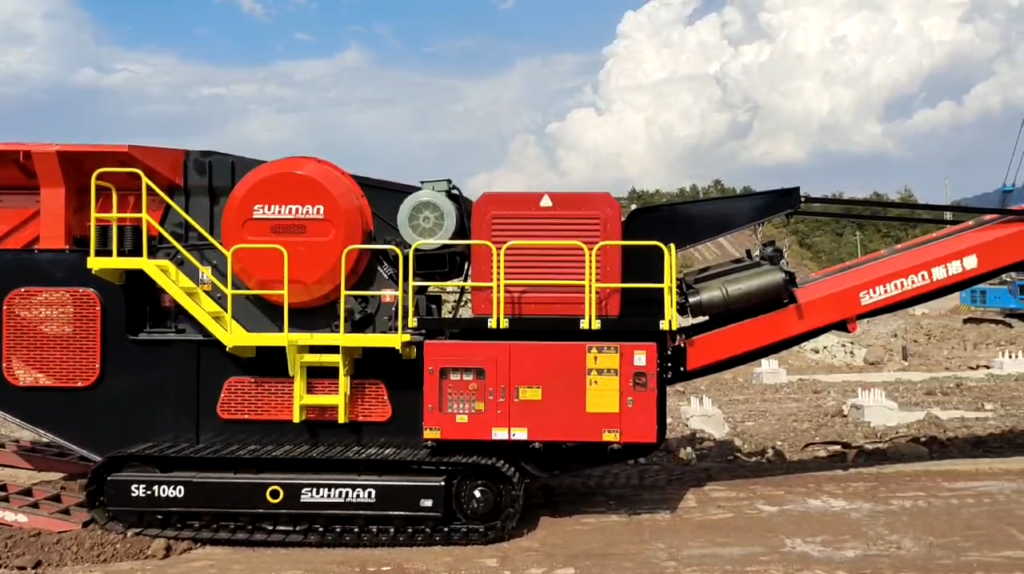
Core Specifications:
| Key Parameter | SE-1060 Specification |
| Processing capacity | 200–250 TPH |
| Max. feed size | 700 mm |
| Discharge port adjustment | 80–250 mm (Hydraulic CSS) |
| Total installed power | 139.4 KW |
| Operating weight | 46 t |
| Track chassis | LDZ55-3657 (30% gradeability) |
Configuration Options: The SE-1060 is available in Single Power (grid connection for urban sites) and Dual Power (integrated 200 KW generator for remote quarries) versions. The hydraulic closed-side setting adjustment allows operators to fine-tune product size from 80 mm to 250 mm without interrupting production.
Field Performance: When processing granite with CSS set at 100–150 mm, field reports indicate sustained throughput in the 180–240 TPH range. For complete technical drawings, detailed component lists, and maintenance schedules, please refer to the SE-1060 Product Page.
1.2 Secondary/Tertiary Crushing: Suhman SY-HP300 Mobile Cone Crusher
The SY-HP300 utilizes interparticle (laminated) crushing. Material is compressed between a gyrating mantle and a stationary concave liner. As the mantle rotates eccentrically, it creates a dynamically narrowing crushing chamber where particles fracture through mutual inter-particle collisions, producing highly cubical aggregate shapes with minimal flakiness.


Core Specifications:
| Key Parameter | SY-HP300 Specification |
| Processing capacity | 180–320 TPH |
| Max. feed size | 250 mm |
| Crushing chamber | Medium/Coarse (Adjustable) |
| Hydraulic control | Overload protection & CSS adjustment |
| Application | Hard rock secondary/tertiary crushing |
Proven Configuration: In a typical hard-rock processing train, the SE-1160 jaw crusher (primary) feeds the SY-HP300 cone crusher (secondary) operating in closed circuit with a three-deck inclined screener. This configuration consistently delivers 250–300 TPH of specification-grade concrete aggregates (0-5, 5-20, 20-40 mm). Detailed hydraulic schematics and liner configurations are available on the SY-HP300 Product Page.
1.3 Impact Crushing: Suhman SF-380D Mobile Impact Crusher
The SF-380D operates on kinetic energy conversion rather than compression. A high-speed rotor carrying wear-resistant blow bars strikes incoming material, propelling it against adjustable impact aprons. The material undergoes rapid size reduction through successive impact events.
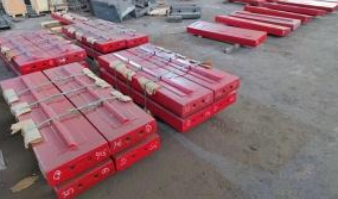

Core Specifications:
| Key Parameter | SF-380D Specification |
| Processing capacity | 150–180 TPH |
| Max. feed size | 600 mm |
| Finished fractions | Up to 3 simultaneous sizes |
| Primary application | Soft rock & construction waste recycling |
| Customization | OEM available |
Operational Advantages: The SF-380D produces exceptional particle shape (cubicality >90%), making it ideal for high-specification concrete. It effectively liberates clean recycled aggregate from concrete slabs while keeping embedded steel intact for magnetic extraction. For detailed blow bar wear curves and recycling application notes, visit the SF-380D Product Page.
Chapter 2: Tracked Mobile Crusher Mobility Architecture
The tracked undercarriage transforms a mobile crusher from a transportable plant into a true all-terrain material processing platform.
2.1 Engineering Fundamentals of Tracked Mobility
The LDZ55-3657 track system on the SE-1060 distributes the 46-ton machine weight across a large ground contact area, achieving ground pressure in the range of 0.4–0.6 kg/cm². This ultra-low ground pressure prevents sinkage in soft soils, mud, or partially consolidated tailings.
Measured Performance Capabilities:
Gradeability: Up to 30% slope negotiation on firm ground
Turning radius: Near-zero pivot turn capability via independent left/right track speed control
Deployment time: Fully operational within 30 minutes of transport trailer detachment
Strategic Advantage: Unlike wheeled units requiring firm concrete/asphalt surfaces, tracked mobile crushers operate directly on rough quarry floors, eliminating site preparation costs ($50,000–$200,000 typically required for stationary plants).
Chapter 3: Industrial Applications and Material-Crusher Matching
3.1 Hard Rock Quarrying — Granite, Basalt, Andesite
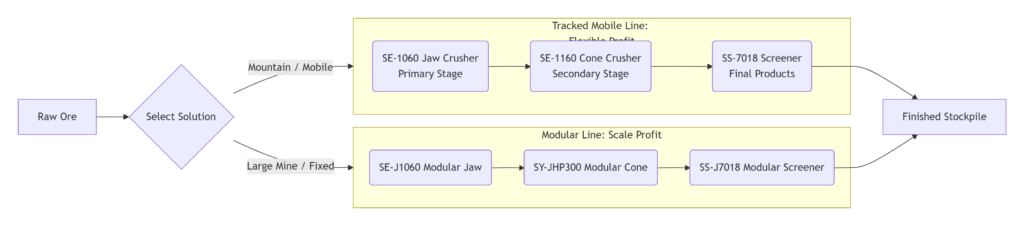
High-compressive-strength rocks (>150 MPa) demand the jaw + cone crusher combination. A proven deployment uses the SE-1060 Mobile Jaw Crusher as the primary unit, feeding the SY-HP300 Mobile Cone Crusher in closed circuit with a three-deck inclined screener.
Process Flow & Output:
Raw blasted rock (max 700 mm) → SE-1060 jaw crusher → primary crushed product (150–200 mm)
Primary product → SY-HP300 cone crusher → secondary crushed product
Secondary product → Three-deck screener → three finished fractions (0-5, 5-20, 20-40 mm)
Oversize material → return conveyor → back to SY-HP300 for recirculation
Typical Sustained Throughput: 250–400 TPH, depending on rock abrasiveness and feed gradation consistency.
3.2 Construction and Demolition Waste Recycling
Urban demolition generates heterogeneous material streams containing concrete, masonry, and embedded steel reinforcement. The SF-380D Mobile Impact Crusher excels in this environment:
Workflow:
Primary sizing: Concrete slabs enter the 600 mm feed opening. High-speed rotor impact fractures concrete along natural weakness planes.
Ferrous extraction: Overband magnetic separator removes steel reinforcement before screening.
Classification: Integrated screening separates finished recycled aggregate fractions meeting ASTM C33 specifications.
Environmental Compliance: Integrated water spray systems suppress airborne particulate matter, satisfying urban dust control regulations.
3.3 Soft Rock Processing — Limestone, Dolomite, Bluestone
Limestone deposits (compressive strength 30–80 MPa) present lower energy requirements per tonne. The SF-380D Mobile Impact Crusher maintains high throughput rates of 150–180 TPH while producing exceptional particle shape for high-specification concrete and asphalt applications.
Chapter 4: Mobile vs. Stationary Crushers — Engineering Trade-off Analysis
The following comparison synthesizes operational data from multiple industry sources:
| Parameter | Mobile Crushers | Stationary Crushers | Engineering Implication |
| Maximum throughput | Up to 700 TPH | Up to 2,000+ TPH | Mobile units constrained by transport width |
| Setup time | 30 min – 4 hours | 4–12 weeks | Mobile eliminates civil works |
| Site preparation cost | $5,000–$20,000 | $50,000–$200,000 | Fixed plants require extensive infrastructure |
| Material haulage cost | Eliminated | $0.50–$3.00 per tonne | Mobile saves $50,000–$200,000 annually |
| Capital expenditure | $200,000–$600,000+ | $500,000–$2,000,000+ | Mobile requires lower upfront investment |
| Operating cost per tonne | Higher ($2.00–$4.00) | Lower ($1.00–$2.50) | Stationary wins on OpEx at high volumes |
| Residual value | 30–45% at 15,000 hrs | 10–25% | Mobile retains higher liquidity |
| Permitting complexity | Low (temporary equipment) | High (building permits) | Mobile avoids 3–6 month delays |

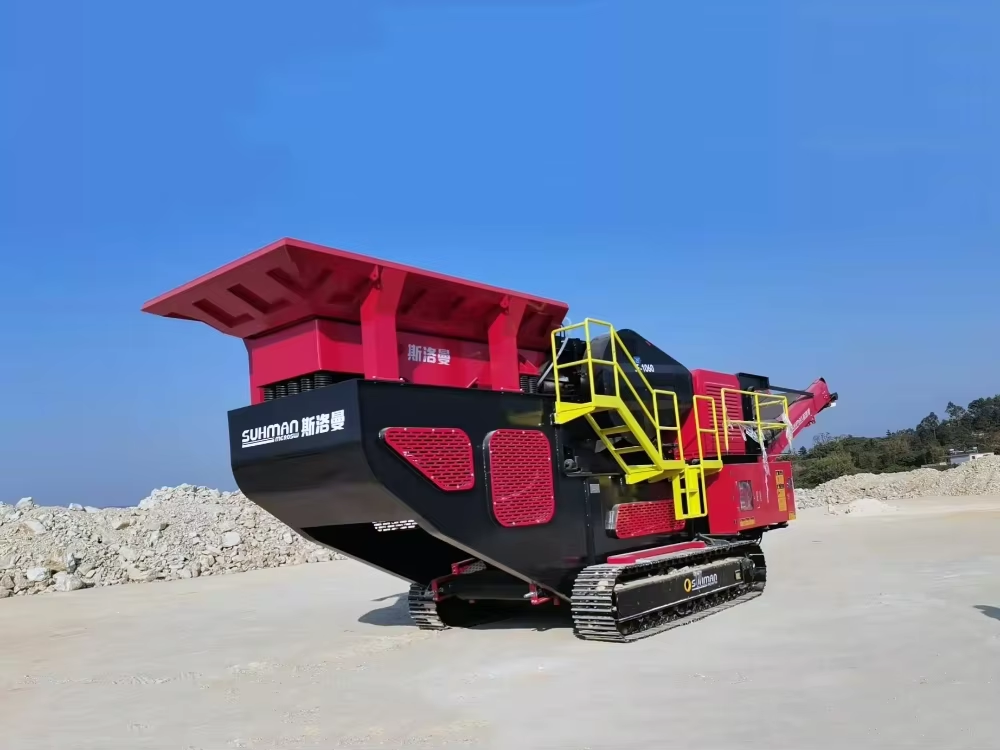
Quantitative Decision Model: If your operation extracts from a single stable deposit with >500 TPH sustained demand over 10+ years, stationary plants offer superior long-term economics. If you operate across multiple quarries or process construction waste, mobile crushers provide unmatched strategic flexibility.
Chapter 5: Selection Methodology — A Systematic Engineering Approach
Selecting the appropriate mobile crushing solution requires systematic evaluation across multiple engineering dimensions. Follow this structured methodology:
Step 1 — Material characterization. Conduct laboratory analysis on representative samples. Measure uniaxial compressive strength (UCS), Los Angeles abrasion value, moisture content, and feed size distribution (PSD).
Step 2 — Define target product specifications. Specify required output fractions (0-5 mm sand, 5-20 mm fine aggregate, 20-40 mm coarse aggregate) and corresponding quality parameters (flakiness index, crushing value).
Step 3 — Match crusher type to material hardness:
UCS >150 MPa (granite, basalt) → SE-1060 Jaw Crusher + SY-HP300 Cone Crusher
UCS 50–150 MPa (medium-hard rock) → SE-1060 Jaw Crusher + SF-380D Impact Crusher
UCS <50 MPa (limestone, recycled concrete) → SF-380D Impact Crusher ± optional prescreening

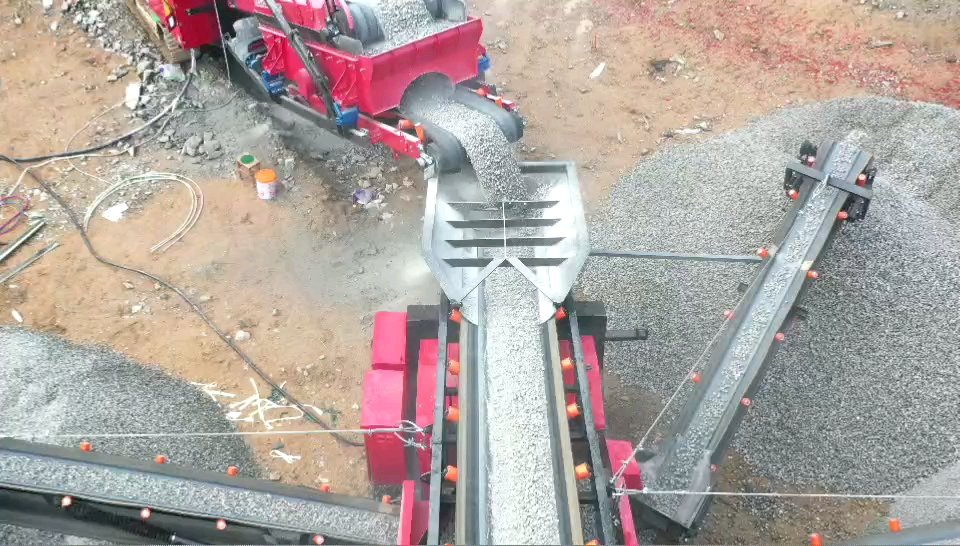
Step 4 — Assess mobility requirements. Rugged, uneven, or soft ground conditions require tracked mobile crushers (0.4–0.6 kg/cm² ground pressure). Confined urban sites benefit from near-zero turning radius capability.
Step 5 — Determine throughput requirements. Match crusher capacity to project demands: <200 TPH (compact units), 200–400 TPH (standard SE-1060 + SY-HP300 combination), >400 TPH (consider multiple units or stationary alternatives).
Step 6 — Evaluate power infrastructure. Grid power unavailable? Select dual-power version with integrated diesel generator. Stable grid connection? Choose single-power version (reduces fuel consumption and emissions).
Step 7 — Calculate total cost of ownership (TCO). Factor capital cost, energy cost (diesel vs. electricity), wear parts replacement, maintenance labor, and expected residual value. For customized TCO calculations based on your specific operational parameters, contact our engineering team.
Chapter 6: The Global Manufacturing Landscape — Strategic Advantages of Chinese Mobile Crusher Manufacturers
The mobile crushing equipment industry has undergone significant geographic consolidation. While European OEMs (Kleemann, Sandvik, Metso) maintain premium positioning, manufacturing capacity has concentrated in the Yangtze River Delta region of China, where Anhui Province serves as a critical hub.
Supply Chain Advantages:
Component proximity: Bearing suppliers (SKF/FAG), hydraulic system integrators (Bosch Rexroth), and structural steel fabricators operate within 200 km of final assembly plants
Cost efficiency: Comparable-specification tracked mobile crushers from Chinese manufacturers price 40–60% lower than European equivalents, while incorporating identical core components
Export logistics: Proximity to Shanghai and Ningbo ports reduces inland freight costs
Suhman’s Differentiation — Military-Industrial Heritage: Suhman operates under Anhui Dongfeng Electromechanical Co., Ltd. (affiliated with China’s defense industrial base). This lineage translates into:
Quality management systems aligned with military manufacturing standards
100% pre-shipment load testing—each unit undergoes minimum 8-hour simulated quarry operation before dispatch
Material traceability protocols for critical structural components
Verification Protocol: The price advantage is meaningful only with rigorous quality assurance. We recommend requesting factory audit reports, weld procedure specifications, critical component traceability documentation, and load test certificates during your procurement process.
Chapter 7: Technology Trajectories — Electrification, Automation, and Modular Architectures
Three convergent trends are reshaping the mobile crushing equipment sector:
7.1 Dual-Power and Hybrid Powertrains
Stringent emission regulations (EU Stage V, EPA Tier 4 Final) drive powertrain diversification. Suhman’s dual-power configuration enables operation from grid electricity when available (reducing fuel consumption by 60–80%) and seamless switching to integrated diesel generation when grid power is unavailable.
7.2 Telematics and Predictive Maintenance
Modern tracked mobile crushers incorporate IoT-enabled condition monitoring. Sensors track bearing vibration signatures, lubrication oil temperature, and hydraulic system pressure in real time. Machine learning algorithms predict component degradation trajectories, enabling scheduled maintenance before catastrophic failures occur.
7.3 Modular Crushing Circuits
Contemporary systems employ standardized modules that can be rapidly reconfigured into multiple circuit topologies. The same jaw module can be paired with a cone module for hard rock processing or an impact module for construction waste recycling, extending equipment useful life through architectural flexibility.
FAQ
Q1: What is the actual throughput of the Suhman SE-1060 Mobile Jaw Crusher when processing granite?
The SE-1060 has a rated capacity of 200–250 TPH. Field measurements indicate sustained throughput of 180–240 TPH when processing granite with CSS set at 100–150 mm. Actual performance varies with feed gradation, moisture content, and crusher CSS setting. Clay-bound material can reduce effective throughput by 30–40%. For application-specific throughput projections, consult our engineering team.
Q2: Can the SE-1060 operate without an external power supply?
Yes. The dual-power version integrates a 200 KW diesel generator set, enabling completely autonomous operation. The single-power version requires connection to a 380V/50Hz three-phase grid supply. The dual-power configuration allows seamless switching based on site infrastructure availability.
Q3: What voltage and current capacity is required for the single-power SE-1060?
The SE-1060 single-power version total crushing operation power is 139.4 KW. At 380V/50Hz, this requires approximately 210–250A of three-phase supply capacity. For 440V/60Hz systems, current draw reduces proportionally. Suhman engineers conduct remote diagnostics and can dispatch on-site support if electrical issues arise during commissioning.
Q4: How does the tracked mobility affect site preparation compared to wheeled units?
The SE-1060’s LDZ55-3657 tracked chassis generates 0.4–0.6 kg/cm² ground pressure, preventing sinkage in soft soils where wheeled equipment would become immobilized. Site preparation requires only basic leveling—no concrete foundations or drainage systems. One operator can deploy the unit within 30 minutes of transport trailer detachment.
Q5: What after-sales service does Suhman provide for international customers?
Suhman dispatches engineers to the customer’s site for commissioning and operator training upon equipment delivery. Training includes hands-on operation, daily maintenance procedures, and troubleshooting protocols. Engineers remain on-site until customer personnel can operate the equipment independently. Remote diagnostic and troubleshooting guidance is provided via video calls throughout the equipment lifecycle. A complete set of wear parts is provided with each machine, and long-term spare parts supply is contractually guaranteed.
Q6: How do I select the right crusher type for my specific material?
Material hardness is the primary selection criterion. For hard rock (granite, basalt, UCS >150 MPa), select jaw + cone combination (SE-1060 + SY-HP300). For medium-hard rock (UCS 50–150 MPa), select jaw + impact combination (SE-1060 + SF-380D). For soft rock and recycling (UCS <50 MPa), select impact crusher (SF-380D). For personalized crusher selection based on your material characteristics, submit your rock samples or PSD data to our engineering team.
Data sources: Grand View Research (“Mobile Crusher Market Size Report, 2023-2030”), Value Market Research (2026 mobile crusher market analysis), QY Research (2024 tracked mobile crusher market report), United Nations Department of Economic and Social Affairs (World Urbanization Prospects 2024), and Suhman product technical documentation. Market projections represent consensus estimates from multiple independent research firms. Product specifications are sourced directly from manufacturer documentation and reflect current production configurations.
Ready to discuss your project requirements? Contact our engineering teamfor a customized crushing solution and quotation within 24 hours.