By SUHMAN Chief Engineer Team
In the heavy-duty world of mining and aggregate production, a jaw crusher is not just a machine; it is the heart of your production line. At the SUHMAN factory in Hefei, we design machines to withstand the brutal forces of compressing granite, basalt, and iron ore. However, even the most robust military-grade machinery relies on a disciplined maintenance protocol to achieve its full lifecycle potential.
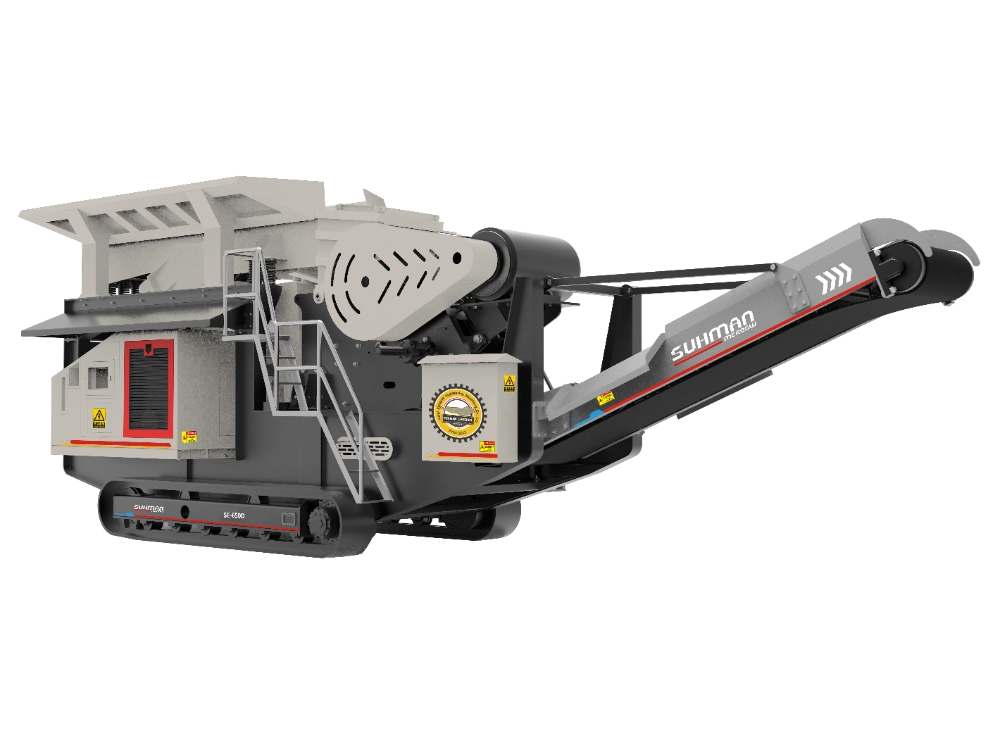
Most maintenance guides tell you to “check the bolts.” This guide goes deeper. We will analyze the mechanics of wear, the chemistry of lubrication, and the physics of vibration that determine the lifespan of your SE-1060, SE-1160, or SE-650D mobile jaw crusher.
This is the preventive maintenance protocol used by our factory engineers to ensure zero-failure operation.


1. The “Golden 50 Hours”: The Break-In Protocol
A common mistake in the industry is treating a new crusher like an old one. The first 50 hours of operation are critical. During this period, metal surfaces are mating, and micro-imperfections in the casting are settling.
Factory Protocol for New Machines:
- Torque Re-Verification (Hour 10 & Hour 25): Factory torque settings are precise, but initial vibration can cause micro-movements. Re-torque the flywheel bolts, jaw plate wedges, and side plate bolts to specification.
- Pro Tip: Use a calibrated torque wrench. Do not rely on “feel.”
- Oil Filtration Analysis: At Hour 50, drain the hydraulic and gear oils. The initial run-in generates metallic micro-particles. Filtering or replacing the oil removes these abrasives before they score the bearings or hydraulic pumps.
- Thermal Cycle Check: Monitor the bearing temperature delta ($\Delta T$). A new bearing may run slightly hotter as the grease distributes. Ensure the temperature stabilizes within 40°C above ambient.
2. Jaw Plate Wear Analysis: Extending Life by 30%
The jaw plate (dies) is your primary consumable. However, premature replacement is often a result of improper feeding, not just material hardness.
The “W” Pattern and Rotation Strategy
As the jaw plate wears, it develops a “W” shape profile.
- The Mistake: Many operators wait until the teeth are gone before replacing. By then, the crushing efficiency has dropped by 20-30% due to the increased gap at the bottom.
- The Factory Solution: Rotate the jaw plates when the wear reaches 30-40% of the tooth height.
- Action: Flip the fixed jaw plate 180 degrees. The unworn bottom section becomes the new feed zone. This simple action doubles the life of the casting.
- Material Science: Ensure you are using the correct alloy. For abrasive granite, Mn22Cr2 (22% Manganese, 2% Chromium) is superior to standard Mn18. SUHMAN supplies Mn22Cr2 plates that offer 20% longer wear life.
Choke Feeding for Even Wear
Uneven wear (one side worn, the other new) is caused by off-center feeding.
- Protocol: Ensure the feed belt is centered and the material is distributed across the full width of the feed opening. This prevents “shoulder wear” and ensures the eccentric shaft load is balanced.


3. Lubrication Science: It’s Not Just Grease
Lubrication failure accounts for over 50% of premature bearing failures. It is not just about adding grease; it is about the right viscosity and the right purge cycle.
Grease Compatibility
- The Rule: Never mix Lithium-based grease with Calcium-based grease. They can react to form a soap that loses its structure, turning into a liquid that leaks out.
- SUHMAN Spec: We recommend a high-quality NLGI 2 Lithium Complex grease with EP (Extreme Pressure) additives.
- Cold Climate: Use NLGI 1 or a synthetic base oil to ensure flowability in winter.
- High Temp: Ensure the dropping point is above 180°C.
The “Purge” Method
Adding grease to a sealed bearing is not enough; you must purge the old, contaminated grease.
- Run the machine at idle speed.
- Inject grease into the bearing zerks.
- Watch the seal: Continue injecting until you see fresh, clean grease pushing out from the labyrinth seal.
- Wipe clean: Remove the old grease. This ensures no abrasive dust remains trapped against the seal.
Warning: Over-greasing is dangerous. If you fill the bearing housing 100% with grease, the churning action creates heat. The housing should only be 30-50% full of grease.
4. The Toggle Plate: The Safety Fuse & Tension Adjustment
The SF-380D is the king of construction waste recycling. However, rebar and iron present unique maintenance challenges.
4.1 Iron Remover (Magnetic Pulley) Maintenance
- Check: The magnetic pulley removes rebar from the crushed concrete.
- Protocol: Inspect the magnetic belt daily. If rebar wraps around the pulley, it can damage the belt or motor.
- Cleaning: Remove accumulated iron debris from the magnetic surface to maintain magnetic field strength.
- Belt Tension: Ensure the magnetic belt is properly tensioned. A loose belt will slip and fail to remove iron effectively.
4.2 Rebar Tangles in the Rotor
- Risk: Long rebar can wrap around the rotor shaft, causing imbalance and overheating.
- Protocol: If the machine stops due to a jam, inspect the rotor shaft immediately. Use a torch or hydraulic cutter to remove any tangled rebar before restarting.
5. Bearing & Eccentric Shaft Diagnostics
The eccentric shaft and bearings (SKF/FAG) are the most expensive components. Their failure is catastrophic.
Vibration Analysis
SUHMAN crushers are balanced to ISO 1940 standards. However, vibration can increase over time due to:
- Flywheel Imbalance: Check the flywheel keys. If the key shears, the flywheel will wobble, destroying the shaft.
- Loose Foundation: For mobile crushers, check the chassis mounting bolts. A loose chassis amplifies vibration.
Temperature Monitoring ($\Delta T$)
Install infrared thermometers or wireless sensors on the bearing housings.
- Normal: Ambient + 20°C to 40°C.
- Warning: Ambient + 50°C. Check lubrication immediately.
- Critical: Ambient + 60°C. Stop the machine. The bearing is likely spalling or the grease has carbonized.
6. Mobile Crusher Specifics: Chassis & Hydraulics
Unlike stationary plants, SUHMAN mobile jaw crushers (SE Series) have dynamic components that require specific attention.
- Hydraulic Oil Analysis: The hydraulic system controls the CSS (Closed Side Setting) and the feeder speed.
- Check: Every 500 hours, take an oil sample. Check for water contamination (which looks milky) and particle count.
- Action: Replace hydraulic filters every 500 hours, regardless of the indicator light.
- Track Shoe Tension: Mud and stone buildup in the track frame can seize the idlers.
- Protocol: Grease the track tension cylinders weekly. If the track is too loose, it can derail; too tight, and you burn out the travel motor.
- Dual-Power System: If you run the SE-1060 in diesel mode, treat the generator set with the same respect as the crusher.
- Protocol: Change engine oil every 250 hours. Check belt tension on the alternator and water pump.
7. The SUHMAN Advantage: Engineering for Maintainability
We understand that maintenance in a remote quarry is difficult. That is why SUHMAN designs for maintainability.
- Modular Access: Our SE-1160 features large access panels that allow technicians to reach the toggle plate and bearings without removing the flywheel.
- Centralized Lubrication: Optional automatic lubrication systems ensure bearings are greased precisely every 4 hours, eliminating human error.
- Genuine Wear Parts: Using generic jaw plates can alter the crushing geometry, reducing capacity by 15%. SUHMAN parts are CAD-modeled to match the original chamber profile perfectly.
8. FAQ: Factory Engineer Answers
Q: Can I use a welding rod to fix a cracked toggle plate?
A:Absolutely not. The toggle plate is designed to fracture at a specific load to protect the machine. Welding it makes it stronger, which means the next failure will likely crack the main frame. Always replace the toggle plate.
Q: How often should I check the CSS (discharge setting)?
A: Check the CSS every shift. As jaw plates wear, the CSS naturally increases. Adjust the hydraulic wedge to maintain the correct product size.
Q: My jaw crusher is vibrating excessively. What is the first thing to check?
A: Check the flywheel keys and the anchor bolts on the chassis. 90% of excessive vibration is caused by a loose flywheel or unbalanced feed.
9. Conclusion: Maintenance as an Investment
A jaw crusher is a capital investment. A disciplined maintenance protocol is the insurance policy that protects that investment. By following this factory-grade protocol—focusing on torque, lubrication science, and wear analysis—you can expect your SUHMAN mobile jaw crusher to deliver reliable performance for over 15 years.
Need Genuine Spare Parts or Technical Support? Download our full maintenance manual or contact the SUHMAN technical team.