If you’re an agent, distributor, or equipment dealer looking to source jaw crushers from China, you’ve probably searched for “jaw crusher manufacturer China” and found hundreds of results. Some are factories. Some are trading companies. Some are both. And it’s nearly impossible to tell the difference from a website alone.
This guide is written for buyers who want to find a reliable Chinese jaw crusher manufacturer — not just the cheapest price, but a partner who will deliver consistent quality, provide after-sales support, and help you build a profitable, long-term business.
We’ll cover how to verify manufacturers, what specifications matter, how to avoid common pitfalls, and what to expect at each price point. All recommendations are based on real-world experience in the Chinese crushing equipment industry.
Part 1: The Chinese Jaw Crusher Market — Three Types of Suppliers
According to the USGS (U.S. Geological Survey), global crushed stone production exceeds 3 billion tons annually, driving demand for crushing equipment worldwide. China has become the world’s largest manufacturer of mobile jaw crushers for three reasons:
- Complete supply chain — China produces everything from manganese steel jaw plates and hydraulic pumps to electric motors and track chassis.
- Manufacturing scale — Chinese factories can produce 50-100 mobile crushers per month, with delivery times of 20-35 days. European manufacturers typically have 3-6 month lead times.
- Price advantage — Chinese mobile jaw crushers typically cost 40-60% less than European equivalents with similar specifications, while using many of the same core components.
But not every company that calls itself a “manufacturer” actually manufactures. Here’s how to tell the difference:
| Type | What They Do | Pros | Cons | How to Identify |
| Trading Company | Buys from factories, adds markup, sells under their own brand | Wide product range, good English | No quality control, no technical support, 20-40% markup | No factory address, shows showroom not factory |
| Assembly Shop | Buys standard components, bolts them together | Lower price, fast delivery | Inconsistent quality, no design capability | Small facility, mostly assembly area |
| True Manufacturer | Designs, fabricates, assembles, tests in-house | Quality control, customization, technical support | Higher price than trading companies | Own factory with laser cutters, welding stations |
Red flag: If a company’s website shows products from multiple unrelated brands, or if their product specifications are identical to another company’s but with a different logo, they’re likely a trading company.
Part 2: How to Verify a Manufacturer — 5 Steps
Step 1: Factory Verification
Ask for a video call factory tour. A legitimate manufacturer will gladly show you their facility. Look for:
- Raw material storage (steel plates, manganese steel for jaw plates)
- Fabrication area (laser cutting machines, welding stations)
- Assembly area (where crushers are built)
- Testing area (where finished machines are test-run)
Look up the factory address on Baidu Maps or Google Maps. A real factory will show as an industrial facility. A trading company will show as an office building.
Step 2: Component Sourcing
A jaw crusher’s reliability depends on its components. Ask the manufacturer for a complete component list:
| Component | What to Look For | Red Flags |
| Engine/Motor | Branded: Cummins, Deutz, Weichai, Shangchai | Unbranded, no model number |
| Hydraulic Pump | Rexroth, Yuken, Hengli | Unbranded, no specifications |
| Bearings | SKF, FAG, NSK | Unbranded |
| Jaw Plate Material | Mn22Cr2 high manganese steel | Generic “high quality steel” |
| PLC/Control | Siemens, Mitsubishi | No brand mentioned |
For reference on jaw plate material specifications, see Manganese Steel properties on Wikipedia.
Step 3: Quality Control Process
Ask about their quality control:
- Incoming inspection — Do they inspect raw materials before using them?
- In-process inspection — Are there QC checkpoints during assembly?
- Final testing — Is each machine test-run before shipping?
- Documentation — Do they provide test reports and a complete parts list?
Step 4: Certifications
or export markets, these certifications are essential:
- CE marking — Required for European markets. Verifies EU safety, health, and environmental compliance.
- ISO 9001 — Quality management system certification.
- EPA Tier 4 / Euro V — Engine emission standards for North American and European markets.
You can verify CE certificates through the issuing body’s database. A legitimate manufacturer will provide the certificate number and issuing body. For information on CE marking requirements, see the European Commission’s CE marking guide.
Step 5: After-Sales Support
A jaw crusher is a long-term investment. The manufacturer’s after-sales support determines your total cost of ownership:
| Support Area | What to Expect | Questions to Ask |
| Commissioning | Engineer dispatched to site | Do you send engineers overseas? Who covers travel costs? |
| Training | Operation and maintenance training | How long does training take? Is documentation provided? |
| Remote Support | Video call troubleshooting | What are the response hours? |
| Spare Parts | Wear parts supplied with machine | What parts are included? How quickly can additional parts be shipped? |
| Warranty | 12-month standard warranty | What does the warranty cover? What is excluded? |
Part 3: Chinese Jaw Crusher Product Lines and Pricing
Product Types
Chinese manufacturers offer three main types of jaw crushers:
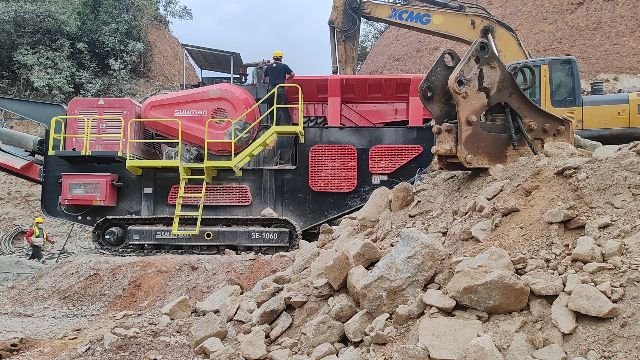
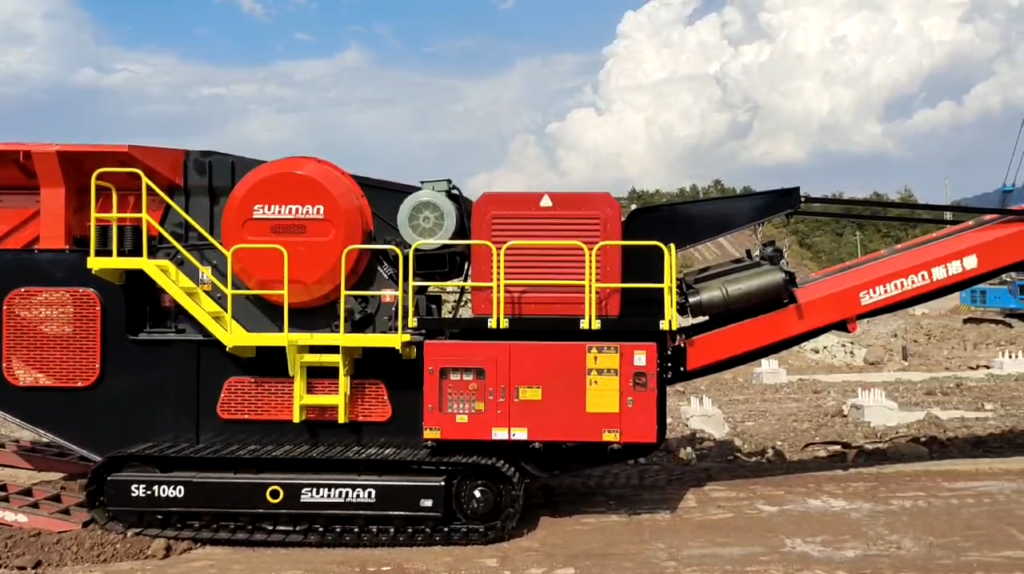
Mobile Jaw Crushers (Tracked) The most popular type for agents and distributors. No foundation needed, can be relocated quickly. For example, the SE-1060 Mobile Jaw Crusher handles 200-250 TPH with 700mm max feed size, while the SE-650D Mini Mobile Jaw Crusher is designed for smaller operations at 50-130 TPH.
Stationary/Modular Jaw Crushers For operations that don’t need mobility. The SE-J1060 Modular Jaw Crusher offers 200-250 TPH at a lower cost per ton than mobile versions.
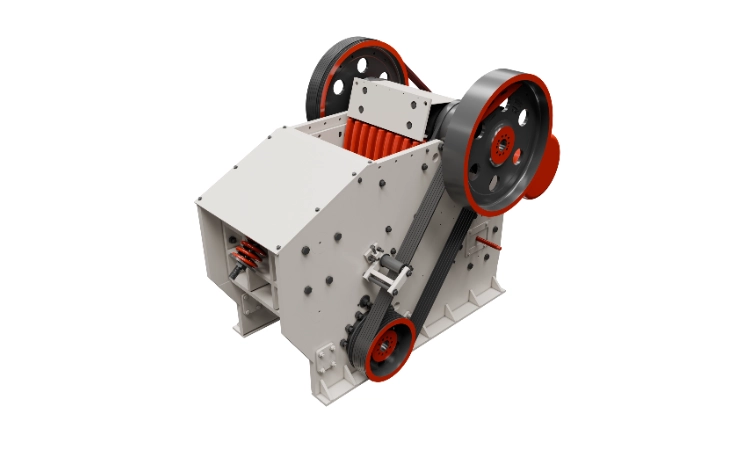
Dual-Core Jaw Crushers A unique design that provides higher reduction ratios. The TZ-6510 Dual Core Jaw Crusher handles 80-300 TPH with a 650×1000mm feed opening.


Price Ranges (FOB China)
| Capacity Range | Chinese Manufacturer | European/American Brand | Savings |
| 50-130 TPH (Mini) | $80,000 – $12,000 | $120,000 – $200,000+ | 50-60% |
| 200-250 TPH (Standard) | $190,000 – $200,000 | $250,000 – $450,000+ | 55-60% |
| 230-280 TPH (Heavy Duty) | $230,000 – $260,000 | $350,000 – $600,000+ | 55-60% |
For comparison, see pricing from Terex MPS mobile jaw crushers and EvoQuip tracked jaw crushers.
Additional Costs to Factor In
| Cost Item | Estimated Cost | Notes |
| Ocean freight | $5,000 – $25,000 | Depends on destination |
| Import duties | 5-20% of CIF value | Varies by country |
| Insurance | 0.3-0.5% of CIF value | Recommended |
| Customs clearance | $500 – $2,000 | Per shipment |
| On-site commissioning | $3,000 – $8,000 | Engineer travel |
For technical specifications on aggregate quality standards, refer to ASTM C33/C33M for concrete aggregates.
Part 4: Common Pitfalls to Avoid
Pitfall 1: Low Price, Shoddy Components
The most common trap. A manufacturer offers a price 30% below market rate, but uses unbranded motors, thin steel plates, and generic bearings. The machine works for 6 months — then the frame cracks or the shaft fails.
How to avoid: Always ask for a complete component list. If they won’t provide it, walk away.
Pitfall 2: Inflated Capacity Ratings
A manufacturer claims 300 TPH for a jaw crusher that should realistically produce 200 TPH. The buyer discovers the difference only after installation — when the machine can’t keep up with the feed rate.
How to avoid: Ask for reference projects with verified production data. A legitimate manufacturer will provide real operating data, not just nameplate ratings.
Pitfall 3: Trading Companies Disguised as Manufacturers
Some trading companies invest in professional-looking websites with factory photos that aren’t theirs. They offer lower prices because they don’t have overhead — but they also can’t provide technical support or customization.
How to avoid: Request a live video call factory tour. Ask specific questions about the fabrication process. A trading company will struggle to answer technical questions.
Pitfall 4: No After-Sales Commitment
Some manufacturers sell the machine and disappear. When a part breaks, there’s no replacement available. When the operator has a question, there’s no one to call.
How to avoid: Ask for a written after-sales commitment before signing. Verify it by contacting their existing customers.
Part 5: 10 Questions to Ask Before Ordering
1.What is your monthly production capacity?
2.What is the standard lead time for a mobile jaw crusher?
3.Can you provide references from existing distributors in my region?
4.What is your warranty policy, and what does it cover?
5.How do you handle spare parts orders? What is the typical delivery time?
6.Do you offer exclusive territory rights? What are the minimum order requirements?
7.Can you customize the machine for my market’s specific requirements?
8.What certifications do your machines carry?
9.Do you dispatch engineers for on-site commissioning?
10.Can I visit your factory before placing an order?
For safety guidance on heavy equipment operation, see OSHA’s construction equipment safety standards.
How We Verify This Information
All technical specifications and price ranges in this article are based on publicly available data from Chinese manufacturers and international brands. Price comparisons are based on published pricing from Terex MPS and EvoQuip. Market data is sourced from USGS. For information on weight differences between manufacturers, see our analysis of why some crushers are heavier than others.
Need help evaluating a Chinese jaw crusher manufacturer? Send us the manufacturer’s name and product specifications — we’ll give you an honest assessment.
ahsuhman@163.com | +86 13856971828