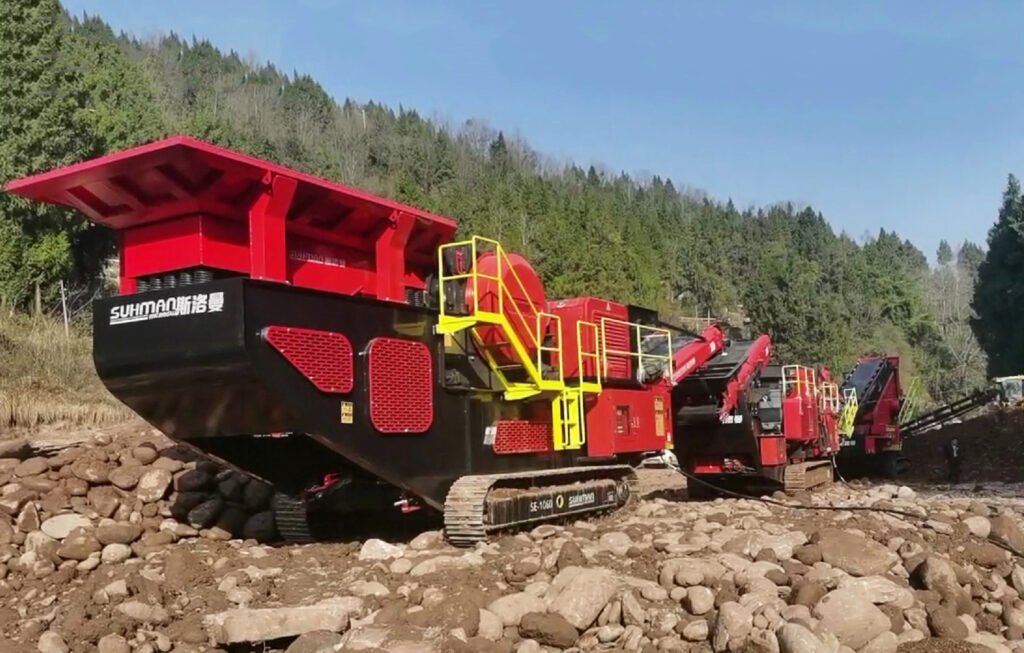
You’re comparing mobile jaw crusher quotes from different manufacturers. The specs look similar — same capacity, same feed size, same motor power. But when you check the weight, something catches your eye:
| Manufacturer | Model | Weight |
| Manufacturer A | 1060 Jaw Crusher | 38tons |
| Manufacturer B | PE1060 Mobile Jaw | 36tons |
| SUHMAN | SE-1060 | 46tons |
The SUHMAN SE-1060 is 8 tons heavier than the competition.
That’s a 21% weight difference on the same machine.
You might think: “That’s a lot of extra steel.” You’re right — and that’s exactly the point.
In the crusher industry, weight is the single most honest specification on the datasheet. Capacity numbers can be inflated. Motor power can be misrepresented. But weight? Weight tells you exactly what you’re getting.
This article explains exactly where those extra 8 tons go, why most manufacturers make their crushers lighter, and how the weight difference affects your operating cost, maintenance frequency, and machine lifespan.
Part 1: Why Most Manufacturers Make Crushers Lighter
If heavier is better, why do most manufacturers aim for lighter machines?
The Price War Reality
When buyers request quotes from 5 manufacturers, they often receive 5 quotes with similar specs but different prices. Here’s what usually happens:
Buyer: “I need a 200-250 tph jaw crusher. Send me your best price.”
Manufacturer A: “$XX,XXX — 38 tons“
Manufacturer B: “$XX,XXX-2,000 — 36 tons” ← Cheaper wins
Manufacturer C: “$XX,XXX+3,000 — 46 tons” ← “Too expensive”
The problem: To win the bid, manufacturers cut weight wherever possible. When a buyer says “give me your best price”, some factories hear “cut the steel thickness.”
How Manufacturers Reduce Weight (And Cost)
| Component | Standard Weight | Lighter Version | Weight Saved |
| Main frame plate | 25mm steel | 16mm steel | 1.5 tons |
| Jaw plate | High manganese,thick profile | High manganese,thin profile | 0.8 tons |
| Eccentric shaft | Forged alloy steel | Cast steel | 1.2 tons |
| Flywheel | Cast iron, solid | Cast iron, hollow | 0.6 tons |
| Base frame | Heavy-duty beam | Standard channel | 1.0 ton |
| Side guards | 12mm liner | 6mm liner | 0.8 tons |
| Hydraulic system | Heavy-duty cylinder | Standard cylinder | 0.5 tons |
| Motor mount | Reinforced plate | Standard bracket | 0.4 tons |
| Total weight saved | ~6.8 tons |
Result: A crusher that looks the same on the outside but weighs 6-8 tons less.
The cost saving for the manufacturer: $3,000-8,000 per unit.
The cost to you: Much higher over the life of the machine.
Part 2: Where SUHMAN’s Extra 8 Tons Go
Let’s break down the SE-1060’s 46-ton weight and show you exactly where it goes. This isn’t “extra steel for the sake of it” — every kilogram serves a purpose.
SE-1060 Weight Breakdown
| Component | SUHMAN SE-1060 | Typical Competitor | Difference |
| Main frame | 25mm Q355B steel plate | 16-18mm Q235B steel plate | +2.0 tons |
| Eccentric shaft | 42CrMo forged alloy steel | 45# cast steel | +1.2 tons |
| Flywheel | Solid cast iron, balanced | Hollow cast iron | +0.6 tons |
| Base frame | Heavy-duty box beam | Standard C-channel | +1.0 ton |
| Side protection liners | 12mm Mn13 liner | 6mm mild steel | +0.8 tons |
| Hydraulic system | Heavy-duty cylinder + valves | Standard cylinder | +0.5 tons |
| Motor mount & guards | Reinforced 10mm plate | 4-6mm standard bracket | +0.4 tons |
| Track undercarriage | Heavy-duty, reinforced | Standard duty | +0.7 tons |
| Total | 46 tons | ~38 tons | +8 tons |
The 8 Tons Explained
1. Main Frame: +2.0 tons
The frame is the backbone of the jaw crusher. SUHMAN uses 25mm Q355B steel plate — a high-strength, low-alloy structural steel.
| SUHMAN | Typical Competitor | |
| Steel grade | Q355B (yield: 355 MPa) | Q235B (yield: 235 MPa) |
| Plate thickness | 25mm | 16-18mm |
| Strength | 51% higher yield strength | Standard |
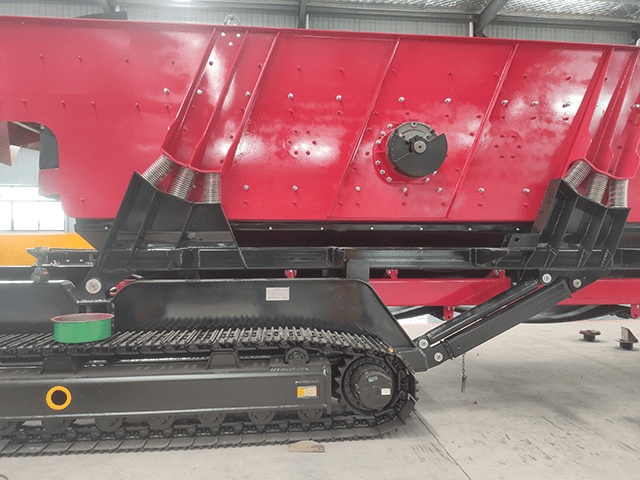
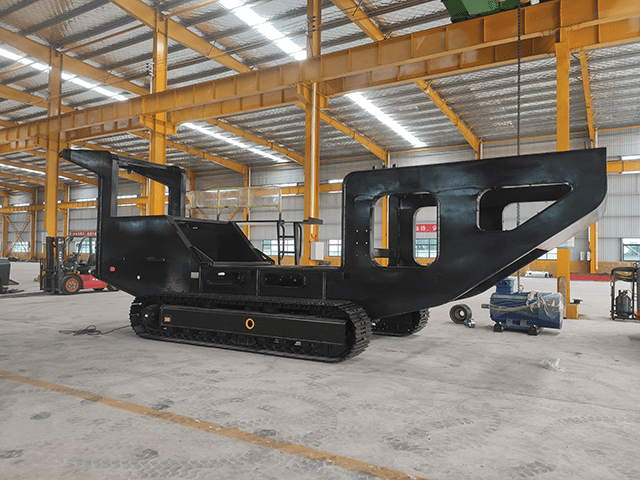

What this means: The SUHMAN frame is 51% stronger and 39-56% thicker than typical competitors. This prevents frame cracking under heavy loads and hard rock crushing — a common failure point in lighter crushers.
Learn more about Q355B steel mechanical properties on MatWeb.
2. Eccentric Shaft: +1.2 tons
The eccentric shaft is the most stressed component in a jaw crusher. It transmits the crushing force and runs under extreme load, 24/7.
| SUHMAN | Typical Competitor | |
| Material | 42CrMo forged alloy steel | 45# cast steel |
| Process | Forged (grain structure aligned) | Cast (grain structure random) |
| Tensile strength | 1,080 MPa | 600 MPa |
| Fatigue resistance | 80% higher | Standard |
What this means: A forged 42CrMo shaft is 80% more resistant to fatigue failure than a cast 45# shaft. Shaft failure means complete machine downtime and a $5,000-15,000 repair. The extra weight here is insurance against catastrophic failure.
Compare 42CrMo (AISI 4140) vs 45# steel on Engineering Toolbox.
3. Jaw Die: +0.8 tons
| SUHMAN | Typical Competitor | |
| Material | Mn18Cr2 (18% manganese + chromium) | Mn13 (13% manganese) |
| Profile thickness | Thick profile (more material at wear points) | Thin profile |
| Lifespan | 300-500 hours (hard rock) | 150-250 hours |
| Replacement frequency | Every 4-6 months | Every 2-3 months |
What this means: Thicker, higher-grade jaw dies last 2x longer, cutting your consumable cost in half and reducing downtime for replacements.
4. Base Frame: +1.0 ton
| SUHMAN | Typical Competitor | |
| Structure | Heavy-duty box beam | Standard C-channel |
| Vibration resistance | Excellent | Fair |
| Bolt loosening | Minimal | Frequent |
What this means: A box beam base frame absorbs vibration far better than C-channel. This means fewer loose bolts, less frame stress, and a more stable crushing operation.
5. Side Protection Liners: +0.8 tons
| SUHMAN | Typical Competitor | |
| Material | Mn13 high manganese steel | Mild steel (6mm) |
| Thickness | 12mm | 6mm |
| Purpose | Protects frame walls from direct impact | Minimal protection |
What this means: Side liners take the beating so the frame doesn’t have to. Thicker Mn13 liners protect the frame walls from wear, extending the crusher’s life by years.
Part 3: The Real Cost of a “Light” Crusher
A lighter crusher costs less to buy — but costs more to own. Let’s quantify it.
5-Year Total Cost of Ownership: 46-Ton vs 38-Ton Crusher
| Cost Category | SUHMAN SE-1060 (46 tons) | Typical 38-Ton Crusher | Difference |
| Purchase price | $X | $X-5,000 | -$5,000 |
| Frame repair/replacement | $0 | $8,000-15,000 | +$8,000-15,000 |
| Shaft replacement | $0 | $5,000-10,000 | +$5,000-10,000 |
| Jaw die replacement (5 years) | $6,000 | $12,000 | +$6,000 |
| Bolt tightening labor | 20 hours | 80 hours | +$3,000 |
| Unplanned downtime (5 years) | 40 hours | 120 hours | +$24,000 |
| Side liner replacement | $1,500 | $4,000 | +$2,500 |
| Machine resale value (5 years) | 55% of purchase | 35% of purchase | +$10,000-15,000 |
| Total 5-year cost | Lower | $58,000-76,000 higher |
The “cheaper” 38-ton crusher costs you $58,000-76,000 MORE over 5 years.
hat’s despite being $5,000 cheaper upfront.
Downtime Cost — The Hidden Killer
The biggest cost of a light crusher isn’t parts — it’s downtime.
Scenario: Frame crack in a 38-ton crusher after 18 months of operation
- Machine stops: Day 1
- Contact manufacturer: Day 2
- Wait for replacement frame: Day 3-10
- Remove old frame: Day 11
- Install new frame: Day 12-14
- Test and restart: Day 15
Total downtime: 14 days
Daily production lost: 2,000 tons × $15/ton = $30,000/day
Total lost revenue: $420,000
Now tell me the $5,000 savings was worth it.
Part 4: How to Check Crusher Weight Before Buying
Weight is the most honest specification — but not all manufacturers list it. Here’s how to use weight to compare crushers:
Step 1: Ask for the Operating Weight
When requesting a quote, always ask: “What is the operating weight of this crusher?“
If they won’t provide it, that’s a red flag.
Step 2: Compare Apples to Apples
Make sure you’re comparing the same type of crusher:
| Crusher Type | Expected Weight Range |
| Mini mobile jaw (50-100 tph) | 12-20 tons |
| Standard mobile jaw (150-250 tph) | 35-50 tons |
| Large mobile jaw (300-500 tph) | 55-80 tons |
| Mobile cone crusher | 25-45 tons |
| Mobile impact crusher | 30-50 tons |
| Mobile screening plant | 15-30 tons |
If a crusher weighs significantly less than these ranges, investigate why.
Step 3: Ask Follow-Up Questions
If a crusher seems unusually light, ask:
- “What steel grade is the main frame?” (Q355B > Q235B)
- “What is the frame plate thickness?” (25mm > 16mm)
- “Is the eccentric shaft forged or cast?” (Forged > Cast)
- “What material are the jaw dies?” (Mn18Cr2 > Mn13)
- “Can you provide photos of the actual machine on a scale?“
Step 4: Request Weight Verification
Reputable manufacturers will:
- Provide the exact weight in the quotation
- Show photos of the machine being weighed before shipping
- Explain the weight difference if asked
SUHMAN’s practice: Every crusher is weighed before shipping, and we provide the weight certificate with the shipping documents.


Part 5: Weight Is Not Everything — But It’s the Best Starting Point
A heavier crusher isn’t automatically better. You also need to check:
| Factor | Why It Matters |
| Motor efficiency | IE3 vs IE2 saves $800-2,000/year |
| Bearing brand | SKF/NSK vs generic affects reliability |
| Hydraulic components | Quality valves and cylinders prevent leaks |
| Warranty terms | 2 years vs 1 year matters |
| After-sales support | Parts availability and technical support |
But weight is the best first filter. If a crusher is significantly lighter than competitors, you need to understand why before you can trust the price.
Read our guide on how to choose a crusher motor →
Bottom Line
In the crusher industry, you get what you pay for — and what you see is what you get.
A 46-ton crusher is not a 38-ton crusher with extra paint. It’s a fundamentally different machine built with:
- 51% stronger steel in the frame
- 80% more fatigue-resistant shaft
- 2x longer-lasting wear parts
- Significantly lower downtime risk
The extra 8 tons isn’t weight — it’s durability.
Every SUHMAN crusher ships with a weight certificate and material test report. Because we have nothing to hide.
Ready to See the Difference?
We invite you to:
- Compare our weight specs with any competitor’s quote
- Visit our factory and see the build quality in person
- Request a detailed quotation with full specifications
WhatsApp: +86 13856971828
Email: ahsuhman@163.com
Website:ahsuhman.com/contact
About the Author
SUHMAN Engineering Team
10+ years in crusher design and manufacturing. 500+ units shipped globally. Specializes in frame stress analysis, wear optimization, and mobile crushing solutions. Based in Hefei, Anhui, China.