Introduction: Economics of Subgrade Production
By 2026, the profitability of road construction will depend on the efficiency of aggregate production lines. Unlike conventional crushing operations, producing high-quality road crushed stone requires precise particle shape and gradation to ensure pavement stability. SUHMAN’s experience deploying equipment in over 50 countries tells us that optimal configuration is not static; it requires calculation and optimization based on material hardness, site constraints, and local power grid conditions. This guide details how to design a crushing plant to maximize output and minimize cost per tonne.
Introduction: Economics of Subgrade Production
Before selecting machinery, engineers must determine the target product. International standards (such as ASTM D448) typically require multi-graded outputs to ensure proper compaction and drainage. Industry standard specifications include:
- 0-5 mm (manufactured sand): used to fill voids in asphalt mixtures and surface courses.
- 5-10 mm (fine aggregate): used for pavement finishing and high-grade concrete.
- 10-20 mm (Medium Aggregate): A major component of the road base course, providing structural integrity.
- 20-40 mm (Coarse Aggregate): Used for road base courses requiring high load-bearing capacity.
Modern crushing plants must be flexible enough to adjust these proportions according to market demand, thereby minimizing waste and maximizing profitability.
Core Equipment Selection Strategy
Choosing the wrong type of crusher is the fastest way to increase operating costs. The choice between impact crushing and compression crushing depends on the Mohs hardness of the feed.
Primary Crushing (Jaw Crusher)
The primary crushing stage must be able to handle feeds of varying sizes and crush them into a consistent, conveyable size.
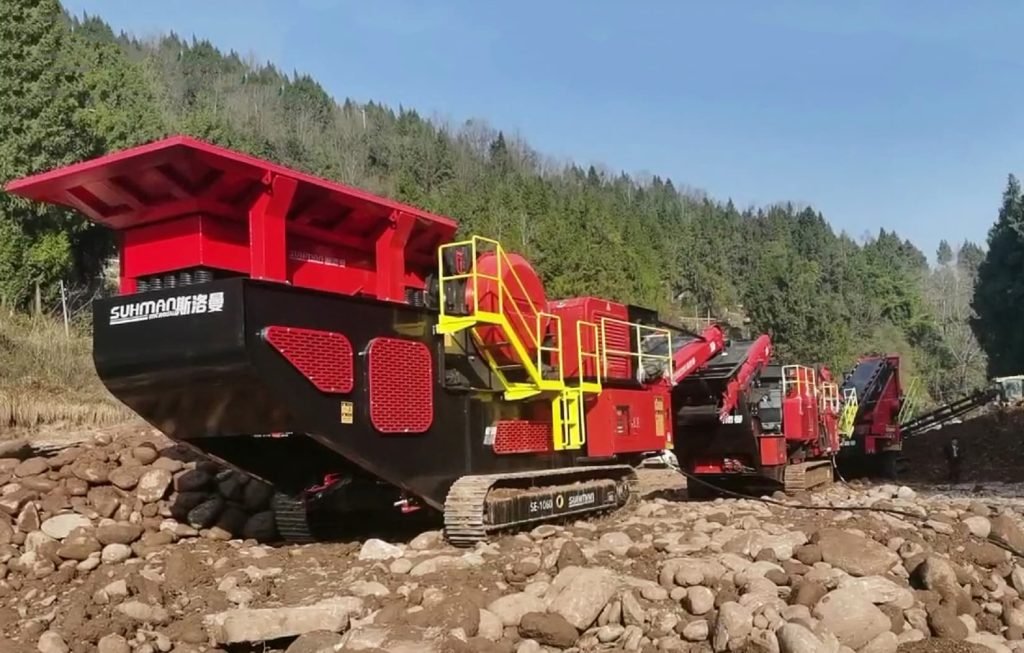
Recommended Models: SE-1060 or SE-1160 mobile jaw crushers.
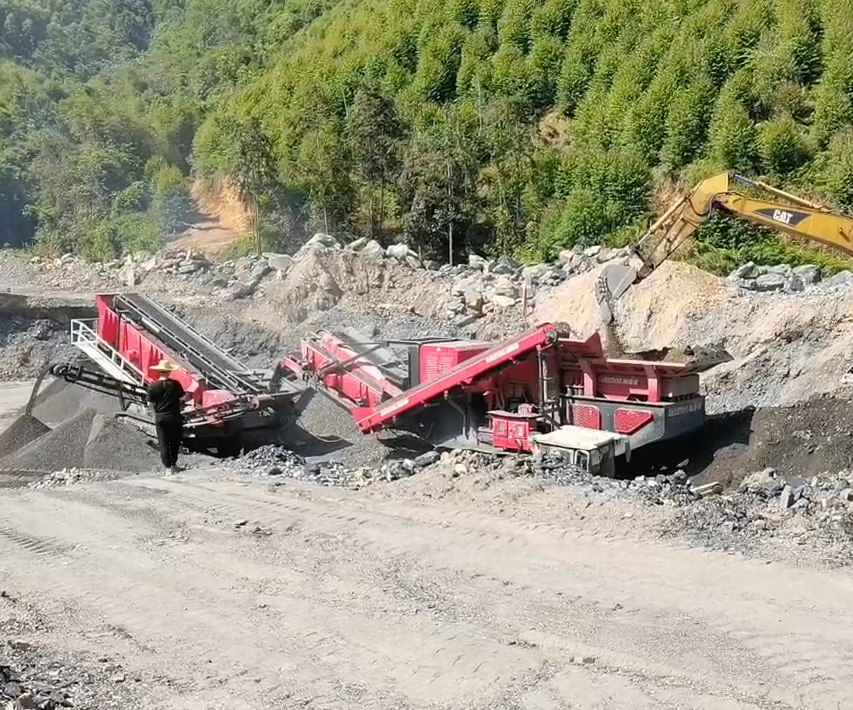
Operating Logic: These machines have a capacity of 200-280 tons/hour and excel at crushing large rocks (up to 700 mm) such as granite, basalt, or limestone. The deep crushing chamber ensures a high crushing ratio, avoiding bottlenecks before secondary crushing. Key Advantages: The integrated tracked chassis eliminates the need for expensive concrete foundations, allowing for immediate deployment.
Secondary Shaping (Impact Crusher vs. Cone Crusher)
This stage determines the quality of the final product and the consumption of wear parts.
Suitable for soft to moderately abrasive materials (limestone, gypsum):
Equipment: SF-380D Mobile Impact Crusher
Working Principle: Utilizes high-speed impact force to crush stone along natural cleavage surfaces.
Advantages: Produces high-cubic-particle products with excellent interlocking properties, reducing the need for binders in subgrade applications.
Suitable for highly abrasive materials (granite, basalt, river pebbles):
Equipment: SY-HP300 Mobile Cone Crusher
Working Principle: Utilizes the compressive force between the cone and concave liners for crushing.
Advantages: In hard rock applications, although slightly fewer cubic particles are produced than with an impact crusher, manganese utilization is higher, resulting in lower cost per ton.
Multi-layer Screening
Efficient separation is impossible without precise screening.
Equipment: SS-7018 Mobile Screen.
Function: Equipped with a three-layer vibrating screen, it can produce four different particle sizes (0-5-10-20-40mm) in a single screening.
Customization: A wide range of screen options are available, from high-strength steel for dry screening to polyurethane for wet, sticky materials.
Engineering Configurations by Capacity
To translate theory into practice, the table below lists three proven configurations based on target throughput. These configurations strike a balance between energy consumption and logistical efficiency. Target Processing Capacity
| Target Capacity | Primary Unit | Secondary Unit | Screening Unit |
| 100 TPH | SE-650D (Jaw) | SF-380D (Impact) | SS-7018 (3-Deck) |
| 200 TPH | SE-1060 (Jaw) | SF-380D (Impact) | SS-7018 (3-Deck) |
| 300 TPH | SE-1160 (Jaw) | SY-HP300 (Cone) | SS-7018 (3-Deck) |
Note: For hard rock operations at 200 tons/hour, it is recommended to use SY-HP300 instead. SF-380D, to reduce wear costs.
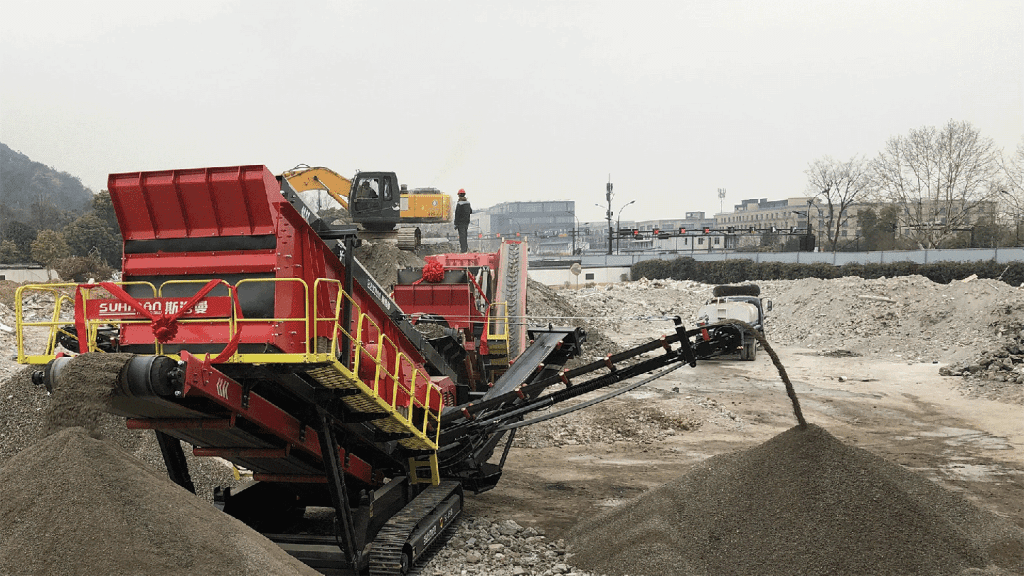
Process Flow and Layout Optimization
A closed-loop system is essential for achieving zero-waste production.
Primary Crushing: Raw materials are loaded into the primary jaw crusher hopper.
Conveying: A discharge conveyor sends the material to the secondary crusher.
Final Crushing: The secondary crusher crushes the material to the target particle size.
Classification: The material enters the SS-7018 screen.
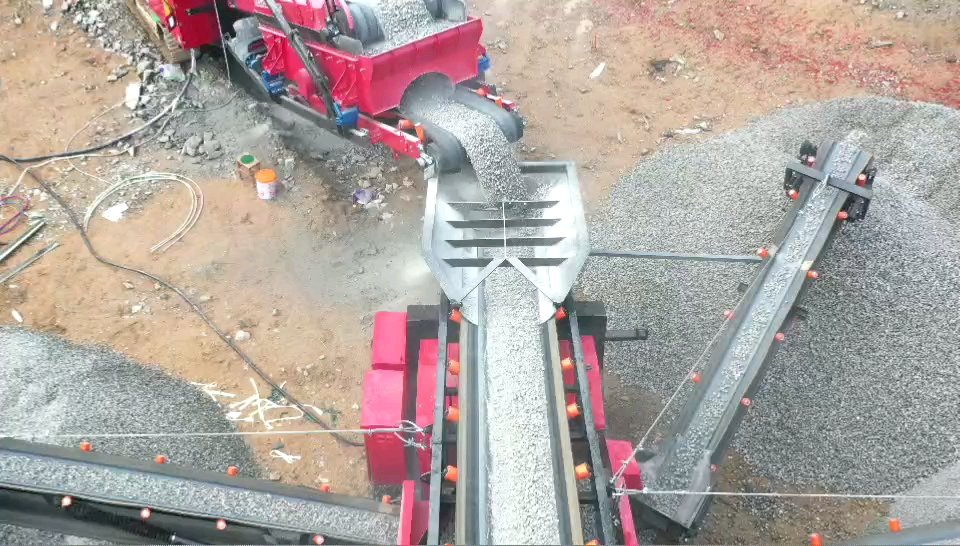
Recycling: Oversized materials (>40mm) are automatically returned to the secondary crusher via a transverse belt conveyor. This closed loop ensures 100% utilization of raw materials.
Site Planning: A standard 200 ton/hour mobile crusher occupies approximately 30m x 50m. A reasonable site layout minimizes conveyor length, thereby reducing energy consumption and material spillage risk.
Financial Analysis: Capital Expenditure and Operating Expenditure
Understanding the full financial picture is crucial for securing project funding. The following data reflects 2026 FOB China market estimates.
Capital Investment (CAPEX)
| Configuration | Equipment Value (USD) | Est. Ocean Freight | Total Landed Cost |
|---|---|---|---|
| 100 TPH Plant | $120,000 | $15,000 | $135,000 |
| 200 TPH Plant | $180,000 | $22,000 | $202,000 |
| 300 TPH Plant | $250,000 | $30,000 | $280,000 |
Operational Expenditure (OPEX per Ton)
The true measure of efficiency is the cost per ton of finished product, typically ranging from $0.33 to $0.52.
- Energy Consumption: $0.15–$0.25/t (Dependent on diesel/electric mix).
- Wear Components: $0.08–$0.12/t (Varies drastically with rock abrasiveness).
- Logistics & Labor: $0.10–$0.15/t.
Mobile solutions drastically reduce OPEX by eliminating haulage costs from quarry to plant and minimizing site preparation expenses.
Global Case Studies


Case 1: Manila Provincial Road Upgrade (Philippines)
- Challenge: Client required four specific specs (0-5-10-20mm) but faced 415V/60Hz power constraints and limited space.
- Solution: Deployed SE-1060 + SF-380D + SS-7018. Control panels were rewired for local voltage.
- Result: Consistent 220 TPH output for 18 months. The impact crusher’s cubic product reduced asphalt binder usage by an estimated 10%.
Case 2: Java Island Highway (Indonesia)
- Challenge: Processing high-silica basalt without prohibitive wear costs.
- Solution: Implemented SE-1160 + SY-HP300. The cone crusher’s slow-speed, high-torque crushing action maximized manganese life.
- Result: Stable 250 TPH over 24 months. Hydraulic CSS adjustment allowed for on-the-fly product grading changes without halting production.
Compliance and Customization
A crusher is useless if it cannot clear customs or connect to the local grid.
- Electrical Systems: Full support for 110V–440V and 50Hz/60Hz standards.
- Control Systems: Multi-language HMI (English, Spanish, Russian, Arabic) for operator accessibility.
- Certifications: Preparation for CE (Europe), SASO (Saudi Arabia), and other regional standards to prevent import delays.
Frequently Asked Questions
Q: What is the lead time for a custom-configured plant?
A: Standard production is completed within 30–45 days. Expedited options are available for urgent projects.
Q: How does a mobile plant handle wet, sticky materials?
A: We equip the SS-7018 screen with optional heating decks and specialized polyurethane meshes to prevent clogging in high-moisture conditions.
Q: Is on-site technical support available?
A: Yes. SUHMAN provides remote video guidance and dispatches engineers for installation and commissioning. We also maintain spare parts warehouses in key regions like Southeast Asia for 48-hour dispatch.
Engineering Your Competitive Edge
Selecting the correct road gravel configuration is a strategic decision that impacts your bottom line for years. By aligning your equipment choice with geological data and production goals, you transform a capital expense into a high-yield asset.
Ready to design your custom crushing solution?
Contact the SUHMAN engineering team for a complimentary site assessment and flow-sheet design.
- WhatsApp: +86 13856971828
- Email:ahsuhman@163.com