Basalt is 3× Harder Than Limestone. The Wrong Crusher = Double Wear Frequency & Out-of-Control Costs. A Military-Grade Factory Tells You the Truth.
introduction
“Basalt has a compressive strength of 200–300 MPa—three times that of limestone. Using the wrong crusher for basalt isn’t just expensive; it can cut your wear parts’ lifespan in half.”
Choosing a basalt crusher isn’t about picking the “most expensive machine”—it’s about matching the crushing principle. The right machine meets expected lifespan; the wrong one doubles replacement frequency and triggers dual losses from downtime and parts costs.
This guide gives you real data on:
- ✅ Ranking of the best basalt crushing machines (with wear life comparison)
- ✅ The hidden cost of wrong choices—why replacement frequency doubles
- ✅ Mobile crushing configurations by capacity
- ✅ Basalt-specific alloy choices & real cost-per-ton data
- ✅ SUHMAN’s full-range mobile basalt solutions
: Basalt physical properties reference: https://en.wikipedia.org/wiki/Basalt
Why Basalt Is the Hardest Rock to Crush
Basalt is a fine-grained volcanic rock formed by rapid lava cooling. With a Mohs hardness of 6–7and compressive strength of 200–300 MPa, it combines high hardness with high toughness—making it a notorious “hard nut” in the crushing industry.
| Property | Basalt | Granite | Limestone |
|---|---|---|---|
| Compressive Strength | 200–300 MPa | 150–250 MPa | 60–150 MPa |
| Mohs Hardness | 6–7 | 6–7 | 3–4 |
| SiO₂ Content | 45–52% | 65–75% | <5% |
| Abrasiveness | High | Very High | Low |
| Toughness | Very High | High | Low |
| Wear Rate (Benchmark) | 3× | 2.5× | 1× |
: Mohs hardness reference: https://en.wikipedia.org/wiki/Mohs_scale_of_mineral_hardness
: Compressive strength reference: https://en.wikipedia.org/wiki/Compressive_strength
Core Conclusion: Basalt is hard and tough. This means:
- Impact Crusher blow bars wear extremely fast (high abrasiveness).
- Jaw plates require frequent changes (high toughness impact resistance).
- Cone Crushers are the best choice for secondary basalt crushing (inter-particle crushing principle minimizes metal contact).
: Cone crusher working principle reference: https://en.wikipedia.org/wiki/Cone_crusher


The Hidden Cost of Wrong Choices—Doubled Wear Frequency
In our previous guide, Crusher Wear Parts Replacement Schedule, we noted that jaw plates typically last 500–1,000 hours under normal conditions. But these figures assume correct machine matching.
Basalt is the ultimate “stress test” for wear parts. If you choose the wrong machine, replacement frequency doubles:
Wrong Choice vs. Right Choice: Wear Parts Life Comparison
| Wrong Choice | Right Choice | Wear Part | Wrong Life (Hours) | Right Life (Hours) | Frequency Difference |
|---|---|---|---|---|---|
| Impact Crusher (Secondary) | Cone Crusher (Secondary) | Blow Bar vs Mantle/Bowl | 200–400 | 500–700 | 2–3× Higher |
| Hammer Crusher (Primary) | Jaw Crusher (Primary) | Hammer vs Jaw Plate | 150–300 | 400–600 | 2–4× Higher |
| Standard Mn Steel Jaw | Mn22Cr2 Jaw Plate | Jaw Plate Material | 300–400 | 500–700 | 1.5× Higher |
Chain Reaction of Doubled Frequency
| Cost Item | Normal Frequency | Wrong Choice Frequency | Annual Cost Difference |
|---|---|---|---|
| Parts Procurement | $8,000–$12,000 | $16,000–$24,000 | +$8,000–$12,000 |
| Downtime for Change | 4–6 times/year | 10–14 times/year | +6–8 days downtime |
| Downtime Loss (@ $2,000/day) | $8,000–$12,000 | $20,000–$28,000 | +$12,000–$16,000 |
| Labor Maintenance | $3,000–$5,000 | $7,000–$10,000 | +$4,000–$5,000 |
| Total Annual Loss | — | — | +$24,000–$33,000 |
Conclusion: Choosing the wrong crusher costs you an extra $24,000–$33,000 per year in parts and downtime. This isn’t about part prices; it’s systemic waste caused by mismatched crushing principles.
📌 Further Reading: Learn standard replacement cycles in our Crusher Wear Parts Guide.
: Impact crusher principle & wear reference: https://en.wikipedia.org/wiki/Rock_crusher#Impact_crusher
Ranking the Best Crushers for Basalt
| Rank | Crusher Type | Role | Wear Life in Basalt | Rating |
|---|---|---|---|---|
| 🥇 | Cone Crusher | Secondary/Fine Crushing | Mantle/Bowl Liner: 500–700 hrs | ⭐⭐⭐⭐⭐ (Best for Basalt) |
| 🥈 | Jaw Crusher | Primary Crushing | Jaw Plate: 400–600 hrs | ⭐⭐⭐⭐⭐ (Essential) |

| 🥉 | VSI Crusher | Sand Making/Shaping | Rotor Tip/Wear Blocks: 300–500 hrs | ⭐⭐⭐⭐ (Necessary for Shaping) |
| 4th | Impact Crusher | Secondary Crushing | Blow Bar: 200–400 hrs | ⭐⭐ (Not recommended for hard basalt) |
Why Cone Crushers Beat Impact Crushers:
- •Impact Crushers rely on “strike crushing”—high-speed blow bars hitting rock. In basalt, blow bar life is only 200–400 hours (vs. 500–1,000 hrs for limestone).
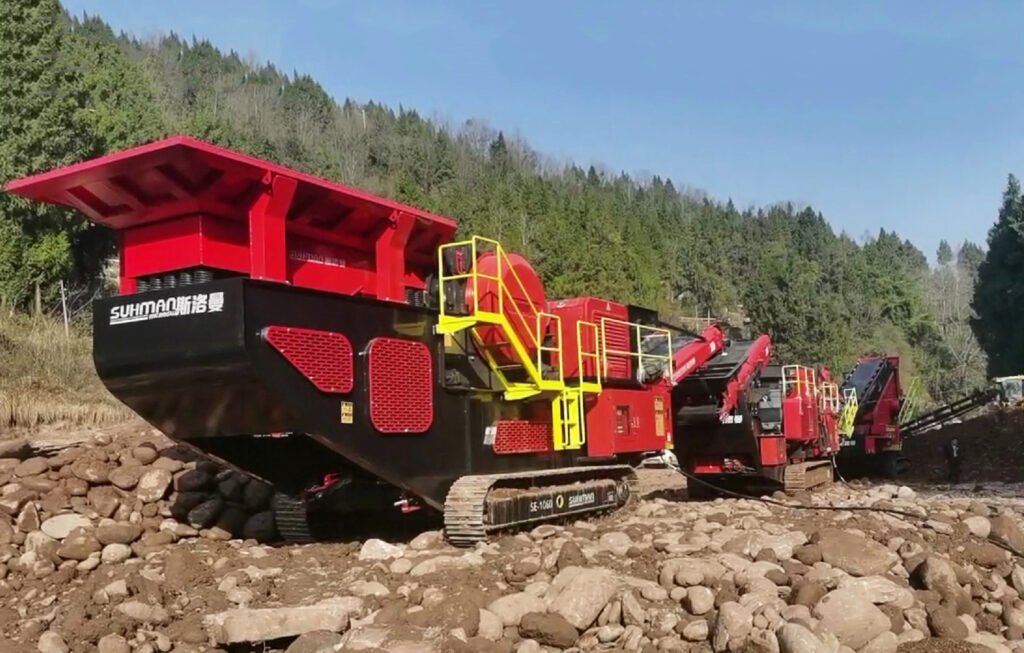
- •Cone Crushers rely on “inter-particle crushing”—rock crushing rock. Metal wear is reduced by 60–70%, extending life to 500–700 hours. 💡 SUHMAN Jaw Strength: SUHMAN mobile jaws are designed for hard rocks with compressive strength ≤320 MPa. Basalt (200–300 MPa) is handled effortlessly, ensuring high reduction ratios and stable output without “overloading.”
Mobile Basalt Crushing Configurations by Capacity

50–100 TPH (Small Scale)
| Stage | Equipment | SUHMAN Model |
|---|---|---|
| Primary | Mobile Jaw Crusher | SE-650D |
| Secondary | Mobile Cone Crusher | SY-HP200 |
| Screening | Mobile Screening Plant | SS-7018 |
Advantages: 3 tracked units—no foundation needed; reposition in hours; SUHMAN factory ships in 25–35 working days.
100–200 TPH (Medium Scale)
| Stage | Equipment | SUHMAN Model |
|---|---|---|
| Primary | Mobile Jaw Crusher | SE-1060 |
| Secondary | Mobile Cone Crusher | SY-HP300 |
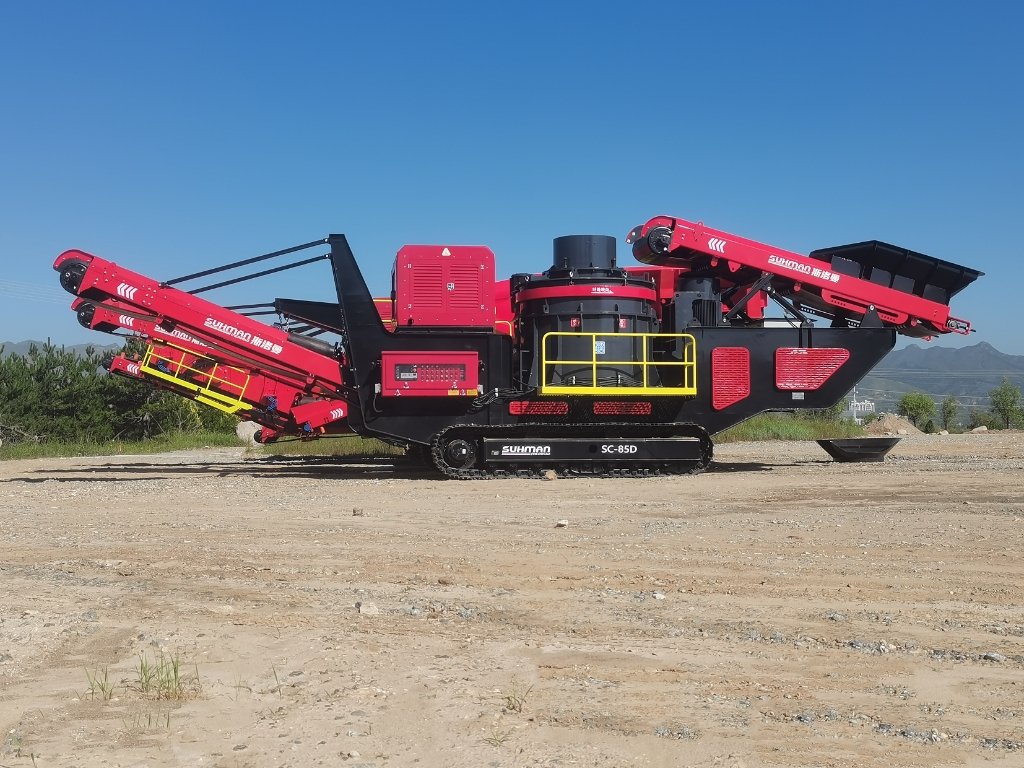
| Tertiary/Shaping | Mobile Impact Crusher | SC-85D |
| Screening | Mobile Screening Plant | SSP-6200 |
Advantages: 4-machine train yields 0–5mm, 5–10mm, 10–20mm, 20–31.5mm specs; excellent cubic shape (<10% flakiness); ideal for road/railway aggregates.
200–300 TPH (Large Scale)
| Stage | Equipment | SUHMAN Model |
|---|---|---|
| Primary | Mobile Jaw Crusher | SE-1160 |
| Secondary | Mobile Cone Crusher | SY-HP400 |
| Tertiary/Shaping | Mobile Impact Crusher | SC-85D |
| Screening | Mobile Screening Plant | SZ-450D + SSP-6200 |
Advantages: High-capacity mobile line for quarries; PLC automatic control; military-grade quality for 24/7 operation.


-1024x438.png)
Basalt-Specific Wear Parts & Material Selection
Real Wear Life in Basalt
| Wear Part | Applicable Crusher | Basalt Life | Limestone Life | Wear Acceleration |
|---|---|---|---|---|
| Jaw Plate | Jaw Crusher | 400–600 hrs | 800–1,000 hrs | 2× Faster |
| Mantle/Bowl Liner | Cone Crusher | 500–700 hrs | 800–1,200 hrs | 1.5× Faster |
| Blow Bar | Impact Crusher | 200–400 hrs | 500–1,000 hrs | 2.5× Faster |
| Rotor Tips | VSI Crusher | 300–500 hrs | 600–1,000 hrs | 2× Faster |
| Screen Mesh | Vibrating Screen | 300–600 hrs | 500–1,000 hrs | 1.5× Faster |
Best Material Combinations for Basalt
| Material | Application | Performance in Basalt | Cost/Ton |
|---|---|---|---|
| Mn22Cr2 High Mn Steel | Jaw Plates, Cone Mantle | Excellent | Lowest |
| High Chrome Alloy Cr26 | Impact Crusher Blow Bars | Poor (Extremely fast wear) | Highest |
| Bi-metal Composite | VSI Rotor Tips, Impact Plates | Good | Medium |
| Premium Alloy Steel | Cone Bowl Liner | Best | Low-Medium |
SUHMAN Recommendation: Best combo = Mn22Cr2 Jaw Plates + Premium Alloy Cone Liners + Bi-metal VSI Wear Blocks. This mix delivers the lowest cost per ton.
Real Cost-Per-Ton Data for Basalt Crushing
Assumptions: 100 TPH mobile line, 2,000 operating hours/year, Basalt strength 250 MPa.
| Cost Item | Mobile Line (SUHMAN) | Fixed Line |
|---|---|---|
| Wear Parts Cost/Ton | $0.80–$1.20 | $0.70–$1.10 |
| Power/Fuel Cost/Ton | $0.50–$0.80 | $0.40–$0.60 |
| Labor Cost/Ton | $0.30–$0.50 | $0.40–$0.70 |
| Maintenance Cost/Ton | $0.20–$0.40 | $0.30–$0.50 |
| Total Cost/Ton | $1.80–$2.90 | $1.80–$2.90 |
| Relocation Cost | $0 (Self-propelled) | $5,000–$20,000/time |
| Foundation Cost | $0 | $10,000–$50,000 |
Conclusion: For single-site long-term runs, costs are similar. But one relocation makes mobile crushing instantly cheaper by saving $5,000–$20,000 in disassembly/assembly fees.
Mobile vs. Fixed Basalt Crushing: Which to Choose?
| Comparison | Mobile Crushing (SUHMAN) | Fixed Crushing Plant |
|---|---|---|
| Installation Time | Hours (arrive & crush) | Weeks (foundation + install) |
| Foundation Needed | None | Yes ($10,000–$50,000) |
| Relocation Method | Track self-propelled | Crane + truck ($5,000–$20,000/time) |
| Lead Time | 25–35 working days | 3–6 months |
| MOQ | 1 Unit | Entire line (5+ units) |
| Best For | Multi-site, short/mid-term | Single site, 5+ years |
| Cost/Ton | $1.80–$2.90 | $1.80–$2.90 |
For most basalt projects, SUHMAN Mobile Crushing is the smarter choice—similar ton cost, but faster setup, easier relocation, and lower total investment.
SUHMAN Basalt Mobile Crushing Solutions
| SUHMAN Advantage | Details |
|---|---|
| Military-Grade Manufacturing | Produced in Chinese arsenal facilities; quality exceeds industry standards. |
| Strength ≤320 MPa Coverage | SUHMAN jaws handle hard rock perfectly; basalt (200–300 MPa) is crushed easily without yield loss. |
| Basalt-Optimized Wear Parts | Mn22Cr2 Jaw Plates + Premium Alloy Cone Liners. |
| Rapid Delivery | Complete machines in 25–35 working days. |
| Spare Parts Support | Ships in 1–7 working days. |
| Flexible Power | Diesel/Electric/Hybrid options available (link). |
| MOQ | Starting from 1 unit. |
| Compatibility | Integrates with existing equipment for complete lines. |
FAQ (Frequently Asked Questions)
Q: Can I use an impact crusher for basalt?
A: Yes, but it is not recommended for hard basalt (>200 MPa). Impact crusher blow bars last only 200–400 hours in basalt—2.5× faster wear than in limestone. For secondary crushing, choose a cone crusher. Impact crushers are suitable only for soft basalt (<150 MPa) or as a shaping stage after cone crushing.
Q: What is the best equipment combination for basalt?
A: Jaw Crusher (Primary) → Cone Crusher (Secondary) → VSI Sand Maker (Tertiary/Shaping). This three-stage combo maximizes wear life and product shape.
Q: Is choosing the wrong machine really that impactful?
A: Absolutely. As noted in our Wear Parts Guide, correct yields 500–1,000 hr jaw plate life. Using an impact crusher for secondary reduces blow bar life to 200–400 hours. Doubled frequency = $24,000–$33,000/year lost to parts and downtime.
Q: How fast is SUHMAN delivery?
A: Complete mobile machines: 25–35 working days. Wear parts/spares: 1–7 working days. Contact the SUHMAN team for exact lead times.
Q: Which wear parts should I stock for basalt crushing?
A: For a 100 TPH mobile line, stock: 2 sets of jaw plates, 1 set of cone mantle/bowl liners, 2 sets of VSI wear blocks, and 2 sets of screen meshes. SUHMAN ships spares in 1–7 days—no need for large inventories.
Q: How much does a SUHMAN basalt crushing plant cost?
A: Prices vary by model, configuration, and capacity. Contact the SUHMAN sales team for a free custom basalt crushing solution quote.
Crush Basalt Smarter—Save 50% on Wear Costs
🔥 Jaw Crusher: Primary Crushing — Mn22Cr2 wear plates maximize life.
⚡ Cone Crusher: Secondary Crushing — Inter-particle crushing cuts wear by 60%.
🔋 VSI Sand Maker: Tertiary Shaping — Cubic product, <10% flakiness.
📱 Mobile Screener: Closed-loop system — Output 4 aggregate specs at once.
🏭 Chinese Arsenal Military Quality
🚚 Complete Machine: 25–35 Days | Spares: 1–7 Days
💰 Want specs & pricing? Contact SUHMAN for a free basalt plan.
📞 Get a Quote Now – Reply in 2 Hours
💬 Contact Us on WhatsApp +86 13856971828
📧 Email: ahsuhman@163.com