
1. Introduction: The Heart of Secondary & Tertiary Crushing
In the aggregate, mining, and construction waste recycling industries, the cone crusher is the undisputed workhorse of secondary and tertiary crushing stages. It determines the final product shape, gradation curve, and overall circuit efficiency. Among the dozens of models available globally, the HP300 cone crusher and HP400 cone crusher consistently rank as the most requested configurations for medium-to-large scale operations.
Both machines share the same proven hydraulic cone crushing architecture, military-grade structural design, and crawler-mounted mobility. Yet, they serve distinctly different production profiles, material hardness ranges, and budget constraints. Choosing the wrong model can lead to under-capacity bottlenecks, accelerated wear costs, or unnecessary capital expenditure.
This comprehensive guide provides a detailed, side-by-side comparison of the HP300 and HP400 cone crushers, covering capacity curves, crushing force distribution, chamber options, operating costs, and ideal application scenarios. By the end, you will know exactly which model aligns with your material characteristics and production targets.


2. Core Specifications: HP300 vs HP400 at a Glance
| Specification | HP300 Cone Crusher | HP400 Cone Crusher |
| Rated Capacity | 200-300 tph | 220-280 tph (heavy-duty optimized) |
| Max Feed Size | 210 mm | 210 mm |
| Crushing Stages | Secondary / Tertiary | Secondary / Tertiary / Fine |
| Motor Power | ~200 kW (268 HP) | ~250 kW (335 HP) |
| Operating Weight | ~35-38 tons | ~40-43 tons |
| Hydraulic CSS Adjustment | Yes (online, ±1mm precision) | Yes (online, ±1mm precision) |
| Chamber Options | Coarse, Medium, Fine | Coarse, Medium, Fine, Extra Fine |
| Tramp Iron Relief | Hydraulic accumulators | Hydraulic accumulators (higher pressure) |
| Best For | Medium capacity, versatile materials | High abrasion, hard rock, continuous cycles |
While both models share the same maximum feed size of 210 mm, the HP400 cone crusher is engineered with a heavier main frame, larger eccentric throw, and higher motor power. This allows it to sustain higher crushing forces, making it better suited for extremely hard and abrasive materials like granite, basalt, and iron ore. The SY-HP300 Mobile Cone Crusher and SY-HP400 Heavy Duty Mobile Cone Crusher from SUHMAN both incorporate these core engineering principles, with SUHMAN’s military-grade welding standards and Austrian-sourced core components ensuring consistent performance across both models.
3. Performance & Crushing Dynamics
3.1 Crushing Capacity & Throughput Optimization
The HP300 cone crusher delivers a flexible capacity range of 200-300 tph, making it ideal for operations that need to switch between secondary and tertiary crushing without changing equipment. Its optimized kinematics and throw adjustment allow operators to fine-tune throughput based on feed characteristics. When paired with a primary jaw crusher like the SE-1060 Mobile Jaw Crusher, the HP300 forms a highly efficient two-stage circuit capable of processing 200-250 tph of limestone or medium-hard rock.
The HP400 cone crusher is rated at 220-280 tph but is designed for heavier continuous loads. The increased motor power and reinforced crushing chamber allow it to maintain consistent throughput even when processing 100% hard rock with high silica content. In tertiary applications, the HP400 often outperforms the HP300 by 10-15% due to its higher crushing force and optimized liner geometry. For operations targeting 250+ tph of granite or basalt, the HP400 cone crusher is the preferred choice.
3.2 Product Shape & Gradation Control
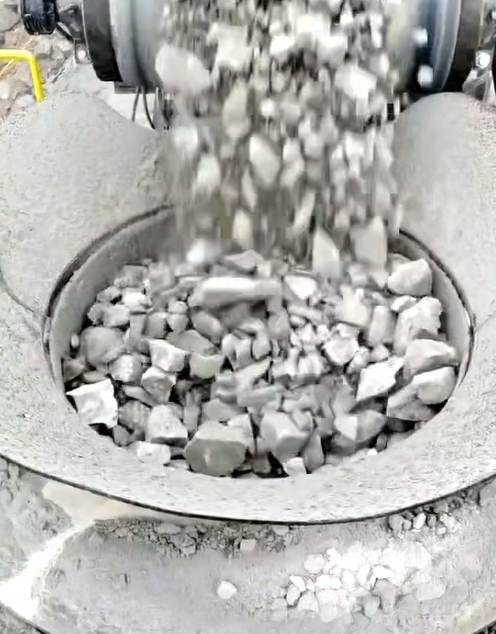
Both models produce excellent cubical product shape, thanks to the laminating crushing principle and hydraulic closed-side setting (CSS) adjustment. However, the HP400 cone crusher’s extra-fine chamber option allows for superior sand-making and fine aggregate production. If your end product requires strict gradation curves (e.g., for asphalt base course or ready-mix concrete), the HP400 offers tighter control and more consistent output. When integrated with a mobile screening plant like the SS-7018 Mobile Screening Plant, both models can produce up to three precisely sized aggregate fractions simultaneously.
3.3 Liner Life & Wear Resistance
Liner life is directly proportional to crushing force distribution and chamber design. The HP300 cone crusher uses standard high-manganese steel liners, suitable for most limestone, dolomite, and medium-hard rock applications. Liner replacement intervals typically range from 3-6 months depending on material abrasiveness.
The HP400 cone crusher features reinforced liner seating surfaces and optional chrome-moly alloy liners. The heavier frame reduces vibration-induced liner loosening, extending service life by 20-30% in abrasive conditions. For granite, basalt, and river pebble crushing, the HP400’s wear parts cost per ton of produced aggregate is often lower than the HP300, despite the higher initial liner cost.
4. Application Scenarios & Circuit Integration
4.1 HP300 Cone Crusher: The Versatile Performer
The HP300 cone crusher is the perfect choice for:
- Limestone & Dolomite Quarries: Medium-hard materials where high capacity and low wear cost are priorities.
- Construction Waste Recycling: Variable feed sizes with occasional rebar contamination; the hydraulic tramp iron relief handles uncrushables smoothly.
- Medium-Scale Aggregate Plants: 200-250 tph circuits where flexibility between secondary and tertiary crushing is needed.
- Contract Crushing Operations: Rapid site changes, diverse material types, and budget-conscious operations.
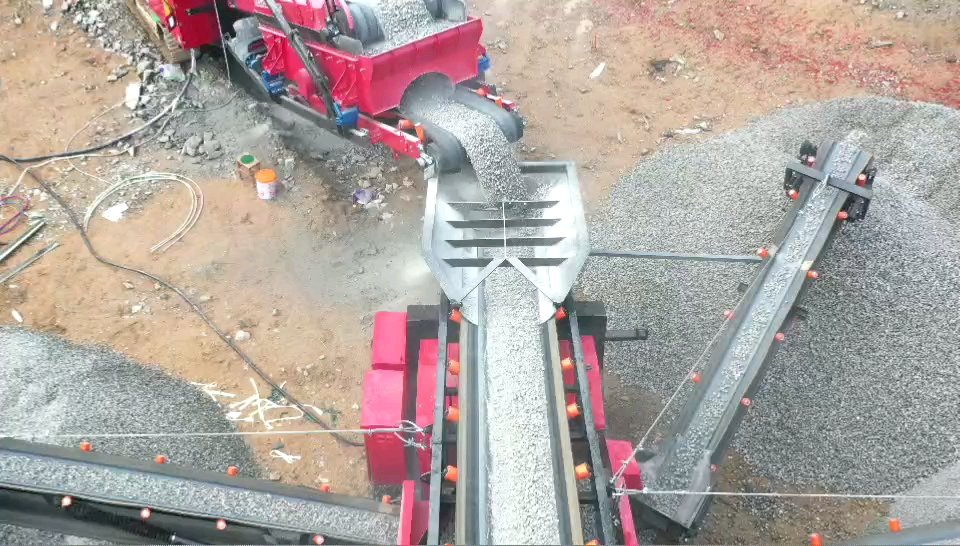
When configured as part of a closed-circuit system, the HP300 pairs seamlessly with impact crushers like the SF-380D Mobile Impact Crusher for soft-rock applications, creating a highly mobile, fuel-efficient production line.
4.2 HP400 Cone Crusher: The Heavy-Duty Specialist
The HP400 cone crusher is engineered for:
- Hard Rock Mining: Granite, basalt, andesite, and iron ore where crushing force and liner life are critical.
- High-Production Aggregate Lines: 250-300 tph circuits running 24/7 with minimal downtime.
- Tertiary Crushing & Sand Making: Fine aggregate production requiring extra-fine chamber configuration.
- Severe Operating Environments: High-altitude, extreme temperature, or continuous shift operations where machine reliability is non-negotiable.
For permanent or semi-permanent installations, the HP400 is often paired with modular equipment like the SE-J1060 Modular Jaw Crusher and SC-85D Mobile VSI Sand Making Machine to create a complete stationary crushing circuit with minimal foundation requirements.
5. Operating Costs & ROI Analysis
5.1 Initial Investment & Capital Efficiency
The HP300 cone crusher typically costs 15-20% less than the HP400 model. For operations with moderate material hardness and capacity requirements below 250 tph, the HP300 offers a faster ROI due to lower capital expenditure and reduced transport costs.
5.2 Energy Consumption & Power Draw
Motor power directly impacts electricity costs. The HP300’s ~200 kW motor consumes approximately 15-20% less energy per hour than the HP400’s ~250 kW motor. However, if the HP300 is consistently overloaded to match HP400-level production, energy efficiency drops, and wear rates increase. Proper sizing based on actual feed characteristics is critical to maximizing ROI.
5.3 Wear Parts & Maintenance Labor
- HP300: Lower liner cost, but may require more frequent replacement in abrasive materials. Standard bearings and seals are widely available and affordable.
- HP400: Higher initial liner cost, but longer service life in hard rock. Reinforced components reduce unplanned downtime, lowering total maintenance labor costs.
Rule of Thumb: If your material Mohs hardness is above 7, or silica content exceeds 15%, the HP400 cone crusher typically delivers a lower cost-per-ton over a 3-year period despite the higher upfront price.
6. Mobility, Transport & Site Flexibility
Both the HP300 and HP400 are available in crawler-mounted mobile configurations, offering:
- Remote control operation with emergency stop functionality
- Hydraulic conveyor folding & feed hopper extension
- Crawler travel for site-to-site mobility without auxiliary equipment
- No concrete foundation required, enabling rapid deployment
The HP400’s heavier weight (40-43 tons) requires slightly more powerful transport vehicles and wider access roads compared to the HP300 (35-38 tons). However, both models comply with standard road transport dimensions when conveyors are folded. For operations that relocate frequently (e.g., road building, tunnel construction, urban recycling), the lighter HP300 offers easier transport and lower logistics costs. For permanent or semi-permanent quarry installations, the HP400’s weight translates to greater stability and reduced vibration during operation.
7. Preventive Maintenance & Longevity
Regardless of model, preventive maintenance is the single most important factor in maximizing cone crusher lifespan. Both the HP300 and HP400 share similar maintenance routines, but the HP400’s reinforced design often allows for longer intervals between major overhauls.
7.1 Daily Checks
- Inspect liner condition and CSS setting using feeler gauges or hydraulic position sensors
- Check hydraulic oil level, temperature, and filter differential pressure
- Monitor motor amperage and vibration patterns for early fault detection
- Clean discharge chutes and screen media (if integrated with a screening plant)
7.2 Weekly/Monthly Tasks
- Lubricate exciter bearings per manufacturer schedule (every 8-12 hours of operation)
- Inspect V-belt tension, pulley alignment, and coupling elastomers
- Check fastener torque on frame, liner bolts, and conveyor structures
- Record wear measurements and update replacement planning logs
7.3 Annual Overhaul
- Replace exciter bearings, seals, and hydraulic accumulators
- Conduct NDT (magnetic particle or ultrasonic) inspection on frame welds
- Calibrate hydraulic adjustment system and position sensors
- Full electrical system service: contactor inspection, cable testing, PLC diagnostics
Strict adherence to lubrication and inspection schedules can extend service intervals by 20-30% and prevent catastrophic frame failures.
8. How to Choose: HP300 vs HP400 Decision Matrix
| Your Requirement | Recommended Model |
| Capacity < 250 tph | HP300 cone crusher |
| Capacity > 250 tph (continuous) | HP400 cone crusher |
| Material: Limestone, Dolomite, Coal | HP300 cone crusher |
| Material: Granite, Basalt, Iron Ore | HP400 cone crusher |
| Budget: Cost-effective, fast ROI | HP300 cone crusher |
| Budget: Heavy-duty, long-term value | HP400 cone crusher |
| Frequent relocation | HP300 cone crusher (lighter) |
| Permanent quarry installation | HP400 cone crusher (more stable) |
| Tertiary crushing / Sand making | HP400 cone crusher (extra-fine chamber) |
| Closed-circuit with screening | Both (pair with SZ-450D or SSP-6200) |
9. Conclusion: Match the Machine to Your Material
There is no universally “better” crusher — only the right crusher for your specific application. The HP300 cone crusher excels in versatility, energy efficiency, and cost-effectiveness for medium-hard materials and flexible production needs. The HP400 cone crusher dominates in heavy-duty, high-abrasion environments where maximum crushing force, liner life, and continuous reliability are paramount.
At Anhui SUHMAN Engineering Machinery, both models are built to military-grade quality standards, featuring hydraulic CSS adjustment, remote control operation, and comprehensive after-sales support. Whether you choose the HP300 or HP400, you’re investing in a machine designed to deliver consistent performance, low operating costs, and maximum ROI.
Ready to optimize your crushing circuit? Contact our technical team for a free consultation, material testing, and factory-direct quote.
| ahsuhman@163.com | |
| Telephone | +86 13856971828 |

