By Xandra Huang, Technical Sales Engineer — 8+ years in mobile crushing solutions
This is the question we hear most often from buyers:
“Should I buy a mobile crusher or a fixed crusher for my river pebble project?”
Here’s the short answer: It depends on your project type — but 70% of river pebble projects are better suited for mobile crushers.
Why?
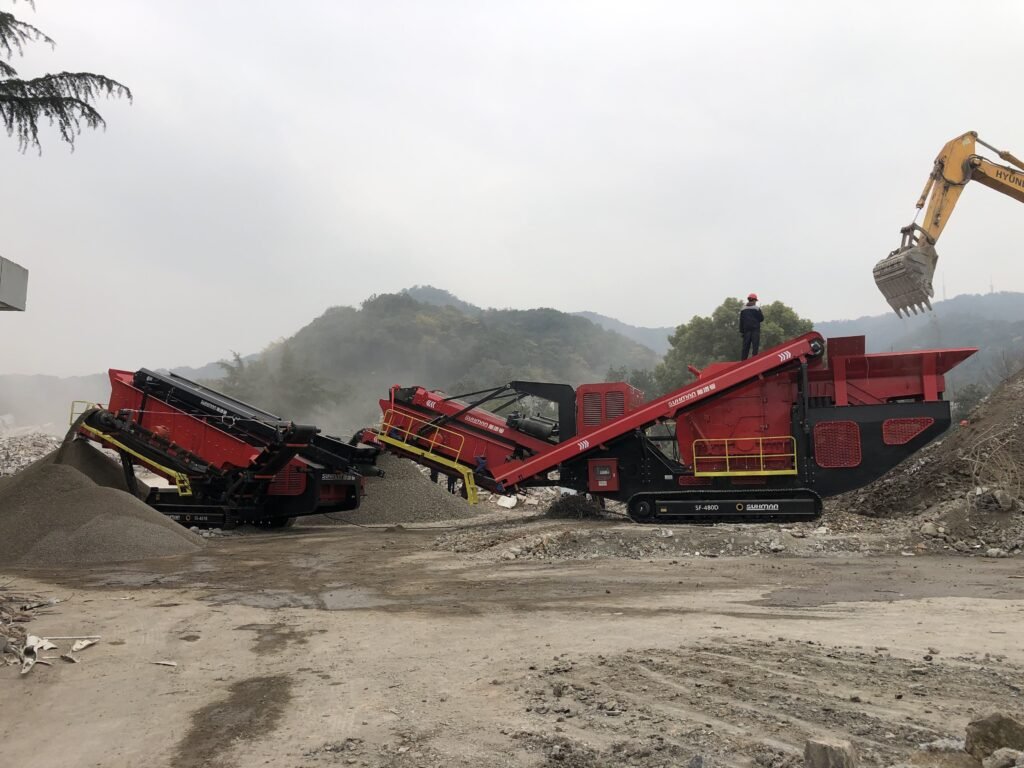
River pebble crushing has unique characteristics: sites are often on riverbanks or in mountainous areas, raw material sources may change over time, terrain is complex, and fast production start-up is critical. These factors make mobile crushers the smarter choice in most cases.
But that doesn’t mean fixed crushers are wrong. If you have a single long-term quarry, need 500+ tph capacity, and have a large budget, a fixed plant may be the better fit.
This article will help you compare both options — costs, performance, pros and cons — so you can make the right decision for YOUR project.
Mobile Crusher vs Fixed Crusher: Key Differences at a Glance
Before diving into details, here’s a quick comparison table that summarizes the core differences:
| Factor | Crawler Mobile Crusher | Fixed Crusher Plant |
| Installation | Self-propelled tracks, no foundation needed, ready to produce on arrival | Requires concrete foundation, steel structures, and electrical work |
| Setup Time | 1-3 days | 30-90 days (including civil works) |
| Site Requirements | Flat ground, handles rough terrain and slopes up to 25° | Needs level, solid ground with good access roads |
| Mobility | Can relocate between sites independently or by trailer | Permanently fixed in one location |
| Upfront Cost | Higher equipment cost, but ZERO civil work cost | Lower equipment cost, but high civil work cost |
| Capacity Range | 50-400 tph | 100-1000+ tph |
| Best For | Multiple sites, temporary projects, difficult terrain | Single long-term quarry, ultra-high capacity |


5 Advantages of Mobile Crushers
1. No Civil Works — Time is Money
Fixed crusher plants require concrete foundations, steel support structures, cable trenches, and drainage systems. These civil works typically take 30-90 days and cost $30,000-$70,000.
A mobile crusher drives onto the site, lowers its support legs, and starts producing. From delivery to first output — as fast as 1 day.
The math: If your project runs for 2 years, spending 2 months on civil works means losing 8% of your production time. That lost revenue often exceeds the price difference between mobile and fixed equipment.
2. Flexible Relocation — Follow the Material
River pebble sources have unique characteristics:
- Riverbank quarries may shift with seasons (wet season / dry season)
- Mountain sites may have narrow roads that large transport trucks can’t access
- When one quarry is depleted, you need to move to the next
Mobile crushers can drive (or be towed) to a new working face without disassembly, transport, and reinstallation.
3. Handles Difficult Terrain
Crawler mobile crushers operate effectively on:
- Slopes up to 25°
- Muddy or soft ground
- Narrow sites
- Uneven terrain
Fixed plants require large, level areas — often impossible in mountainous or riverbank locations.
4. Modular Configuration — Scale as You Grow
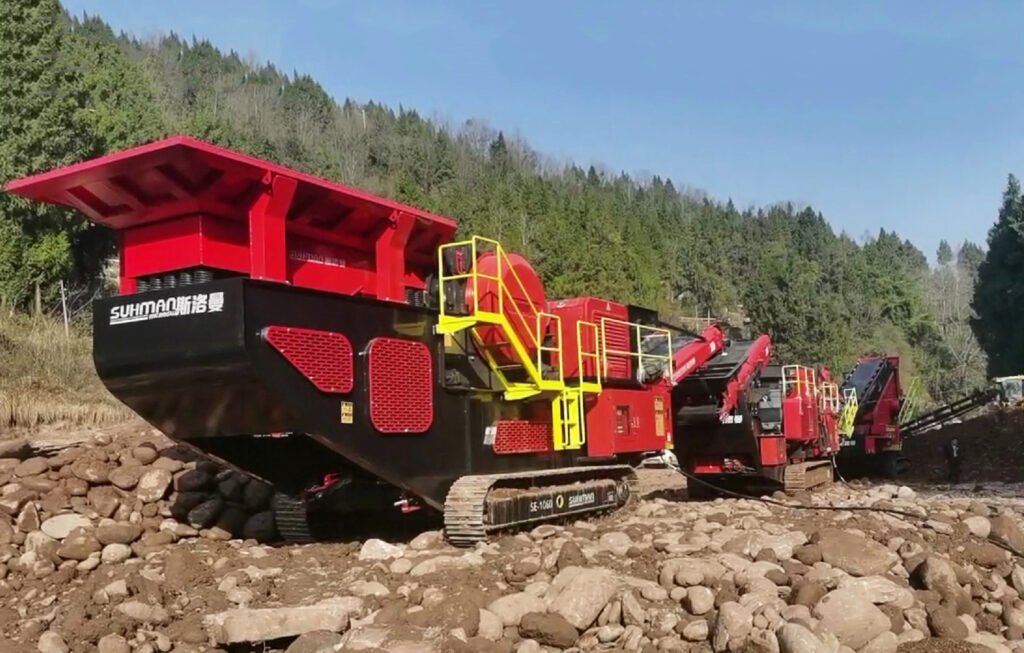
SUHMAN mobile crushing stations are modular:
- Need just a jaw crusher? Start with one mobile jaw unit.
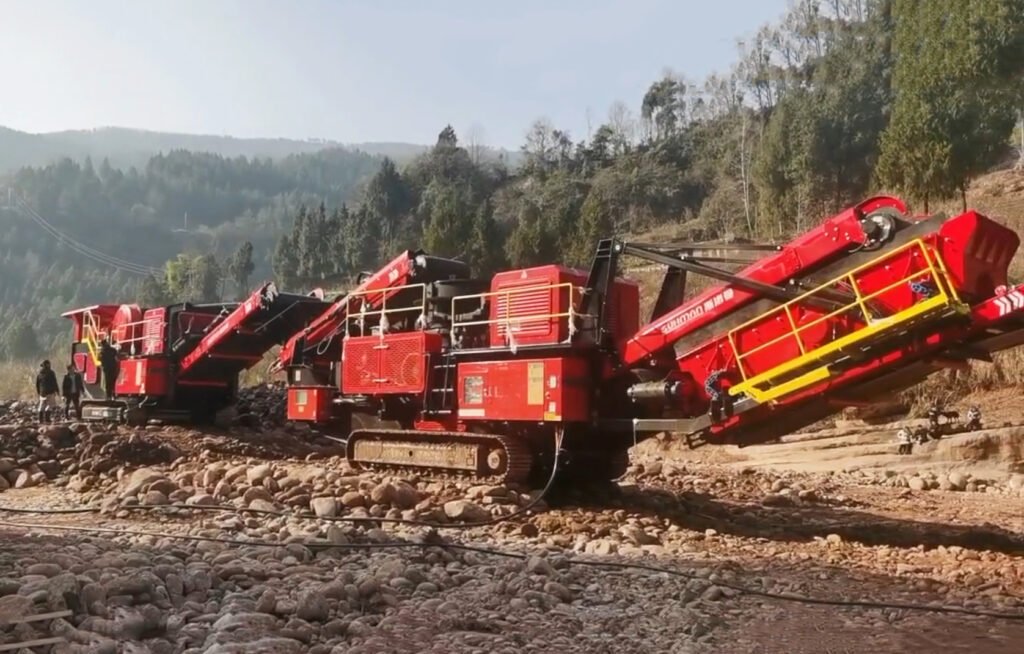
- Need a complete line? Combine jaw crusher + cone crusher + screening plant — all on tracks.
- Want to add sand making later? Simply add a mobile VSI crusher.
No need to invest in everything upfront.
5. Higher Resale Value
Mobile crushers are standardized equipment with strong secondary markets. After 3-5 years of use, resale value typically remains at 40-60% of original cost.
Fixed plants, once dismantled, are worth little more than scrap metal — resale value under 10%.
When is a Fixed Crusher the Better Choice?
We don’t claim mobile crushers are the answer for everything. Here are scenarios where a fixed plant makes more sense:
When a Fixed Crusher Makes Sense
A fixed plant is the right choice when:
- You have a single quarry with 10+ years of reserve — the civil work cost gets amortized over many years, lowering your per-ton cost
- Your capacity need exceeds 500 tph — ultra-high capacity fixed plants have lower per-ton operating costs at scale
- You have ample budget and a dedicated maintenance team — fixed plants require more labor and ongoing maintenance
- Your site has good conditions — flat ground, road access, and stable terrain make civil work easier and cheaper
- You need to integrate with an existing production line — fixed plants connect more easily to existing systems
When a Fixed Crusher is NOT Recommended
A fixed plant is the wrong choice when:
- You operate at multiple sites — each site requires new civil works, multiplying your costs
- Your project lasts under 3 years — the civil work cost cannot be amortized over a short timeframe
- Your site is mountainous, on a riverbank, or narrow — concrete foundations are often impossible to build
- You have limited capital — the upfront investment (equipment + civil works) is significant
- You need fast production start-up — 30-90 days of civil work delays your revenue
River Pebble Crushing: Why Mobile Crushers Are the Smarter Choice
River pebble has several unique properties that make mobile crushers especially advantageous:
1. River Pebble is Hard — Requires Multi-Stage Crushing
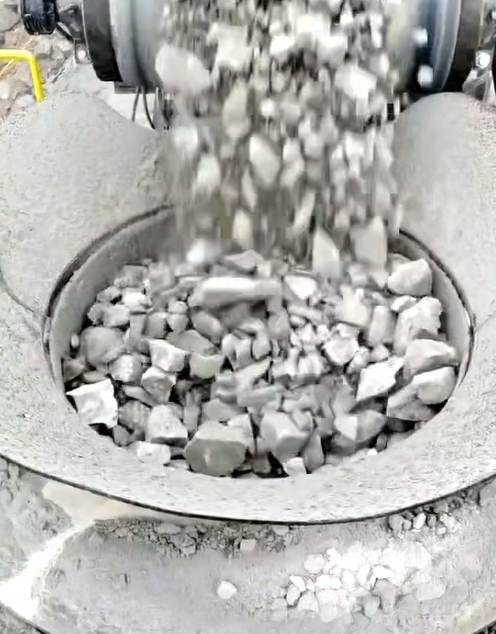
River pebble has a Mohs hardness of 6-7 and compressive strength of 150-300 MPa. A complete crushing process requires:
- Jaw crusher (primary) → Cone crusher (secondary) → VSI crusher (sand making & shaping)
With a fixed plant, each of these three stages needs its own foundation and steel structure — doubling or tripling civil work costs.
With mobile crushers, each unit is self-contained. Drive them into position and you have a complete production line.
2. River Pebble Sites Are Often in Difficult Locations
Major river pebble sources worldwide include:
- Riverbanks of the Mekong, Irrawaddy, and Chao Phraya (Southeast Asia)
- Mountainous river valleys in Africa and South America
- Coastal and inland river deposits across the Middle East and India
Common characteristics: uneven terrain, narrow access roads, difficult transport conditions.
Mobile crushers’ track drive and compact design are a perfect match for these scenarios.
3. Raw Material Sources May Change
River pebble mining is heavily affected by government policy:
- Environmental regulations may ban mining in certain river sections
- New quarry permits may require relocation
- Seasonal mining restrictions (wet season shutdowns)
Mobile crushers can relocate to a new site. Fixed plants are stuck where they are.
4. Manufactured Sand is High-Margin — Fast Start-Up = Fast Profit
River pebble manufactured sand sells for $15-25/ton — a high-margin product.
Mobile crusher start-up in 1-3 days vs. fixed plant in 30-90 days means starting production 2 months earlier = earning an extra $100,000-$200,000 in revenue.
Cost Comparison: Are Mobile Crushers Really More Expensive?
Many buyers assume mobile crushers cost more. But when you calculate the total cost of ownership, it’s not always true.
200 tph River Pebble Crushing Line — Cost Comparison
Here’s a detailed cost breakdown for a complete 200 tph river pebble crushing line:
| Cost Item | Mobile Crusher Solution | Fixed Crusher Solution |
| Jaw crusher | $110,000-$160,000 | $40,000-$65,000 |
| Cone crusher | $85,000-$125,000 | $35,000-$55,000 |
| VSI sand maker | $70,000-$110,000 | $28,000-$48,000 |
| Vibrating screen | $28,000-$42,000 | $14,000-$20,000 |
| Conveyors & others | $20,000-$28,000 | $14,000-$20,000 |
| Equipment Subtotal | $313,000-$465,000 | $131,000-$208,000 |
| Concrete foundation | $0 | $30,000-$55,000 |
| Steel structures | $0 | $20,000-$40,000 |
| Electrical & piping | $7,000-$14,000 | $14,000-$20,000 |
| Installation & commissioning | $7,000-$14,000 | $20,000-$35,000 |
| Civil Work Subtotal | $14,000-$28,000 | $84,000-$150,000 |
| Total Investment | $327,000-$493,000 | $215,000-$358,000 |
Real Cost Comparison (Including Resale Value & Relocation)
Let’s look at the true 3-year cost of ownership, assuming one relocation:
Mobile Crusher:
- Initial investment: $400,000
- One relocation: $10,000
- Resale value after 3 years (50%): -$200,000
- Net 3-year cost: $210,000
Fixed Crusher:
- Initial investment: $280,000
- Cannot relocate (would need to rebuild at new site): $0 saved, but $0 flexibility
- Resale value after 3 years (7%): -$20,000
- Net 3-year cost: $260,000+
Conclusion: When factoring in resale value and relocation, the mobile crusher’s 3-year net cost is actually lower. If multiple relocations are needed, the mobile advantage is even greater.
Customer Case Studies
Case A: Mobile Crusher Project in Myanmar (2024)
Project Background
Located in Mandalay Region on a sloped riverbank with a 15° grade and narrow access road, this project processed river pebble with a maximum feed size of 350mm. The target was 200 tph producing 0-5mm manufactured sand, 5-10mm, and 10-20mm aggregate.
Equipment Configuration
The complete mobile line included:
- SE-1060 Mobile Jaw Crusher for primary crushing
- SY-HP300 Mobile Cone Crusher for secondary crushing
- SC-85D Mobile VSI Crusher for sand making
- SS-7018 Mobile Inclined Screener for final screening
Results
From delivery to first production took just 2 days. The line achieved 215 tph — exceeding the 200 tph target. After 3 months, the entire operation relocated to a new quarry in a single day.
The customer’s feedback: “A fixed plant would have been impossible on this riverbank. Mobile crushers were the only viable option.”
Case B: Fixed Crusher Project in Saudi Arabia (2023)
Project Background
Located in Riyadh on flat ground in an industrial zone with excellent road access, this project processed river pebble from Wadi deposits with a maximum feed size of 300mm. The target was 300 tph producing 0-5mm sand, 5-10mm, and 10-20mm aggregate. The quarry reserve was estimated at 15+ years.
Equipment Configuration
The fixed plant included a PE-750×1060 jaw crusher, HPT300 cone crusher, VSI-9526 sand maker, and a 3YK vibrating screen with conveyor system.
Results
Civil works and installation took 60 days. The plant achieved 280 tph — slightly below the 300 tph target, likely due to the harder-than-expected material.
The customer’s feedback: “We have 15+ years of material, so fixed plant makes financial sense. But the civil work and installation took much longer than expected.”
5 Questions to Help You Decide
Answer these five questions to determine which solution fits your project:
| Question | Choose Mobile | Choose Fixed |
| 1. How long is your project? | Under 5 years | Over 10 years |
| 2. How many sites will you operate? | 2 or more sites | 1 site only |
| 3. What is your site terrain | Mountainous, riverbank, or narrow | Flat and open |
| 4. What capacity do you need? | Under 400 tph | Over 500 tph |
| 5. How fast do you need to start? | Under 1 week | Over 1 month is acceptable |
How to interpret your answers:
- 3+ answers favor mobile → A mobile crusher is right for you
- 3+ answers favor fixed → A fixed plant may be better
- 2 each → Contact us for a free project analysis
There’s no single “best” crusher — only the best crusher for YOUR specific situation.
Alternative: Modular Crushers (Semi-Mobile)
If you’re somewhere in between mobile and fixed, SUHMAN also offers modular crushers — a middle-ground solution:
- Installation: Steel frame base with bolted connections, no concrete foundation needed
- Setup Time: 7-15 days (faster than fixed, slower than mobile)
- Relocation: Can be disassembled and transported, but requires reinstallation at the new site
- Price: Between mobile and fixed equipment
- Best For: 3-5 year projects with 1-2 relocations
The SE-J1060 Modular Jaw Crusher and SY-JHP300 Modular Cone Crusher are popular choices for buyers who want more flexibility than fixed equipment without the full investment of mobile crushers.
Why Choose SUHMAN?
Our Advantages
- 120+ river pebble crushing projects worldwide
- Full product line — mobile, fixed, and modular — we recommend what’s best for YOU, not what we want to sell
- Free project analysis — equipment selection, layout design, and ROI calculation
- 25-35 day delivery — 2-3x faster than European brands
- Military-grade quality — manufactured at China’s original military ordnance factory
What We DON’T Do
- We don’t push mobile crushers if your project suits fixed equipment
- We don’t exaggerate capacity (all data from real customer feedback)
- We don’t hide costs (civil work, installation, and maintenance costs are fully transparent)


Get Your Free Crushing Solution
Not sure whether to choose a mobile or fixed crusher? Tell us about your project and we’ll analyze it for free:
Please provide:
- Material type (river pebble / granite / limestone / other)
- Maximum feed size (mm)
- Target capacity (tph)
- Project duration (years)
- Site conditions (flat / mountainous / riverbank)
- Desired product sizes (0-5mm / 5-10mm / 10-20mm, etc.)
We’ll recommend the most suitable equipment configuration and solution.
Get Your Free Crushing Solution →