🎯 Quick Decision Guide
Skip to your situation:
| Your Situation | Recommended Choice | Why |
|---|---|---|
| Multi-site contractor | Mobile ✅ | Move equipment between projects |
| Single quarry, 10+ year lease | Stationary ✅ | Lower cost per tonne long-term |
| Construction waste recycling | Mobile ✅ | Process on-site, avoid transport |
| Capacity needed: 500+ TPH | Stationary ✅ | Higher maximum output |
| Limited initial budget | Mobile ✅ | No foundation/infrastructure costs |
| Remote location, no grid power | Mobile ✅ | Diesel-powered option |
Still deciding? Read on — we’ll walk you through every factor that matters.
Table of Contents
- Understanding the Core Difference
- Mobile Jaw Crusher: Pros & Cons
- Stationary Jaw Crusher: Pros & Cons
- Total Cost of Ownership Analysis
- 5 Real Project Scenarios
- Decision Matrix: Score Your Needs
- Popular Models Comparison
- FAQ
Understanding the Core Difference {#core-difference}
Before diving into comparisons, let’s clarify what we’re talking about:
Mobile Jaw Crusher
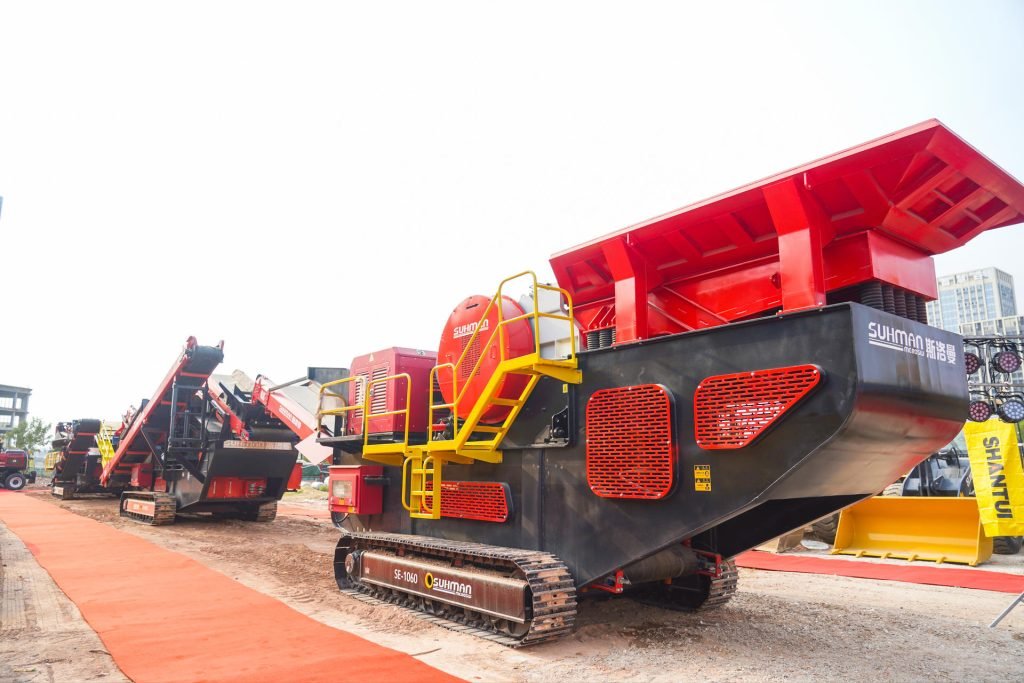
A self-contained crushing plant mounted on crawler tracks or wheels. Key characteristics:
- Built-in engine or electric motor
- Hydraulic folding conveyors
- Can relocate under its own power (crawler type)
- No permanent foundation required
- Typical capacity: 50-350 TPH
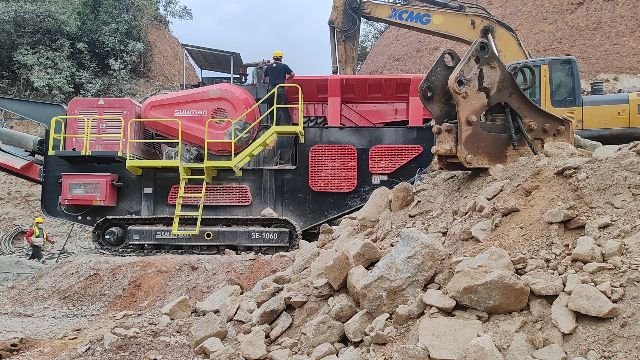
Example: SUHMAN SE-1060 — 200-250 TPH, crawler-mounted, dual power option
Stationary Jaw Crusher
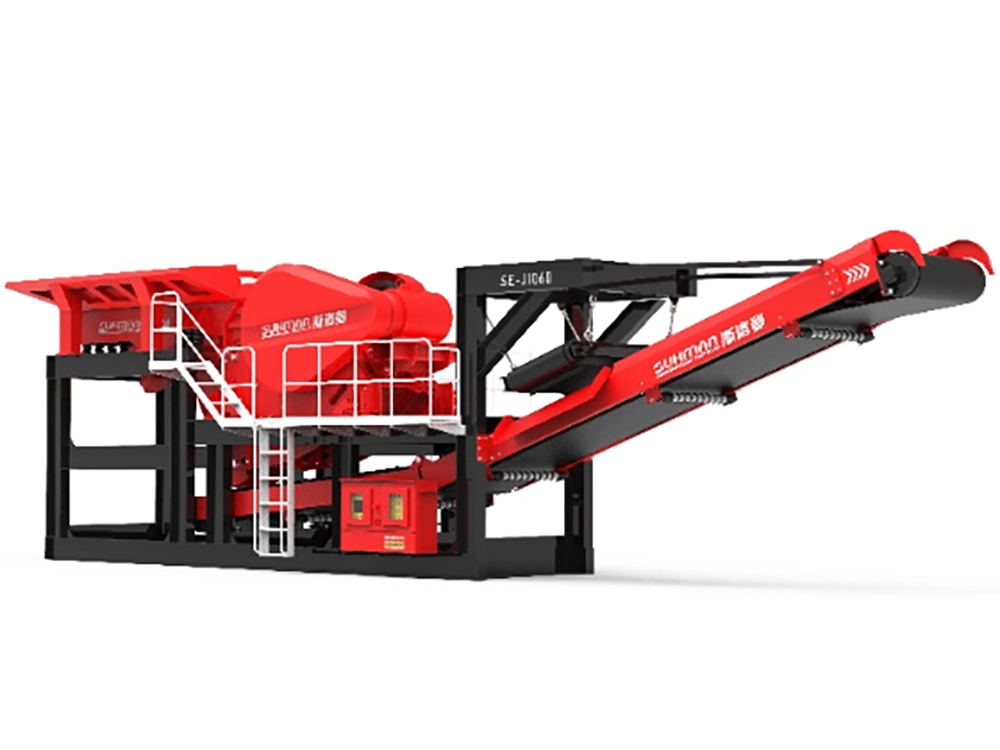
A fixed crushing unit that requires permanent installation. Key characteristics:
- Electric motor powered (typically)
- Requires concrete foundation
- Fixed location for entire lifespan
- Can be part of larger processing plant
- Typical capacity: 100-1000+ TPH
Example: SUHMAN SE-J1060 Modular — 200-250 TPH, skid-mounted, requires foundation
Mobile Jaw Crusher: Pros & Cons {#mobile-pros-cons}
✅ Advantages
1. Zero Foundation Costs
No civil engineering work needed. The crusher arrives, unfolds, and starts crushing within 30-60 minutes.
Cost savings: $30,000 – $150,000 (depending on ground conditions)
2. Follow the Material, Not the Other Way Around
This is the #1 advantage. Instead of trucking raw stone 5-20km to a fixed plant:
- Position the crusher at the extraction face
- Load finished product directly into trucks
- Reduce fuel costs by 40-70%
Real data: A Philippine quarry operator reported saving $2.80 per tonne in transportation costs after switching to mobile crushing.
3. Flexibility for Contract Crushers
If you win a 2-year road project, then move to a mining contract:
- Take your crusher with you
- No stranded assets
- Maintain revenue during transitions
4. Faster Permitting
In many jurisdictions, mobile equipment:
- Doesn’t require building permits
- Has simpler environmental approval
- Can be classified as “temporary equipment”
Time savings: 3-6 months vs. stationary permitting
5. Resale Value
Mobile crushers retain value better:
- 5-year resale: 55-65% of original price
- Larger buyer pool (contractors + quarry owners)
- Easier to transport for inspection
❌ Disadvantages
1. Higher Operating Cost
Diesel-powered mobile crushers cost more per tonne:
| Power Source | Cost Per Tonne |
|---|---|
| Diesel (Mobile) | $0.90 – $1.40 |
| Grid Electric (Stationary) | $0.35 – $0.60 |
Annual difference: At 300,000 tonnes/year, expect $165,000 – $240,000 higher fuel cost.
2. Lower Maximum Capacity
Mobile units top out around 350-400 TPH. If you need 600+ TPH, stationary is your only option.
3. More Maintenance Points
Additional components requiring attention:
- Crawler tracks (tension, wear pads)
- Hydraulic systems (hoses, pumps)
- Diesel engine (if equipped)
- Folding mechanisms
Maintenance time: 15-20% more hours vs. stationary
4. Space Limitations
Compact design means:
- Smaller feed hoppers (more loader cycles)
- Narrower conveyors (potential bottleneck)
- Less access for maintenance
Stationary Jaw Crusher: Pros & Cons {#stationary-pros-cons}
✅ Advantages
1. Lowest Cost Per Tonne
For high-volume, long-term operations, nothing beats stationary:
| Cost Component | Mobile | Stationary |
|---|---|---|
| Power/Fuel | $1.10/t | $0.45/t |
| Maintenance | $0.22/t | $0.15/t |
| Wear Parts | $0.28/t | $0.22/t |
| Total | $1.60/t | $0.82/t |
At 500,000 tonnes/year: $390,000 annual savings with stationary
2. Higher Capacity Options
Stationary plants scale up:
- Jaw crushers up to 1500×1200mm feed opening
- Motors up to 400 KW
- Throughput up to 1000+ TPH
3. Customizable Layout
Design the entire flow:
- Optimal conveyor angles
- Multiple discharge points
- Integrated dust suppression
- Sound enclosures for noise control
4. Better for Multi-Stage Crushing
If you need primary + secondary + tertiary:
- Stationary allows optimized spacing
- Permanent conveyor connections
- Centralized control room
- Automated monitoring systems
5. Less Downtime
Fewer moving parts = fewer failures:
- No tracks to replace
- No hydraulic folding systems
- Stable foundation reduces vibration stress
❌ Disadvantages
1. High Upfront Infrastructure Cost
| Item | Typical Cost |
|---|---|
| Concrete foundation | $40,000 – $120,000 |
| Steel support structure | $30,000 – $80,000 |
| Electrical infrastructure | $25,000 – $75,000 |
| Installation labor | $15,000 – $40,000 |
| Total | $110,000 – $315,000 |
2. Stranded Asset Risk
If the quarry depletes early or permits aren’t renewed:
- Can’t easily relocate
- Demolition costs to remove
- Resale value drops (buyer must have similar site)
3. Long Lead Time to Operation
From purchase to first tonne:
- Foundation: 2-4 weeks
- Installation: 1-2 weeks
- Commissioning: 3-5 days
- Total: 4-7 weeks vs. 1 day for mobile
4. Material Transportation Required
Raw stone must come to the crusher:
- Loader fuel costs
- Truck fleet requirements
- Road maintenance within quarry
TikTok Showcase:https://vt.tiktok.com/ZSHjFotPd
Total Cost of Ownership Analysis {#cost-analysis}
Let’s compare real numbers for a typical operation.
Scenario: 250 TPH Operation, 8 Hours/Day, 250 Days/Year
Annual production: 500,000 tonnes
Mobile Jaw Crusher (SE-1060)
| Cost Category | Year 1 | Years 2-5 (Annual) |
|---|---|---|
| Equipment Purchase | $220,000 | – |
| Foundation/Install | $5,000 | – |
| Diesel Fuel | $550,000 | $550,000 |
| Maintenance | $55,000 | $60,000 |
| Wear Parts | $70,000 | $75,000 |
| Labor (2 operators) | $80,000 | $85,000 |
| Total Year 1 | $980,000 | – |
| Total Years 2-5 | – | $770,000/year |
Stationary Jaw Crusher (SE-J1060)
| Cost Category | Year 1 | Years 2-5 (Annual) |
|---|---|---|
| Equipment Purchase | $180,000 | – |
| Foundation/Install | $150,000 | – |
| Electrical Power | $225,000 | $225,000 |
| Maintenance | $40,000 | $45,000 |
| Wear Parts | $60,000 | $65,000 |
| Labor (2 operators) | $80,000 | $85,000 |
| Total Year 1 | $735,000 | – |
| Total Years 2-5 | – | $485,000/year |
5-Year Total Cost of Ownership
| Mobile | Stationary | Difference | |
|---|---|---|---|
| 5-Year Total | $4,060,000 | $2,675,000 | $1,385,000 |
| Cost Per Tonne | $1.62 | $1.07 | $0.55/t savings |
BUT — this doesn’t include:
- Transportation cost savings with mobile (~$150,000/year)
- Flexibility value (hard to quantify)
- Resale value difference (mobile typically 10-15% higher)
Adjusted 5-Year Total:
- Mobile: $4,060,000 – $750,000 (transport savings) = $3,310,000
- Stationary: $2,675,000
- Real difference: $635,000 over 5 years ($127,000/year)
5 Real Project Scenarios {#project-scenarios}
Scenario 1: Road Construction Contractor 🏗️
Profile:
- 3-year highway project
- 4 different quarry sites along the route
- Need 150,000 tonnes of aggregate per year
- After project, moving to different region
Recommendation: MOBILE ✅
Why:
- Move crusher between 4 sites
- No stranded investment after project ends
- Transport savings: $200,000+ over 3 years
- Resale or redeploy to next project
Equipment: SE-1060 Mobile Jaw Crusher
Scenario 2: Family-Owned Granite Quarry 🪨
Profile:
- 25-year quarry lease
- Confirmed reserves: 15 million tonnes
- Target production: 400,000 tonnes/year
- Stable grid power available
Recommendation: STATIONARY ✅
Why:
- Long-term operation = lower cost per tonne matters
- $0.55/t savings × 400,000t = $220,000/year
- 5-year savings: $1.1 million
- Can add secondary/tertiary crushing later
Equipment: SE-J1060 Modular Jaw Crusher + secondary cone
Scenario 3: Urban Demolition & Recycling ♻️
Profile:
- Demolition contracts in metropolitan area
- 10-15 different sites per year
- Process concrete into 0-40mm aggregate
- Resell aggregate or use for backfill
Recommendation: MOBILE ✅
Why:
- Each site lasts 2-6 weeks
- On-site processing avoids landfill fees ($80-150/tonne)
- Can drive crusher to next job
- No transportation of demolition waste
Equipment: SE-1060 + SF-380D-S (integrated crushing & screening)
Scenario 4: Remote Mining Operation ⛏️
Profile:
- Gold mine in remote area
- No grid power available
- Need to crush ore before heap leaching
- Mine life: 8-10 years
- Diesel fuel must be trucked in
Recommendation: MOBILE (Dual Power) ✅
Why:
- No grid power = stationary needs expensive generators
- Mobile with dual power (diesel + electric) offers flexibility
- Can relocate as mining face advances
- Lower infrastructure in remote area
Equipment: SE-1160 Heavy Duty Mobile Jaw Crusher (Dual Power)
Scenario 5: Aggregate Supplier to Concrete Plants 🚛
Profile:
- Supply 0-20mm aggregate to 5 concrete plants
- Single quarry location
- 20-year supply contract
- Need 600,000 tonnes/year
Recommendation: STATIONARY ✅
Why:
- High volume = operating cost critical
- Fixed location for entire contract
- 600,000t × $0.55/t = $330,000/year savings
- Can invest in automation and quality control
Equipment: Large stationary jaw (1000×1200mm) + cone + screening plant
Decision Matrix: Score Your Needs {#decision-matrix}
Rate each factor from 1-5 (5 = most important), then multiply by the score for each option.
| Factor | Your Priority (1-5) | Mobile Score (1-5) | Stationary Score (1-5) | Mobile Total | Stationary Total |
|---|---|---|---|---|---|
| Initial budget | _ | 4 | 3 | _ | _ |
| Operating cost | _ | 2 | 5 | _ | _ |
| Flexibility | _ | 5 | 1 | _ | _ |
| Maximum capacity | _ | 2 | 5 | _ | _ |
| Site longevity | _ | 2 | 5 | _ | _ |
| Power availability | _ | 5 | 3 | _ | _ |
| Resale value | _ | 5 | 3 | _ | _ |
| Setup speed | _ | 5 | 2 | _ | _ |
| TOTAL | _ | _ |
How to use:
- Fill in “Your Priority” column (1-5)
- Multiply by Mobile Score → Mobile Total
- Multiply by Stationary Score → Stationary Total
- Higher total = better fit for your needs
Popular Models Comparison {#models-comparison}
Mobile Jaw Crushers (SUHMAN)
| Model | Capacity | Max Feed | Power | Transport Weight | Best For |
|---|---|---|---|---|---|
| SE-650D Mini | 50-130 TPH | 500mm | 90 KW | 32 tonnes | Small projects, rental, tight budgets |
| SE-1060 | 200-250 TPH | 700mm | 110 KW | 46 tonnes | General quarry, recycling, road construction |
| SE-1160 Heavy Duty | 230-280 TPH | 700mm | 132 KW | 52 tonnes | Large quarry, mining, high abrasion |
| TZ6510 Dual-Core | 80-300 TPH | 650mm | 160 KW | 48 tonnes | Variable feed, efficiency-focused |
Stationary Jaw Crushers (SUHMAN)
| Model | Capacity | Max Feed | Power | Foundation Required | Best For |
|---|---|---|---|---|---|
| SE-J650D Modular | 50-130 TPH | 500mm | 75 KW | Minimal (skid-mounted) | Small fixed plants, pilot operations |
| SE-J1060 Modular | 200-250 TPH | 700mm | 110 KW | Standard concrete | Medium quarries, aggregate suppliers |
| Custom Large | 400-800 TPH | 1000mm+ | 200-400 KW | Heavy-duty reinforced | Large mining, high-volume production |
Frequently Asked Questions {#faq}
1. Can I convert a mobile crusher to stationary later?
Yes. Most mobile jaw crushers can operate in stationary mode:
- Lock or remove crawler tracks
- Connect to external power (if electric version)
- Operate without using diesel engine
Benefit: Start with mobility, then reduce operating costs once site is established.
Limitation: You can’t convert a stationary crusher to mobile.
2. How long does a mobile jaw crusher last compared to stationary?
| Component | Mobile Lifespan | Stationary Lifespan |
|---|---|---|
| Main Frame | 10-15 years | 15-25 years |
| Jaw Plates | 3-6 months | 4-8 months |
| Engine/Motor | 8-12 years | 12-20 years |
| Bearings | 3-5 years | 5-8 years |
| Hydraulic System | 5-8 years | N/A |
Why the difference? Mobile crushers experience more vibration and movement stress.
3. What about environmental regulations?
Mobile Crushers:
- Typically classified as “temporary equipment”
- May not require air quality permits
- Noise regulations still apply
- Dust suppression recommended
Stationary Crushers:
- Usually require air quality permit
- Environmental impact assessment may be needed
- Permanent noise monitoring
- Dust collection systems often mandatory
Check local regulations — requirements vary significantly by country and region.
4. Can I use a mobile crusher as my primary crusher?
Absolutely. Many operations use mobile jaw crushers as primary crushers:
Typical mobile circuit:
- Mobile jaw crusher (primary)
- Mobile cone crusher (secondary)
- Mobile impact crusher (tertiary, optional)
- Mobile screening plant (final sizing)
Advantages:
- Fully mobile operation
- No permanent infrastructure
- Can scale up/down as needed
5. What’s the typical lead time for delivery?
| Equipment Type | Production Time | Shipping Time | Total |
|---|---|---|---|
| Mobile Crusher | 20-30 days | 15-40 days | 35-70 days |
| Stationary Crusher | 25-35 days | 15-40 days | 40-75 days |
| Complete Plant | 40-60 days | 20-50 days | 60-110 days |
Shipping time varies by destination:
- Southeast Asia: 15-20 days
- Middle East: 25-30 days
- Africa: 30-35 days
- South America: 35-40 days
6. Do you offer financing options?
SUHMAN works with international financing partners:
- 30% down payment, 70% before shipment (standard)
- Letter of Credit (L/C) accepted for large orders
- Financing partnerships available in select countries
- Lease-to-own options for qualified buyers
Contact us for financing options in your region.
7. What warranty is included?
| Equipment Type | Warranty Period | Coverage |
|---|---|---|
| Mobile Crushers | 2 years | Main frame, motor/engine, bearings, hydraulic system |
| Stationary Crushers | 2 years | Main frame, motor, bearings, electrical components |
| Wear Parts | Not covered | Jaw plates, toggles, liners (consumables) |
Note: SUHMAN offers industry-leading 2-year warranty, double the standard 1-year from most manufacturers.
The Bottom Line: Make the Right Choice for YOUR Situation
After analyzing hundreds of quarry and construction projects, here’s our honest assessment:
Choose Mobile Jaw Crusher If:
✅ You work across multiple sites or projects
✅ Material transportation is a significant cost
✅ You value flexibility over maximum efficiency
✅ Initial capital is limited
✅ Site permits are temporary or uncertain
✅ You need quick deployment (< 1 week)
Choose Stationary Jaw Crusher If:
✅ You have a fixed, long-term quarry (5+ years)
✅ Maximum capacity is critical (400+ TPH)
✅ Operating cost per tonne is your #1 priority
✅ Stable grid power is available
✅ You plan to add secondary/tertiary crushing
✅ You can afford higher upfront investment
The Hybrid Approach (Best of Both Worlds)
Many successful operators use both:
- Start with mobile crusher during early years
- Prove the quarry’s viability
- Add stationary plant once reserves are confirmed
- Use mobile for satellite deposits or special projects
This approach minimizes risk while maximizing long-term profitability.
Need Expert Guidance?
Choosing between mobile and stationary is a $200,000+ decision. Don’t guess — get expert advice.
SUHMAN’s Free Consultation Includes:
✅ Project assessment — Tell us about your quarry, we’ll analyze your needs
✅ ROI calculation — We’ll model mobile vs. stationary for your specific case
✅ Site layout design — Our engineers can design optimal crushing circuit
✅ Competitive quote — Factory-direct pricing, no middleman markup
✅ After-sales commitment — 2-year warranty, 24/7 technical support
📞 Call/WhatsApp: +86 13856971828
📧 Email: ahsuhman@163.com
🏭 Factory Address: Feixi County Economic Development Zone, Hefei, Anhui, China