Published: May 9, 2026 | Last Updated: May 9, 2026
Author: SUHMAN Technical Team |
Reviewed By: Chief Engineer, SUHMAN Crusher Verified: This analysis is based on real-world cost data from 50+ crushing plant installations across mining and aggregate sectors.
Introduction
When setting up a new crushing operation, one of the biggest decisions you’ll make is choosing between a modular crushing plant and a mobile (tracked) crusher.
Both systems have their merits, but the wrong choice can cost you tens of thousands of dollars in hidden expenses — from shipping oversized components to pouring expensive concrete foundations.
This guide breaks down the true cost of ownership for both options, comparing logistics, installation, flexibility, and long-term ROI. By the end, you’ll know exactly which solution fits your project and budget.
What’s the Difference?
Before comparing costs, let’s define the two systems:
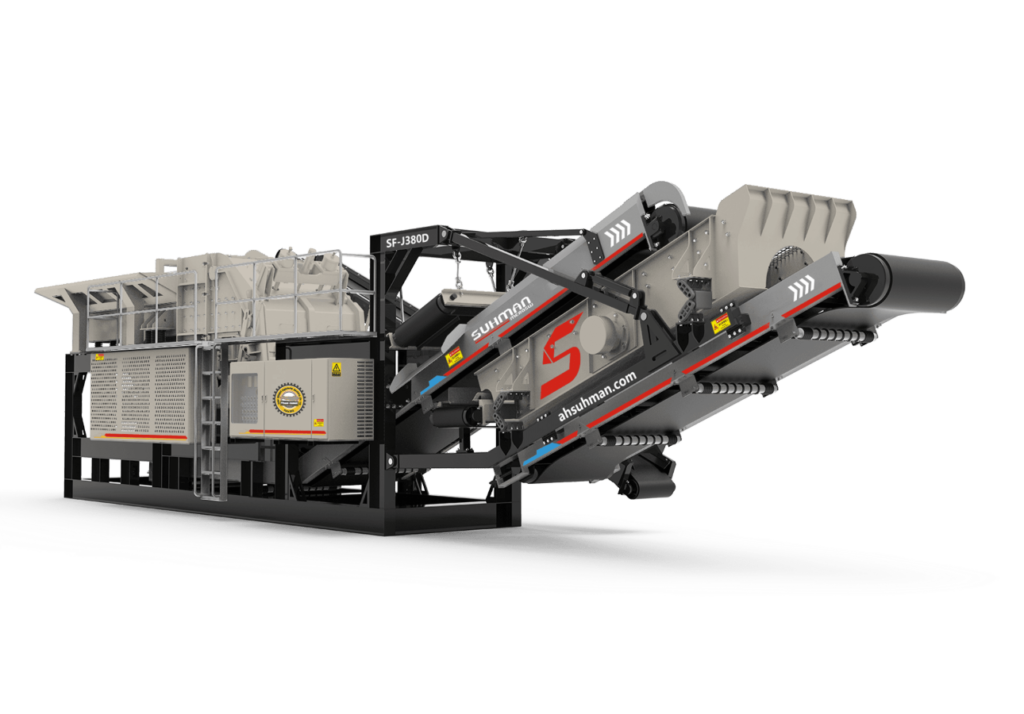
Modular Crushing Plant
A modular plant consists of pre-engineered, skid-mounted components (feeders, crushers, screens) that are bolted together on-site. They are designed for semi-permanent or fixed installations but can be disassembled and relocated if needed.
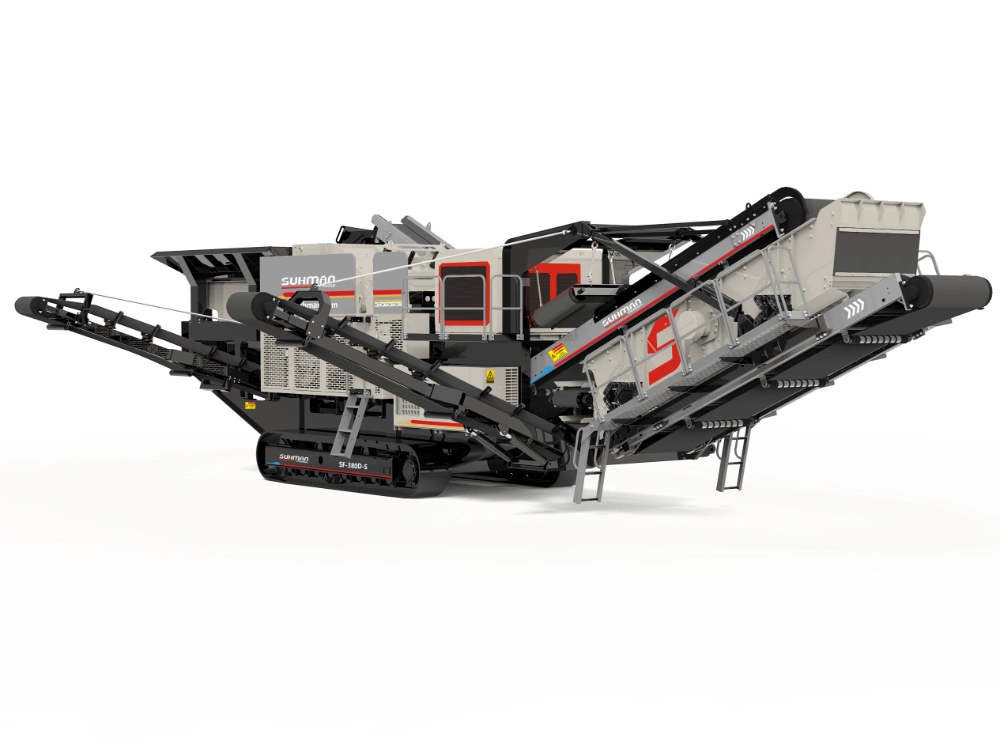
Mobile (Tracked) Crusher
A mobile crusher is a self-contained unit mounted on a crawler chassis. It drives directly to the job site, sets up in minutes, and can move with the mine face or between different project locations.
1. Logistics & Shipping Cost: Modular Wins
Shipping heavy machinery internationally is one of the biggest hidden costs.
| Factor | Modular Plant | Mobile Crusher |
| Transport Mode | Standard 40HQ Containers | Flat Rack or Bulk Cargo |
| Shipping Cost | Low (Shared container space) | High (Dedicated vessel space) |
| Customs Clearance | Standard | Complex (Oversized cargo) |
The Cost Reality: Mobile crushers are often too wide or tall for standard containers. This means they require flat-rack containers or breakbulk shipping, which can cost 2x to 3x more than standard container shipping.
Modular Advantage: Our SS-J7018 Modular Screen Plant, for example, is designed to fit entirely within standard 40HQ containers. This slashes shipping costs and speeds up customs clearance significantly.
Field Experience: A client in Tanzania saved approximately $12,000 on shipping alone by choosing our modular SS-J7018 over a comparable tracked screen, simply because it fit into two standard containers instead of requiring a flat rack.
2. Installation & Civil Work: Mobile is Faster, Modular is Cheaper
Mobile Crusher: No Foundation Needed
Mobile crushers are designed for rapid deployment. You just need a flat, compacted surface.
- Setup Time: 30 minutes to 2 hours.
- Civil Work: Minimal to none.
- Best For: Temporary sites, demolition projects, or areas with unstable ground.
Modular Plant: Minimal Concrete
Modular plants sit on steel skids. While they don’t need the massive concrete foundations of traditional fixed plants, they do require a stable base.
- Setup Time: 1–3 days (bolting and connecting).
- Civil Work: Simple steel supports or a thin concrete pad.
- Best For: Quarries, mining sites, or long-term aggregate production.
The Verdict: If your site has no infrastructure, a mobile crusher saves time. If you have a prepared site, a modular plant saves money on the equipment itself.
3. Operational Flexibility: Mobile Wins
This is where the choice depends entirely on your project duration and terrain.
When to Choose Mobile
- Moving Material: If your material source moves (e.g., open-pit mining, multiple quarry faces).
- Rough Terrain: Tracked chassis can navigate mud, slopes, and uneven ground.
- Short-Term Projects: Construction waste recycling or 1-2 year contracts.
When to Choose Modular
- Fixed Location: If you’re processing material from a single source for 5+ years.
- High Capacity: Modular plants can be scaled up easily by adding more modules.
- Stable Ground: Ideal for flat quarry floors or prepared sites.
4. ROI Comparison: The Bottom Line
| Cost Factor | Modular Plant | Mobile Crusher |
| Initial Equipment Cost | Lower | Higher |
| Shipping Cost | Low (Containers) | High (Flat Rack/Bulk) |
| Installation Cost | Low (Steel supports) | Very Low (Drive & Go) |
| Relocation Cost | Medium (Disassembly) | Low (Drive to new site) |
| Resale Value | High (Steel structure) | High (Complete machine) |
| Best For | Long-term, fixed sites | Short-term, mobile sites |
Decision Matrix: Which One is Right for You?
| Your Situation | Recommended Solution | Why? |
| Construction Waste Recycling | Mobile Crusher | Move between sites; no foundation needed. |
| Small Quarry (5-10 years) | Modular Plant | Lower cost; stable production. |
| Large Mine (10+ years) | Modular or Fixed Plant | High capacity; scalable. |
| Remote/Rough Terrain | Mobile Crusher | Tracked mobility; easy setup. |
| Budget Constraints | Modular Plant | Tracked mobility; easy setup. |
Recommended Equipment from SUHMAN
For Modular Solutions
- Fits in standard 40HQ containers.
- 220-320 TPH capacity.
- Easy assembly; low civil work.
- Ideal for: Aggregate screening, mining classification.

For Mobile Solutions
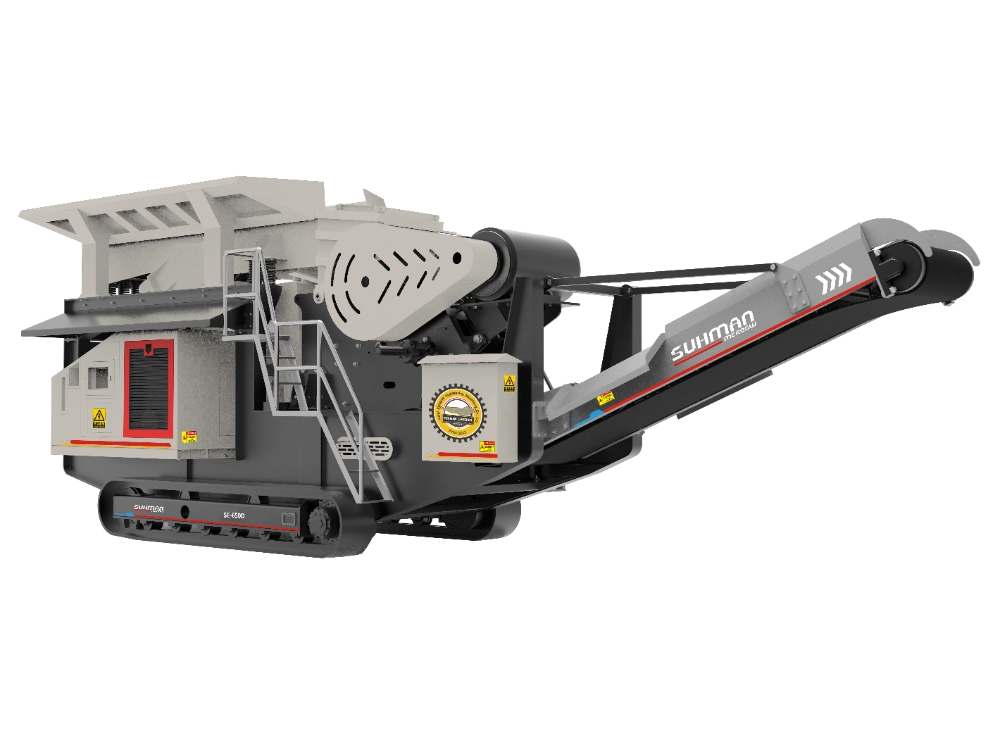
SE-650D Mini Mobile Jaw Crusher
- Compact 30-ton design; easy transport.
- 50-130 TPH capacity.
- Perfect for small quarries and construction waste.
SE-1060 Track-Mounted Mobile Jaw Crusher
- Heavy-duty 46-ton design.
- 200-250 TPH capacity.
- Ideal for large-scale mining and quarrying.

FAQ
Q: Can a modular plant be moved?
A: Yes. Modular plants are designed to be disassembled and relocated. While not as mobile as a tracked crusher, they can be moved to a new site with a crane and flatbed truck in a few days.
Q: Which is more expensive to maintain?
A: Mobile crushers have more complex hydraulic and tracking systems, which can increase maintenance costs. Modular plants have simpler mechanical setups, generally resulting in lower maintenance costs over time.
Q: Can I use a modular plant for construction waste?
A: It’s possible, but not recommended. Construction waste sites often require frequent relocation and have unstable ground. A mobile crusher is better suited for this application.
Q: How long does a modular plant last?
A: With proper maintenance, a modular plant can last 15-20 years or more. The steel structure is durable and can be reused across multiple projects.
Conclusion
Choosing between a modular and mobile crusher isn’t about which is “better” — it’s about which fits your project’s logistics, timeline, and budget.
- Choose Modular if you want lower shipping costs, a stable long-term solution, and easy scalability.
- Choose Mobile if you need rapid deployment, terrain flexibility, and the ability to move with the material.
At SUHMAN, we offer both solutions. Our engineering team can help you calculate the total cost of ownership for your specific project and recommend the most cost-effective setup.
Get a free consultation: Contact us at +86 13856971828 or email ahsuhman@163.com
Explore our full range:https://ahsuhman.com/