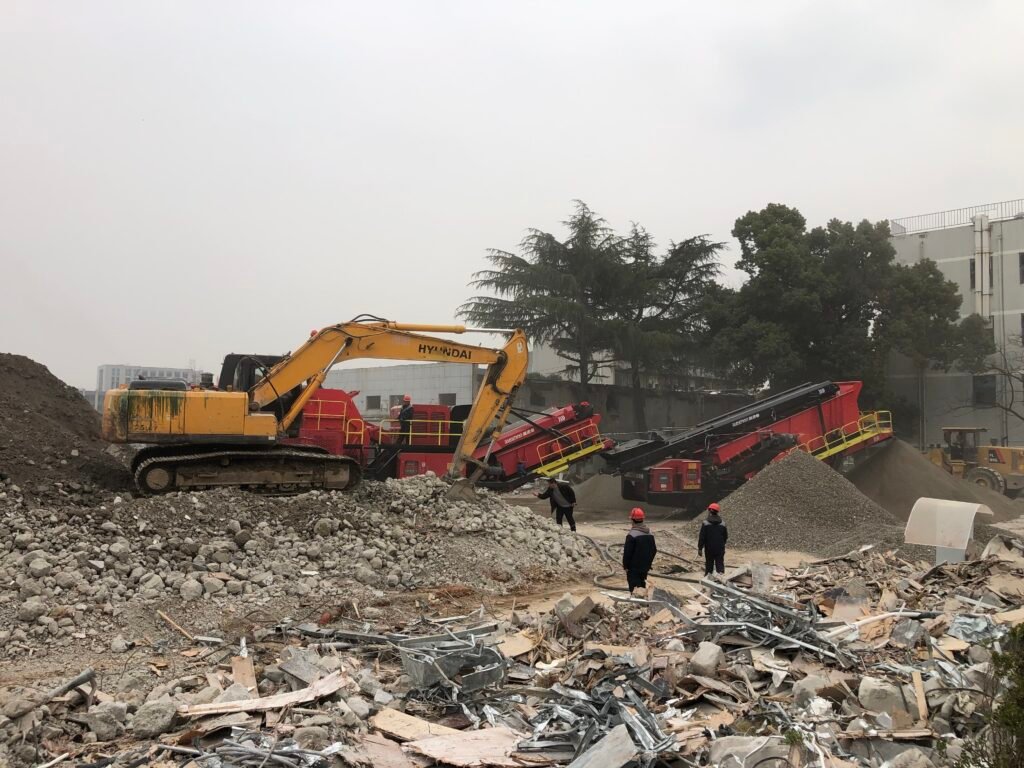
In the demolition and construction waste recycling industry, every job site is different. One day you’re processing reinforced concrete between two active buildings. The next, you’re moving a crusher across a muddy demolition field while excavators swing overhead. The ground is uneven, the space is tight, and the material is unpredictable.
This is not a quarry. There are no smooth access roads, no level foundations, no controlled environment.
Two questions define your equipment purchase in this industry:
- How do I operate safely in confined, hazardous spaces? → Wireless remote travel control.
- What machine configuration gives me the right output at the right cost? → The right scale of crusher setup.
This article answers both. We’ll explain why wireless remote control is essential for demolition and recycling operations, then walk through three crusher configurations — small, medium, and large — so you can match the right setup to your project scale.
Part 1: Why Wireless Remote Control Is Essential on Demolition Sites
The Challenges That Don’t Exist in Quarries
Demolition and construction waste recycling sites present a unique combination of challenges:
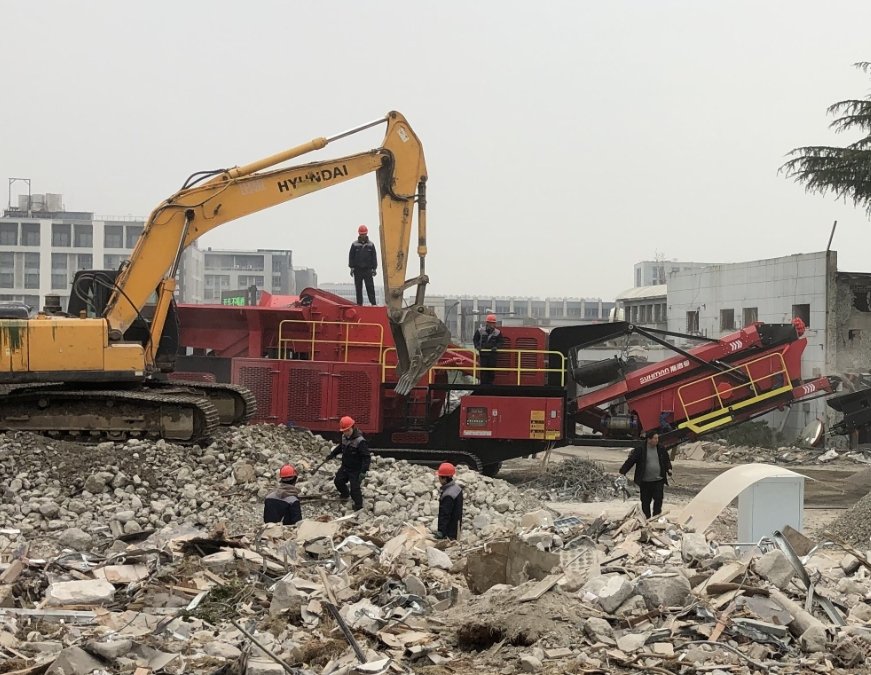
Narrow Working Spaces Urban demolition sites are often surrounded by existing buildings, active roads, and underground utilities. A 40-50 ton mobile crusher needs to be positioned precisely between structures, sometimes in gaps of just 4-5 meters. An operator sitting inside a cabin with limited visibility is trying to navigate a machine they can’t fully see, in a space where a 10-centimeter mistake means hitting a wall.
Unpredictable Ground Conditions Demolition sites are littered with rebar, broken concrete slabs, voids beneath collapsed floors, and varying levels of debris. A crawler crusher sitting on uneven ground needs careful positioning to avoid track slippage. The operator needs to see exactly where each track is contacting the surface — something that’s nearly impossible from inside a cabin.
Multiple Machines Working Simultaneously A typical demolition site has excavators breaking structures, loaders feeding material to the crusher, dump trucks hauling processed aggregate, and sometimes multiple crushers operating in a line. The crusher operator needs to be aware of all surrounding activity — not just the machine they’re operating.
Overhead Hazards In active demolition zones, falling debris is a constant risk. An operator sitting on top of a 40-ton machine is directly in the fall zone. An operator standing 20 meters away with a remote control is not.
Frequent Relocation Unlike a quarry where a crusher might stay in one position for weeks, demolition sites require constant movement. As one area is cleared and processed, the crusher needs to move to the next work face — sometimes multiple times per day.
How Wireless Remote Control Solves All Five
Precise Positioning in Confined Spaces With SUHMAN’s wireless remote travel control, the operator doesn’t need to climb into a cabin to move the machine. They pick up the handheld transmitter and stand in the position that gives them the best view of where the crusher needs to go.
On a narrow demolition site, the operator can stand between two walls, watching the crusher approach from the front, seeing exactly how much clearance remains on each side. They can walk alongside the machine, adjusting in real-time. One smooth movement. No stopping to reassess.
The remote has a 300-meter control range, sub-0.5-second response time, and an ergonomic design that lets the operator control all track functions with one hand.
Safety: Operator Away from the Machine With remote travel control, the operator is never physically on the machine during movement. They’re standing at a safe distance with clear visibility of the entire work area. If something falls, if a loader backs up unexpectedly, if the ground shifts — the operator is already in the position they need to be in.
The remote system includes a dual-channel emergency stop, signal-loss auto-shutdown (the machine stops if contact is lost for more than 2 seconds), and a dead man’s switch. These are standard on every SUHMAN machine — not optional extras.
Faster Relocation, Less Downtime Demolition contractors make money by processing material, not by waiting for machines to reposition. With remote travel control, relocation is faster because:
- No engine warm-up delay — the remote is battery-powered and ready instantly
- No climbing — the operator picks up the remote and goes
- Better visibility — one-shot positioning means fewer adjustments
- One operator, multiple machines — in a multi-machine setup, one operator can reposition all machines from a central vantage point
Part 2: Choosing the Right Crusher Configuration for Your Scale
Wireless remote control handles the “how do I operate safely” question. The next question is: what machines do I actually need?
The answer depends on your project scale. SUHMAN offers three configurations designed specifically for demolition and recycling operations.
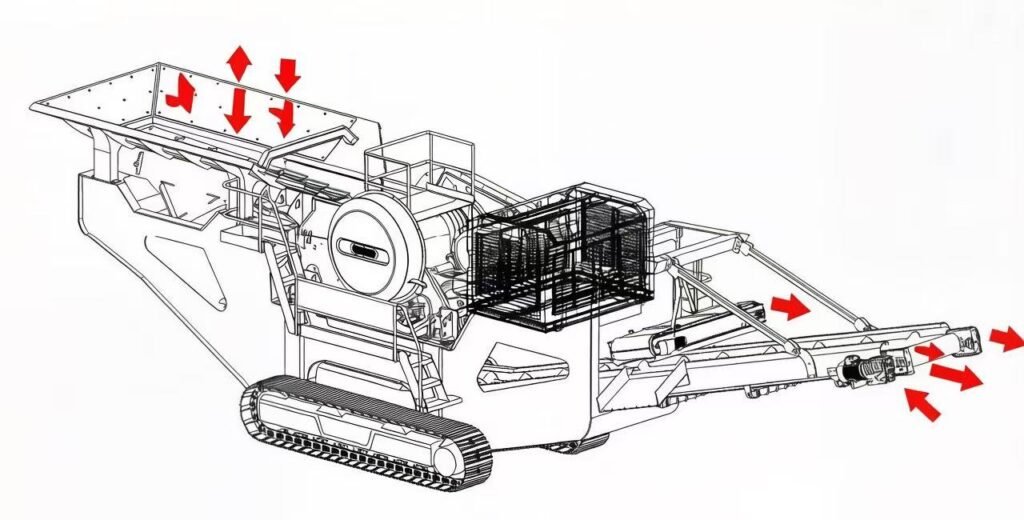
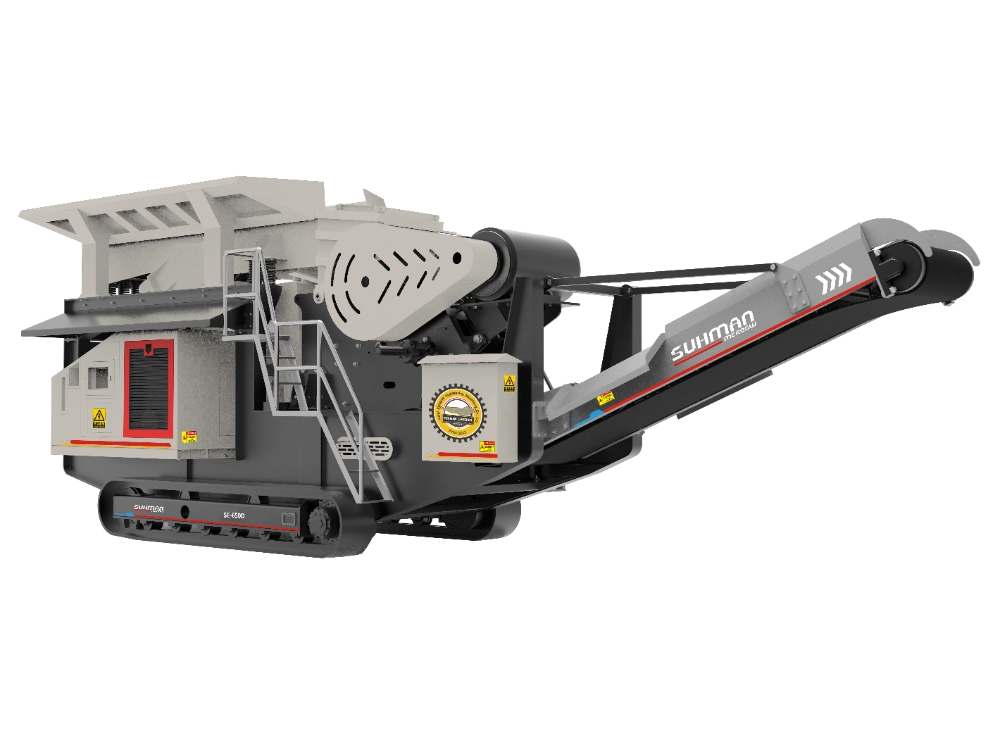
Small Scale: SE-650D Mini Mobile Jaw Crusher
Best for: Small demolition projects, interior demolition, tight urban sites, contractors processing under 10,000 tons per year.
| Specification | SE-650D |
| Capacity | 50-130 TPH |
| Max Feed Size | 500mm |
| Discharge Size Range | 0-100mm |
| Machine Weight | 30 tons |
| Working Dimensions | 10,000 × 2,700 × 3,500mm |
Why it works: The SE-650D is a single-machine solution. It’s compact enough to fit in tight spaces (working width just 2.7 meters), light enough at 30 tons to navigate soft ground, and powerful enough to handle reinforced concrete, brick, and mixed demolition debris up to 500mm.
The jaw crusher’s compression-based crushing mechanism handles anything you feed it — clean concrete, rebar-laden slabs, mixed brick and block. The hydraulic discharge adjustment lets you set the output size from 0-100mm, producing a single-size recycled aggregate suitable for road base, fill, or backfill applications.
At this scale, you typically don’t need a secondary crusher or screening plant. The SE-650D produces one-size-fits-most output that can be sold directly as road base material or used as fill on the same project.
Wireless remote travel control on the SE-650D lets the operator position this 30-ton machine precisely in tight spaces — between buildings, alongside active roads, in basements and underground parking structures — all from a safe distance.
Medium Scale: SE-1060 Jaw Crusher + SF-380D-2S Integrated Crushing & Screening Machine
Best for: Medium demolition projects, urban infrastructure removal, contractors processing 10,000-50,000 tons per year, operations needing multiple aggregate sizes.
| Specification | SE-1060 (Primary) | SF-380D-2S (Secondary + Screening) |
| Capacity | 200-250 TPH | Integrated crushing + screening |
| Max Feed Size | 700mm | Pre-crushed material from jaw |
| Discharge | 80-250mm (to SF-380D-2S) | Up to 3 finished sizes |
| Machine Weight | 46 tons | Integrated unit |
Why this combination: The SE-1060 handles primary crushing — taking full-size demolition debris (up to 700mm) and breaking it down to a consistent size that feeds the secondary stage.
The SF-380D-2S is the key differentiator in this configuration. It’s an impact crusher with integrated screening — meaning crushing and screening happen in one machine. This is not just a crusher with a screen bolted on; it’s a purpose-built integrated unit where material goes through the impact crusher and then directly onto the onboard screening system, producing up to three different finished aggregate sizes from a single machine.
Why three sizes matters: Most impact crusher machines on the market produce only two sizes — oversize material that gets returned to the crusher, and undersize material that becomes the finished product. The SF-380D-2S is the exception. Its integrated screening system separates material into three distinct size fractions simultaneously, giving you:
- Fine fraction (0-5mm or 0-10mm) — road base, fill
- Medium fraction (5-10mm or 10-20mm) — asphalt, concrete production
- Coarse fraction (10-20mm or 20-35mm) — structural concrete, drainage
Producing three sizes from one machine means you don’t need a separate screening plant. That’s one less machine to buy, one less machine to transport, one less machine to position on site, and one less machine requiring an operator.
Cost savings: A separate mobile screening plant typically costs $40,000-80,000. The SF-380D-2S eliminates that cost entirely. You get crushing + three-size screening in one tracked unit.
Wireless remote travel control on both machines means one operator can position the SE-1060 and SF-380D-2S in relation to each other from a single vantage point, maintaining proper conveyor alignment between the two machines without climbing into either one.

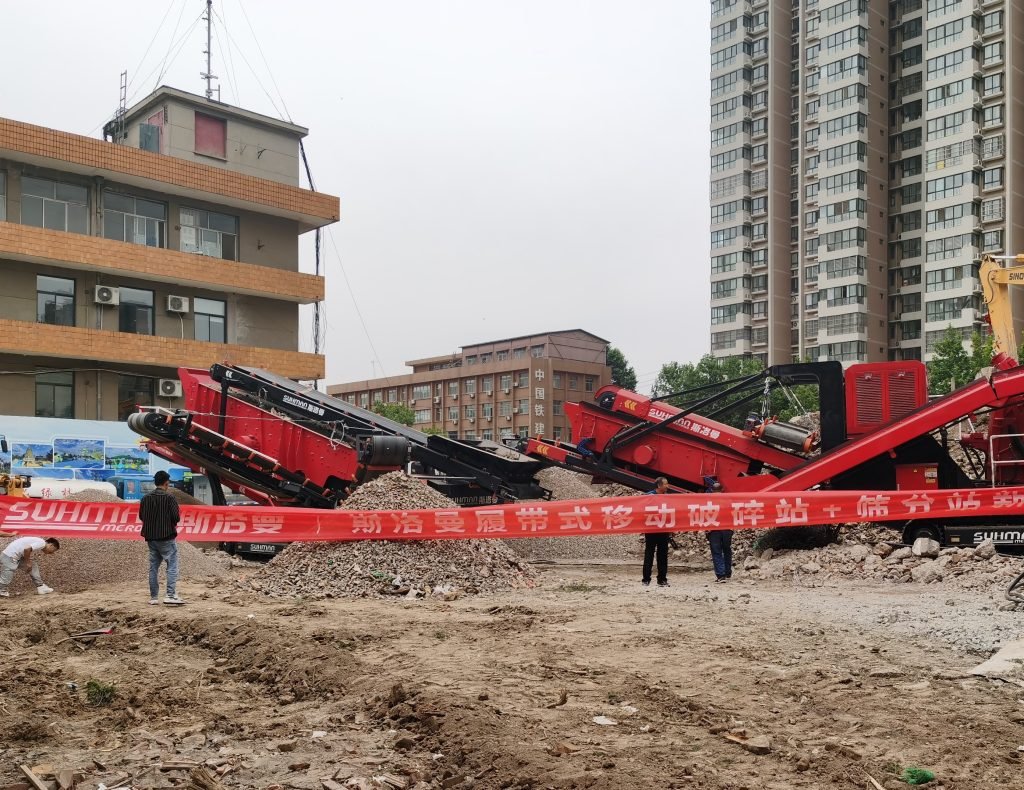
Large Scale: SE-1160 Jaw Crusher + SF-580D-S Crushing & Screening Plant
Best for: Large-scale demolition, highway/bridge removal, high-volume recycling operations processing 50,000+ tons per year.
| Specification | SE-1160 (Primary) | SF-580D-S (Secondary + Screening) |
| Capacity | 230-280 TPH | 150-350 TPH |
| Max Feed Size | 700mm | Pre-crushed material from jaw |
| Discharge | 0-250mm | Multiple finished sizes |
| Machine Weight | 48 tons | 59.5 tons |
| Crusher Power | 132 kW | 315 kW |
Why this combination: The SE-1160 is SUHMAN’s heavy-duty jaw crusher. With a 1160×800mm feed opening, 132 kW crusher motor, and 23-ton crusher weight, it handles the largest demolition debris — full concrete slabs, thick reinforced concrete, large granite blocks — at rates up to 380 TPH.
The SF-580D-S is a high-capacity integrated crushing and screening plant. At its core is a 1315-model triple-chamber impact crusher with 315 kW of power, processing 150-350 TPH. The onboard dual-deck vibrating screen sorts material into multiple finished sizes, with oversized material automatically returned to the crusher through a closed-loop system.
SF-580D-S vs. SF-380D-2S: What’s the difference? Both are integrated crushing and screening machines. The key difference is scale and output configuration:
- SF-380D-2S produces up to 3 finished sizes — optimized for operations that need maximum product diversity from a single machine
- SF-580D-S is the higher-capacity option at 150-350 TPH with a 315 kW crusher motor — optimized for operations that need maximum throughput
If your priority is producing three distinct aggregate sizes from one machine, the SF-380D-2S is the right choice. If your priority is maximum throughput and you can accept two finished sizes (or add a separate screen for the third), the SF-580D-S gives you more crushing power.
Wireless remote travel control on both machines lets one operator manage the positioning of this two-machine production line. The SE-1160 and SF-580D-S together weigh over 100 tons — positioning them precisely on a large demolition site is significantly easier and safer when the operator can stand where they have the best view rather than being confined to a cabin.
Part 3: Recycled Aggregate — Turning Waste into Revenue
Regardless of which configuration you choose, the end product is the same: recycled aggregate from construction waste. Here’s why it matters.
Environmental Benefits
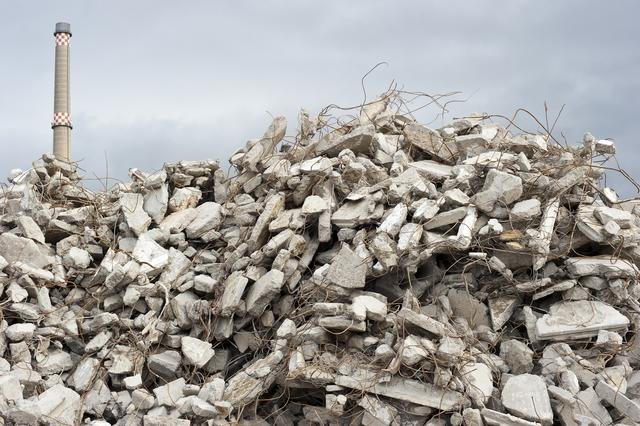
Landfill Reduction Construction and demolition waste accounts for 30-40% of all solid waste globally. Processing this waste on-site into reusable aggregate dramatically reduces landfill volume. A single demolition project processing 10,000 tons of concrete waste on-site diverts 10,000 tons from landfill.
Natural Resource Conservation Every ton of recycled aggregate used in construction is one ton of natural stone that doesn’t need to be quarried, crushed, and transported.
Transport Emissions Reduction On-site processing eliminates two transport requirements: waste to landfill AND new aggregate from quarry to site. Double the emissions saved.
Economic Benefits
Lower Material Costs Recycled aggregate typically costs 20-40% less than natural aggregate.
Revenue from Waste Instead of paying landfill fees, contractors process waste on-site and sell the recycled aggregate. The crusher pays for itself through avoided disposal costs plus generated revenue.
Regulatory Compliance Many governments require minimum percentages of recycled material in public construction projects. Contractors with on-site recycling capabilities are better positioned to win these contracts.
Quality Assurance
Modern mobile crushers produce recycled aggregate that meets the same specifications as natural aggregate:
- Consistent sizing — achieved through proper screening (SF-380D-2S produces up to 3 sizes, SF-580D-S produces multiple sizes)
- Low contamination — achieved through overband magnets and pre-screening (all SUHMAN impact crushers include de-ironing separators)
- Good particle shape — achieved through impact crushing (triple-chamber design produces cubical aggregate)
Part 4: Summary — Matching Configuration to Your Needs
| Factor | Small (SE-650D) | Medium (SE-1060 + SF-380D-2S) | Large (SE-1160 + SF-580D-S) |
| Annual Volume | < 10,000 tons | 10,000-50,000 tons | 50,000+ tons |
| Output Sizes | 1 size | Up to 3 sizes | Multiple sizes |
| Screening Needed | No | No (integrated) | No (integrated) |
| Machines Needed | 1 | 2 | 2 |
| Remote Control | ✓ Standard | ✓ Standard | ✓ Standard |
| Best For | Small sites, tight spaces | Multi-size output, cost efficiency | High throughput, large projects |
Common to all configurations:
1.Wireless remote travel control included as standard
2.Tracked chassis for mobility on rough terrain
3.Dual-power option (diesel + electric) available
4.On-site commissioning and training included
5.12-month warranty with long-term spare parts supply
Turn your demolition waste into profit. Choose the right configuration for your scale, and move every machine from a safe distance.
Get a SUHMAN Recycling Configuration Quote →
Telephone:+86 13856971828
Mail:ahsuhman@163.com