
Published: May 9, 2026 | Last Updated: May 9, 2026
Author: SUHMAN Technical Team | Reviewed By: Chief Engineer, SUHMAN Crusher
Verified: All technical data and recommendations have been reviewed by our engineering team based on field data from 500+ global installations.
Introduction
In mineral processing and aggregate production, the cone crusher is the workhorse of secondary and tertiary crushing. But the profitability of your entire crushing circuit often hinges on two critical components: the mantle and the bowl liner.
Wear parts are not just operational costs — they are the frontline of your production. When liners wear prematurely, you face a triple threat:
- Increased spare parts expenditure
- Labor-intensive changeouts
- Lost revenue from unplanned downtime
By implementing professional maintenance strategies, operators can often extend cone crusher liner life by 20% to 40%, directly impacting the bottom line.
This guide covers everything you need to know about maximizing liner lifespan — from understanding wear mechanisms to practical maintenance routines that deliver measurable ROI.


Why Liner Lifespan Matters for Your ROI
Every millimeter of manganese steel worn away represents a specific volume of crushed rock. However, uneven or accelerated wear reduces the efficiency of the crushing chamber, leading to:
1. Minimized Downtime
Fewer changeouts mean more hours of active production. A typical liner changeout takes 8-12 hours. Extending liner life from 800 hours to 1,200 hours means 3 fewer changeouts per year, saving 24-36 hours of downtime.
2. Consistent Product Quality
Worn liners struggle to maintain the Closed Side Setting (CSS), leading to “oversize” material and poor grain shape. This affects downstream processing and final product value.
3. Lower Cost-Per-Ton
Extending lifespan reduces the frequency of capital outlay for new castings. Consider this: A typical set of cone crusher wear parts processing hard rock might last 800–1,200 hours. Extending that life by just 20% could save your operation $15,000–$30,000 per year or more, depending on your crusher size and production volume.
Key Factors Affecting Mantle and Bowl Liner Wear
Understanding what drives wear is the first step to controlling it. Three primary factors determine how quickly your liners wear out.
1. Feed Material Characteristics
The material you crush has the single greatest impact on liner wear. Three specific characteristics matter most:
Abrasiveness (Abrasion Index)
Materials with high silica content — such as granite, basalt, river pebbles, and iron ore — are highly abrasive. High abrasion accelerates wear exponentially.
Action: If you process highly abrasive rock, expect shorter liner life and budget accordingly. Consider upgrading to higher-grade manganese (Mn22% instead of Mn18%).
Hardness (Compressive Strength)
Harder rock requires more crushing force, increasing liner stress. Soft rock like limestone and sandstone causes less wear but may lead to other issues like chamber packing.
Action: Match your liner profile to the material hardness (see cavity selection below).
Moisture and Clay Content
Wet, sticky material can pack in the crushing chamber, causing uneven pressure and localized wear. Clay also prevents proper work-hardening of the manganese surface.
Action: Pre-screen or dry material before feeding if moisture exceeds 8-10%.
2. Feeding Method: Choke Feeding vs. Trickle Feeding
The way material enters the crushing chamber directly affects wear patterns, product quality, and liner life.
| Feeding Method | Wear Pattern | Effect on Liner Life |
| Choke Feeding (chamber kept full) | Uniform wear across entire liner surface | Extended life (20-30% longer) |
| Trickle Feeding (intermittent or partial fill) | Localized wear on lower portion; uneven wear | Reduced life; risk of premature failure |
| Segregated Feed (material falling to one side) | One-sided wear; bowl tilting | Severely reduced life; potential crusher damage |
Why Choke Feeding Matters:
When the chamber is kept full, interparticle crushing occurs — rock crushing rock. This distributes wear evenly across the liner surface and protects the manganese from direct impact. In contrast, trickle feeding causes direct impact between rock and liner, accelerating wear and creating deep grooves.
Best Practice: Use an automated feeder with level sensors to maintain a consistent, full chamber at all times.
3. Choosing the Right Chamber Profile
Cone crushers offer different cavity profiles (chamber shapes) for specific applications. Using the wrong profile for your material dramatically accelerates wear.
| Cavity Type | Best Application | Why It Matters |
| Coarse (Standard) | Primary or secondary crushing of large feed (200-450mm) | Designed for high reduction; wider liners resist impact |
| Medium | All-around secondary crushing | Balance of wear life and reduction |
| Fine (Shorthead) | Tertiary crushing for fine product (under 20mm) | Narrower liners; sensitive to overfeeding |
Common Mistake: Using a fine cavity for coarse material. The narrow chamber forces rock to crush against liners rather than against other rock, causing rapid wear and potential liner cracking.
Best Practice: Match your liner cavity to your feed size and reduction target. When in doubt, consult your crusher manual or supplier.
Best Practices to Maximize Cone Crusher Liner Life
Now that you understand the key factors, here are six proven practices to extend liner life, reduce change-out frequency, and lower your cost per ton.
1. Monitor and Optimize Work-Hardening of Manganese Steel
Manganese steel (Mn13%, Mn18%, Mn22%) is unique: it hardens under impact. When rock strikes the liner surface, the manganese work-hardens, becoming harder and more wear-resistant. However, this requires proper impact force.
| Condition | Work-Hardening Result | Liner Life |
| Sufficient impact (choke-fed, hard rock) | Work-hardened surface (500-550 BHN) | Extended life |
| Insufficient impact (soft rock, trickle feeding) | No work-hardening (220-250 BHN) | Rapid wear |
Best Practice:
- Ensure choke-fed operation to generate sufficient impact energy
- For soft rock applications, consider alternative materials (e.g., high-chrome iron) that do not rely on work-hardening
- Use a hardness tester to periodically check surface hardness
2. Ensure Uniform Backing Compound Application
The backing compound (epoxy or polyester resin) fills the gap between the liners and the crusher frame. It transmits crushing forces evenly and supports the liner.
| Application Issue | Consequence |
| Air pockets or voids | Liner flexes under load; cracking; premature failure |
| Incomplete fill | Uneven pressure; localized wear |
| Improper curing | Weak support; liner movement |
Best Practice:
- Follow the manufacturer’s mixing and pouring instructions precisely
- Pour backing compound slowly to allow air to escape
- Allow full curing time before putting the crusher back into service
- Inspect used liners after removal — void marks indicate poor application
3. Avoid Tramp Iron and Other Uncrushable Objects
Nothing destroys cone crusher liners faster than tramp iron (bolts, excavator teeth, rail spikes) or other uncrushable material. Even with tramp release systems, each tramp event:
- Grows the liner surface
- May crack the mantle or bowl liner
- Disrupts the work-hardened surface
Best Practice:
- Install a metal detector on the feed conveyor before the crusher
- Use a magnetic separator (especially after primary crushing)
- Train operators to stop the feed immediately if tramp metal is suspected
4. Measure and Record Liner Wear Data
You cannot manage what you do not measure. According to ISO 9001:2015 quality management standards and industry best practices, regular wear monitoring should be conducted at intervals not exceeding 100 operating hours. Track liner wear systematically to predict replacement intervals and identify abnormal wear patterns.
| What to Measure | Frequency | Why |
| Liner thickness at 4-6 points | Weekly or monthly | Track wear rate; predict remaining life |
| CSS (Closed Side Setting) | Daily | Monitor for setting drift |
| Power draw trend | Continuous | Spikes indicate liner issues |
| Product particle size | Weekly | Detects chamber wear before failure |
Best Practice: Use a simple spreadsheet to log measurements. Compare actual life to predicted life and adjust maintenance schedules accordingly.
5. Rotate Liners When Possible
On some cone crusher models, liners can be rotated (turned 180 degrees) to extend life. This is particularly effective when wear is uneven.
- Slightly uneven (one side more worn): Evening out wear; extra 15-25% life
- Feed segregation wear: Significant extension
Note: Not all crusher designs allow rotation. Check your manual first.
6. Train Your Operators
The best liners in the world will fail prematurely if operators do not understand proper crusher operation.
| Operator Error | Consequence |
| Starting crusher empty | No material cushion; liners take direct impact |
| Opening CSS too tight | Overload; liner cracking |
| Ignoring power draw spikes | Over-compaction; uneven wear |
| Feeding from only one side | One-sided wear; bowl tilting |
Best Practice: Conduct regular operator training on:
- The importance of choke feeding
- Reading and responding to power draw
- Proper CSS setting procedures
- Recognizing signs of liner wear
Liner Material Selection — Mn18% vs. Mn22% vs. Alternatives
Choosing the correct manganese grade is essential for maximizing liner life in your specific application.
| Material | Best Application | Characteristics |
| Mn14% | Soft, non-abrasive rock (limestone, gypsum) | Lower cost; limited work-hardening |
| Mn18% (Standard) | General purpose; most medium-hard to hard rock | Best balance of life and cost; works for 80% of applications |
| Mn22% (High Manganese) | Extremely hard, highly abrasive rock (granite, basalt, iron ore) | Higher initial cost; superior work-hardening (550+ BHN); 20-30% longer life than Mn18% |
| High-Chrome Iron | Low-impact applications (soft rock, fine crushing where impact is insufficient for work-hardening) | No work-hardening needed; excellent wear resistance in low-impact conditions |
Recommendation: For most hard rock applications, Mn18% is the sweet spot. Only upgrade to Mn22% if you’re processing extremely abrasive material like granite or basalt, and the extra cost is justified by the extended life.
Our Field Experience
Over the past 5 years, SUHMAN engineers have worked directly with over 200 crushing operations worldwide. Here’s what we’ve learned from the field:
What We’ve Seen Work:
- A granite quarry in Vietnam extended their SY-HP300 Mobile Cone Crusher liner life from 850 to 1,150 hours simply by switching from Mn14% to Mn18% and installing a metal detector. That’s 350 extra hours of production — worth approximately $18,000 in savings.
- A limestone operation in Kenya was experiencing premature liner wear due to high moisture content (12-15%). After installing a pre-screening feeder to remove fines and wet material, liner life increased by 25%.
What We’ve Seen Fail:
- Several operators tried using fine cavities for coarse feed to “get a finer product in one pass.” The result: liner life dropped to 400-500 hours, and the crushing chamber cracked within 6 months.
- Trickle feeding is the #1 cause of premature liner wear we see in the field. Operators who don’t use automated feeders typically see 20-30% shorter liner life.
Real-World Case Study: Extending Liner Life by 35%
A granite quarry in Southeast Asia was experiencing liner life of only 750 hours with their secondary cone crusher. After implementing the following changes:
- Switched from Mn14% to Mn18% manganese (+15% life)
- Installed automated feeder with level sensors to ensure choke feeding (+10% life)
- Added metal detector and magnetic separator upstream (+5% life)
- Implemented weekly wear measurement and logging (+5% life through early detection)
Result: Liner life increased from 750 hours to 1,012 hours — a 35% improvement. Annual savings: approximately $22,000 in liner costs plus 18 hours of reduced downtime.
Choosing the Right Cone Crusher for Your Application
The right cone crusher makes liner management easier from day one. Key considerations:
For Hard Rock (Granite, Basalt, Iron Ore)
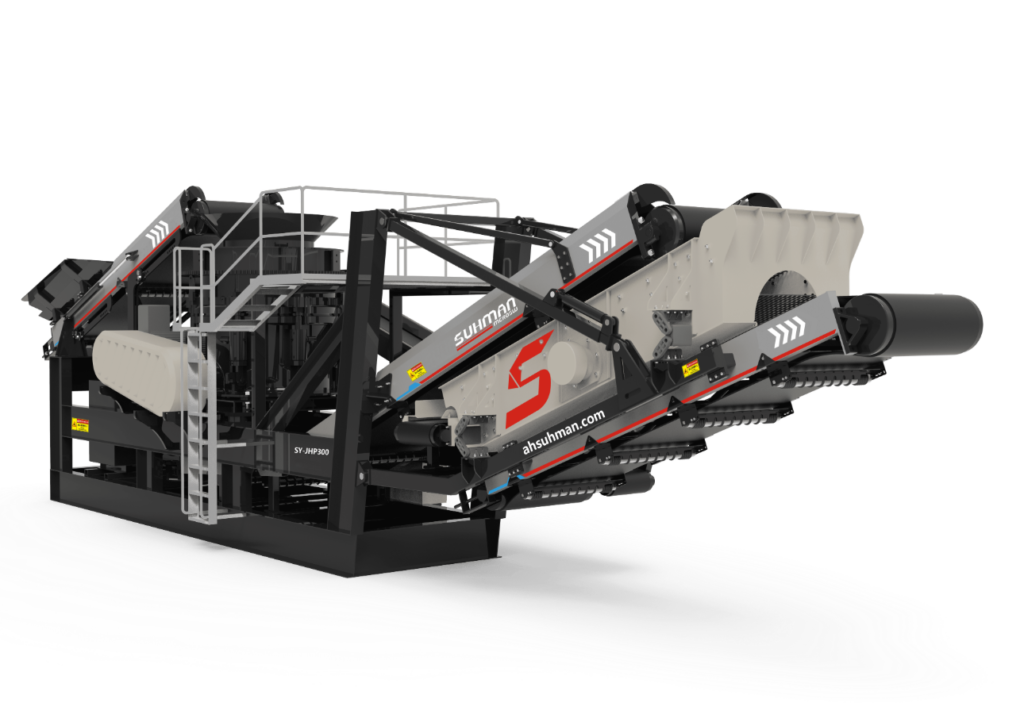
- Recommended:SY-HP300 Mobile Cone Crusher
- Why: Hydraulic adjustment, tramp release, multiple cavity options
- Capacity: 100-200 TPH
For Medium-Hard Rock (Limestone, Dolomite)
- Recommended:SY-HP200 Mini Mobile Cone Crusher
- Why: Compact design, easy transport, ideal for small to medium operations
- Capacity: 50-100 TPH
For Large-Scale Operations
- Recommended:SY-HP400 Heavy Duty Mobile Cone Crusher
- Why: High capacity, robust construction, designed for continuous operation
- Capacity: 200-350 TPH

FAQ
Q: How often should I replace cone crusher liners?
A: There’s no fixed schedule. Replacement depends on material hardness, feed size, and operating conditions. Typically, liners last 800-1,200 hours for hard rock. Monitor liner thickness weekly and replace when wear reaches 70-80% of original thickness.
Q: What’s the difference between Mn18% and Mn22% manganese?
A: Mn18% is the standard grade, suitable for most applications. Mn22% has higher manganese content, providing superior work-hardening (550+ BHN vs 500 BHN) and 20-30% longer life in extremely abrasive conditions like granite and basalt crushing. The extra cost is justified only for highly abrasive materials.
Q: How do I know if my cone crusher liners need replacement?
A: Look for these signs:
- Product size becomes inconsistent (more oversize material)
- Power draw increases significantly
- Visible wear patterns (grooves, thinning) on liner surface
- CSS cannot be maintained even after adjustment
- Cracks or fractures in the liner
Q: Can I extend liner life by adjusting the CSS?
A: Yes, but carefully. A tighter CSS increases reduction but also increases wear. A looser CSS reduces wear but produces coarser product. Find the optimal CSS for your application — typically the loosest setting that still produces your target product size.
Conclusion
Maximizing cone crusher liner life isn’t about one magic solution — it’s about implementing a comprehensive maintenance strategy that addresses material selection, feeding practices, cavity configuration, and operator training.
By following the practices outlined in this guide, you can realistically extend liner life by 20-40%, translating to significant savings in wear parts costs, reduced downtime, and more consistent product quality.
Ready to upgrade your crushing operation? SUHMAN’s SY series mobile cone crushers are designed with easy liner replacement, hydraulic adjustment, and tramp release — making liner management simpler and more cost-effective.
Get a free consultation: Contact us at +86 13856971828 or email ahsuhman@163.com
Explore our full range:https://ahsuhman.com/
